
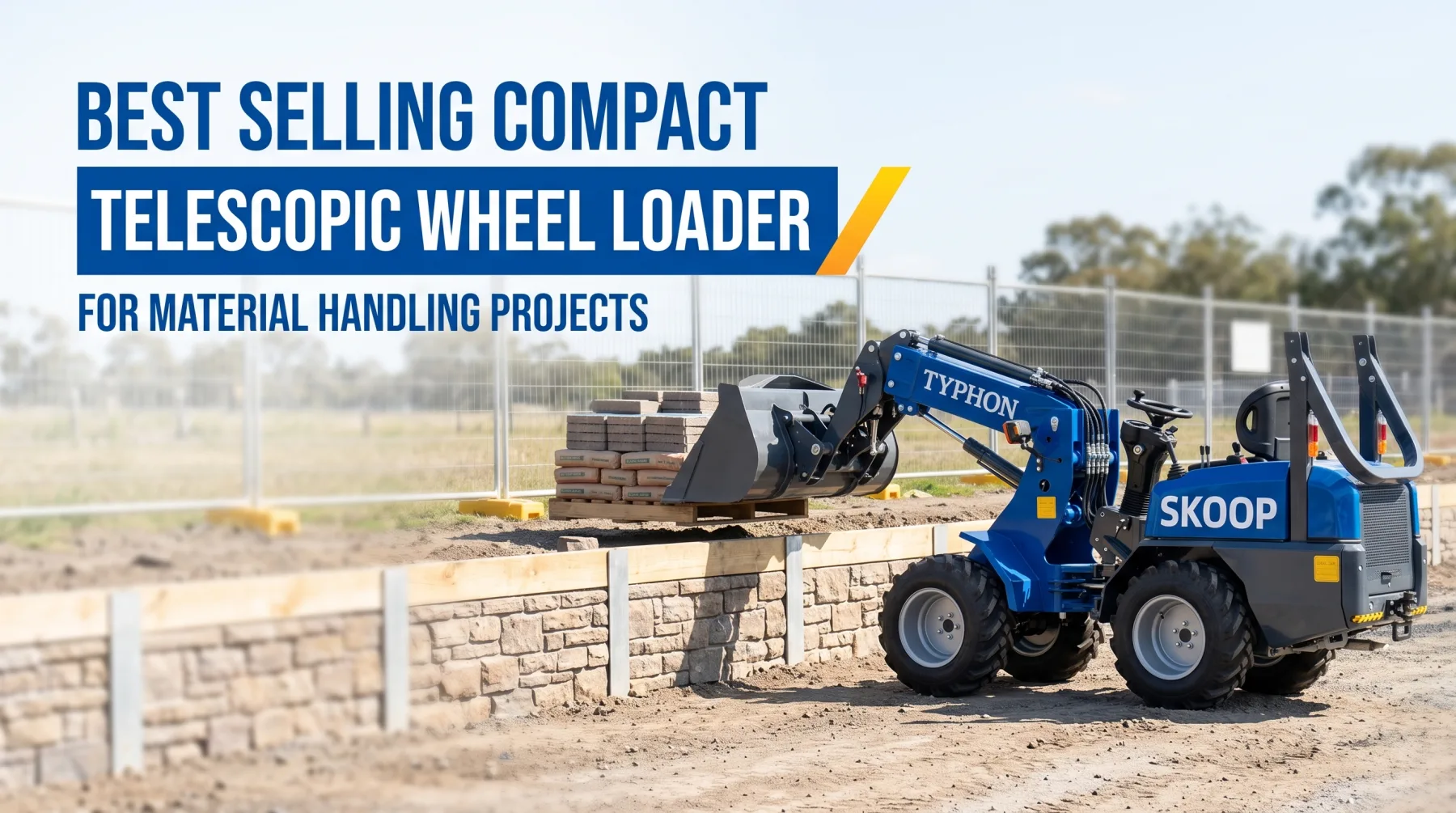
Picture a landscape crew unloading a flatbed stacked with pallets of pavers, bagged soil, and block, wedged into a job site with a fence on one side and a half-built retaining wall on the other. A standard wheel loader can scoop, but it can’t reach over the wall to set pallets where the crew needs them, and it’s too wide to swing around in space. Rolling a compact telescopic wheel loader onto that same site changes everything. Its boom extends up and out to place each pallet exactly where it belongs, and its tight frame turns in a fraction of the room. What took two machines and a lot of hand-carrying now takes one operator and a couple of hours.
Material handling rewards machines that reach, lift, and fit, and a compact telescopic wheel loader delivers all three in one compact package. Combining the muscle of a loader with the extendable boom of a telehandler, it scoops loose material, stacks pallets at height, and works loads a fixed-arm machine simply can’t touch. This post breaks down what sets it apart from a standard loader, how its telescopic boom expands reach and lift, the attachments that widen its range, its edge in tight spaces, and the real value it delivers for contractors and landscapers. Here’s why it keeps landing at the top of the sales charts.
For businesses that handle a wide variety of materials every day, equipment flexibility can make a major difference in productivity. A compact telescopic wheel loader reduces the need for multiple machines by combining loading, lifting, and placement capabilities into one versatile unit. From construction sites and landscaping projects to agricultural operations and property maintenance, its ability to adapt quickly helps crews complete more tasks with less downtime and fewer equipment changes.
What Sets It Apart From a Standard Wheel Loader
Every standard wheel loader shares one limitation: a fixed lift arm that raises the bucket in a set arc and no farther. That arc handles scooping and dumping fine, but it can’t extend forward or place a load over an obstacle. A telescopic model swaps that fixed arm for an extendable boom, and that single change unlocks a whole different range of work.
Think of it as a loader and a telehandler rolled into one frame. Where a conventional machine only lifts, the telescopic version lifts and reaches, sliding the boom outward to set a pallet on a scaffold deck, over a trench, or onto a truck bed from farther back. Sizing this against your typical load work and material handling needs shows where the extra reach earns its keep.
Here’s the takeaway: a standard loader moves bulk material well, but a compact telescopic wheel loader moves material and places loads with precision. That combination is exactly why crews handling mixed material and palletized goods gravitate toward it.
Telescopic Boom Reach and Lift Height Advantages
Reach is the headline feature, especially for operators handling heavy duty demand in construction, landscaping, agriculture, and material handling environments. The extending boom pushes the load away from the machine, letting an operator place material several feet beyond the front tires without repositioning. On a crowded site, that reach means fewer moves, less backing up, and pallets landing right where the crew wants them the first time.
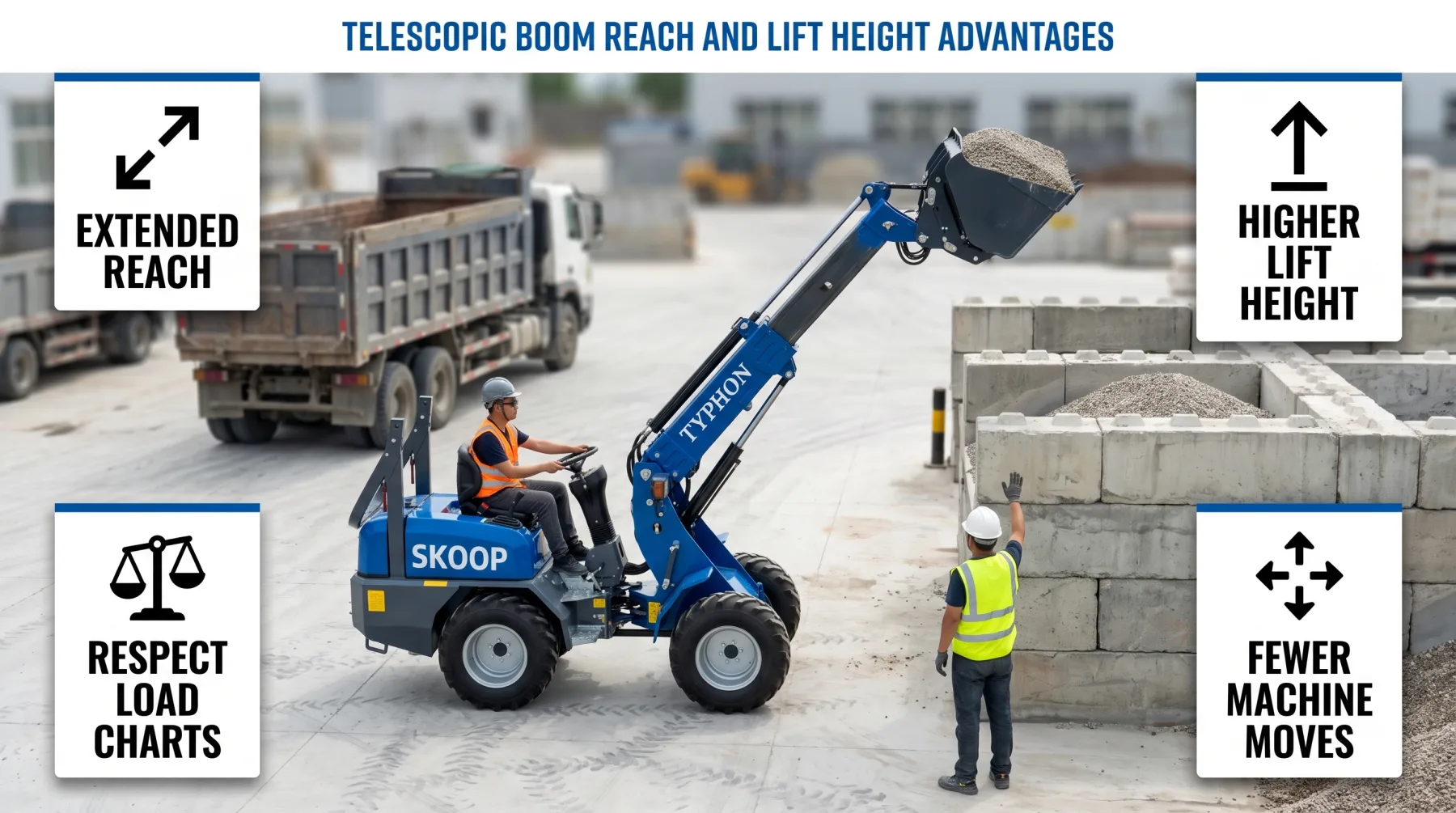
Lift height climbs alongside reach. Raising the boom to its full extension stacks material higher than a fixed-arm loader can manage, which matters when you’re loading high-sided trucks, feeding a second-story build, or stacking block bins in a supply yard. Always confirm the machine’s rated reach and lift height against your actual workload before you commit to a placement.
One caution worth naming: reach and height shift the machine’s balance, so load charts matter. Extending a boom fully carries less safe weight than keeping it tucked in, and respecting that limit protects both the load and the operator. Used within its ratings, though, the boom turns awkward, out-of-arm’s-reach placements into routine work.
The telescopic boom also improves efficiency by reducing the amount of repositioning required during material handling tasks. Instead of constantly moving the machine closer to each placement point, operators can stay in a stable position and complete multiple lifts from one setup. This saves valuable time on busy job sites while improving workflow, especially when working around obstacles, structures, or limited access areas where maneuvering space is restricted.
Attachment Versatility for Every Load
Buckets are only the beginning with this machine. Because the boom accepts a range of tools, one compact telescopic wheel loader covers jobs that would otherwise demand several pieces of equipment. Swapping the attachment reshapes what the machine does in a matter of minutes.
Here’s a quick look at the tools that see the most use:
- Pallet forks turn the loader into a material handler for sod, block, pavers, and bagged goods, placing deliveries exactly where the crew needs them.
- Buckets scoop and carry mulch, soil, sand, gravel, and aggregate, handling the bulk-loading side of the work.
- Grapples grab brush, logs, and debris during cleanup and land-clearing, holding awkward loads a bucket can’t secure.
Beyond those three, augers, brooms, and specialty carriers extend the machine further into fencing, site cleanup, and seasonal work. Matching each tool to your real workload keeps that spend honest, and reviewing your typical attachment needs helps you see how much a single machine can already cover. Versatility like this is a big reason the machine sells so well, since one purchase does the work of a small fleet.
Job Site Maneuverability in Tight Spaces
Size is where “compact” earns its name. Narrow lots, fenced yards, and busy sites leave little room to swing a full-size loader, and that’s precisely where this machine shines. Its short wheelbase and tight turning radius let it thread between obstacles and work close to walls and structures without a dozen back-and-forth corrections.
Compact dimensions pay off in two ways. First, the machine reaches spots a bigger loader can’t enter at all, which keeps material moving instead of stalling at the gate. Second, its smaller footprint treads lighter on finished surfaces and soft turf, so you protect the ground you’ve worked hard to prep.
Maneuverability pairs naturally with the boom’s reach. Setting up close and then extending the boom lets one operator cover a wide work zone from a single position, cutting the repositioning that eats time on cramped sites. For crews who fight for room on every job, that combination of small frame and long reach is a genuine advantage.
The ability to work efficiently in confined areas makes a compact telescopic wheel loader especially valuable for modern job sites where space is often limited. Operators can navigate around existing landscaping, buildings, and stored materials while still maintaining strong lifting performance. This balance of mobility and capability helps crews complete material handling tasks faster without needing to bring in larger equipment that may be difficult to transport or operate in restricted areas.
Value and ROI for Contractors and Landscapers
Cost is the question every buyer weighs first, and it’s a fair one. A telescopic model runs higher upfront than a plain loader, so the return has to come from somewhere. That somewhere is versatility and time saved, since a single machine that loads, lifts, reaches, and swaps attachments replaces work you’d otherwise split across several tools or a bigger crew.
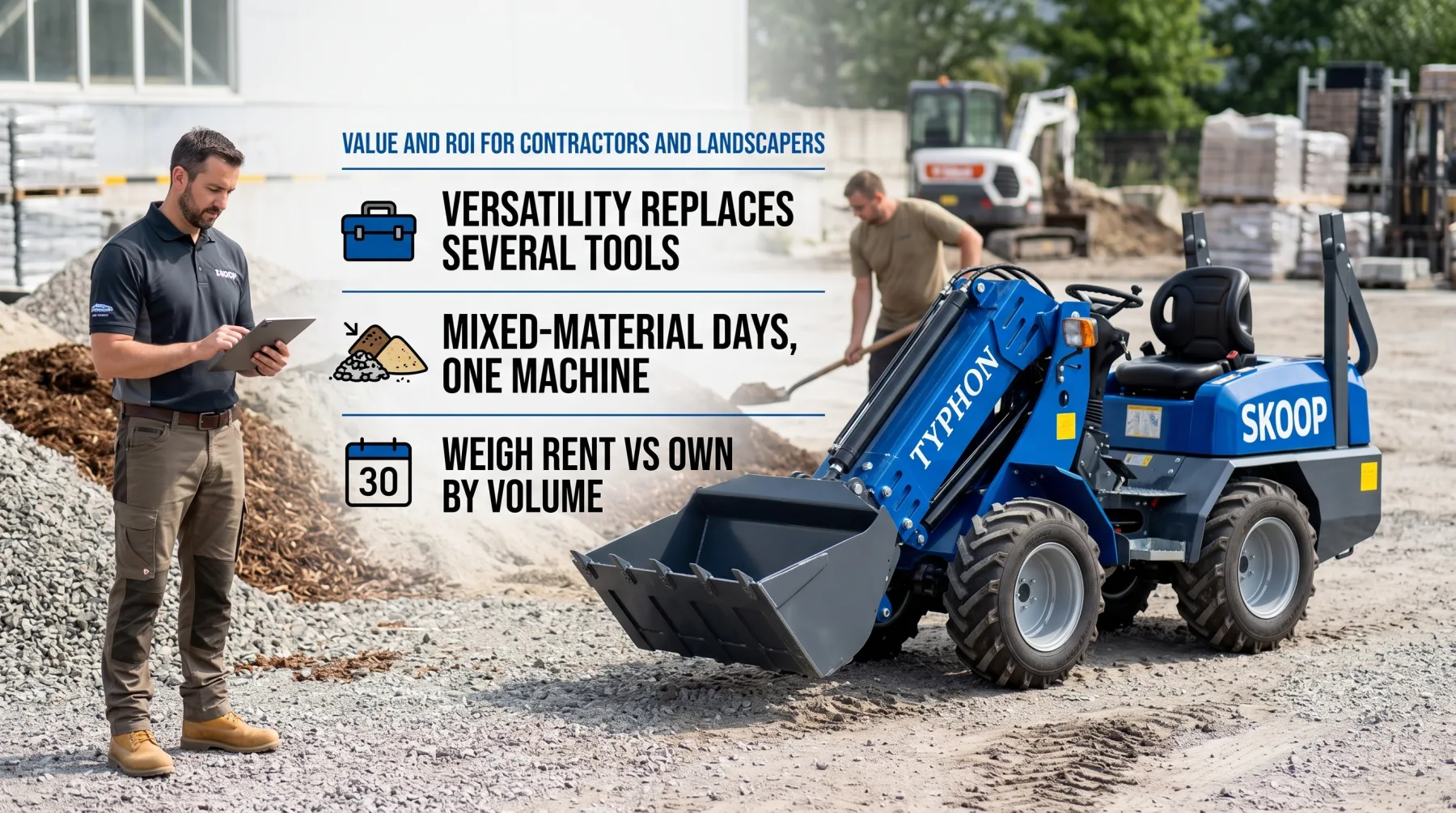
Landscapers gain the most from mixed-material days. Loading mulch in the morning, setting pallets of blocks at noon, and grappling brush in the afternoon all happen on one machine, which keeps the operator busy and the fleet lean. Contractors handling deliveries, backfill, and staged material see the same payoff across a build.
Whether buying makes sense comes down to volume. Crews moving serious material week after week recoup the premium fast, while lighter operations may find renting for peak stretches fits better, so weighing your options against your real workload keeps the spend lean. Protecting that investment takes a steady maintenance routine, and safe operator training guards the whole crew on every site.
The long-term return becomes even stronger when the machine stays productive across multiple seasons and project types. Instead of sitting idle after a single type of job, a compact telescopic wheel loader can support landscaping, construction, agriculture, and property maintenance throughout the year. By increasing equipment utilization and reducing the need for additional specialized machines, contractors can maximize their investment while improving daily workflow and profitability.
Conclusion
Choosing a compact telescopic wheel loader for material handling comes down to one clear advantage: reach, lift, and a small footprint packed into a single machine. Unlike a fixed-arm loader, its extending boom places pallets and material well beyond the front tires and stacks them higher, while its tight frame threads into spaces a full-size machine can’t enter. Pallet forks, buckets, and grapples widen its range so one unit handles bulk loading, palletized deliveries, and cleanup alike. Value follows volume, so crews moving material day in and day out recoup the higher upfront cost fastest, while lighter operations may lean toward renting. Weigh how much reaching and lifting your projects actually demand, respect the load charts as the boom extends, and keep the machine on a steady maintenance routine.
Ready to put a dependable compact telescopic wheel loader to work? Reach out to a trusted equipment specialist who can pair a reliable machine with the results your projects depend on.
Frequently Asked Questions
What makes a compact telescopic wheel loader better than a standard loader for material handling?
Its extending boom reaches and lifts loads well beyond a fixed arm’s arc, so it places pallets and material at height and distance a standard loader can’t, all in a frame small enough for tight sites.
What attachments can I run on a compact telescopic wheel loader?
Pallet forks, buckets, and grapples cover most material handling, with augers, brooms, and specialty carriers extending the machine into fencing, cleanup, and seasonal work, so one unit handles a wide range of tasks.
Is a compact telescopic wheel loader worth the cost for a small landscaping business?
For crews moving serious material across mixed jobs, the versatility and time saved recoup the higher upfront price quickly, while lighter operations may find renting for busy stretches fits their workload and budget better.