
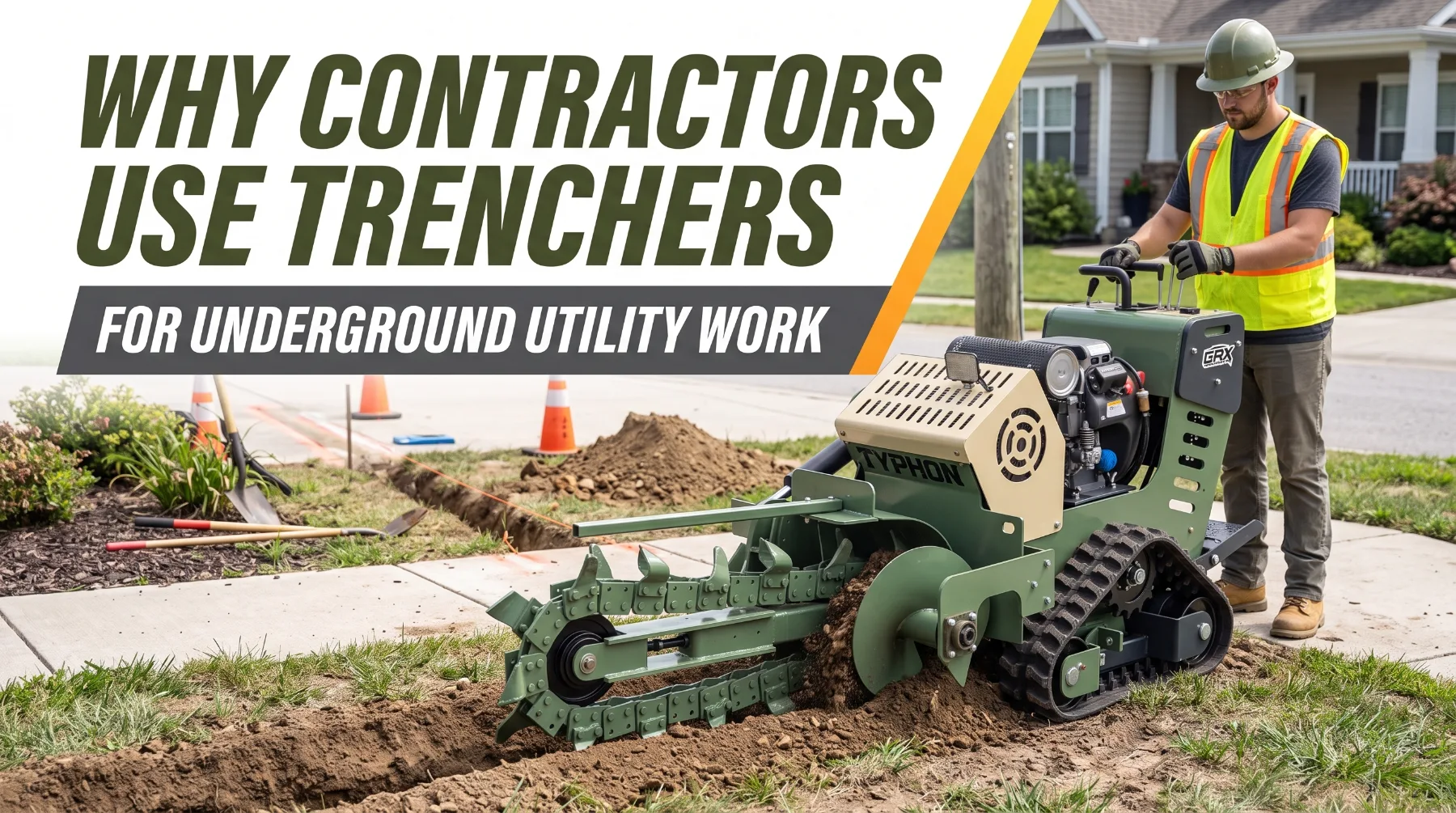
Why Contractors Use Trenchers for Underground Utility Work
Before a new underground utility can be installed, the planned route needs a trench that is deep and wide enough for the line while avoiding unnecessary disturbance to the surrounding ground. Opening the entire route with a standard excavator can create a much wider excavation, producing more spoil and increasing the amount of restoration required afterward. A trencher takes a more focused approach by cutting a narrow, continuous slot along the marked path as the machine moves forward.
Cutting width and digging depth can be matched to the requirements of the utility installation, allowing the machine to remove only the material needed for the line. The continuous cutting action also keeps the trench formation consistent as the operator follows the planned route. Compared with creating a broad excavation, this focused method can reduce excess spoil and limit disturbance around the work area.
Along long utility routes, that narrow cutting process becomes especially useful for maintaining steady progress. Electrical lines, communication cables, irrigation systems, and other underground services can require extended runs where controlling trench size matters. Properly matching the trencher to the ground conditions and installation requirements helps create a clean work path while keeping excavation and restoration work more manageable.
Narrow Excavation for Utility Lines
A trencher removes a relatively narrow strip of soil rather than opening a wide excavation, and that focus is the heart of its value. Utility installations rarely need a broad trench. They need just enough room for the pipe, cable, or line going in, and a trencher delivers precisely that. The cut is sized to the work, not oversized to the equipment.
That narrow profile pays off well beyond the digging itself. Less soil comes out of the ground, which means less material to handle, stockpile, and place back once the line is installed. On a long run, that reduction in spoil adds up quickly, saving both time and effort. A focused cut keeps the whole operation leaner, from the first foot of trench to the final backfill.
Key takeaway: A trencher removes only a narrow strip of soil sized to the line being installed, reducing the material that has to be excavated and later placed back.
Continuous Cutting Performance
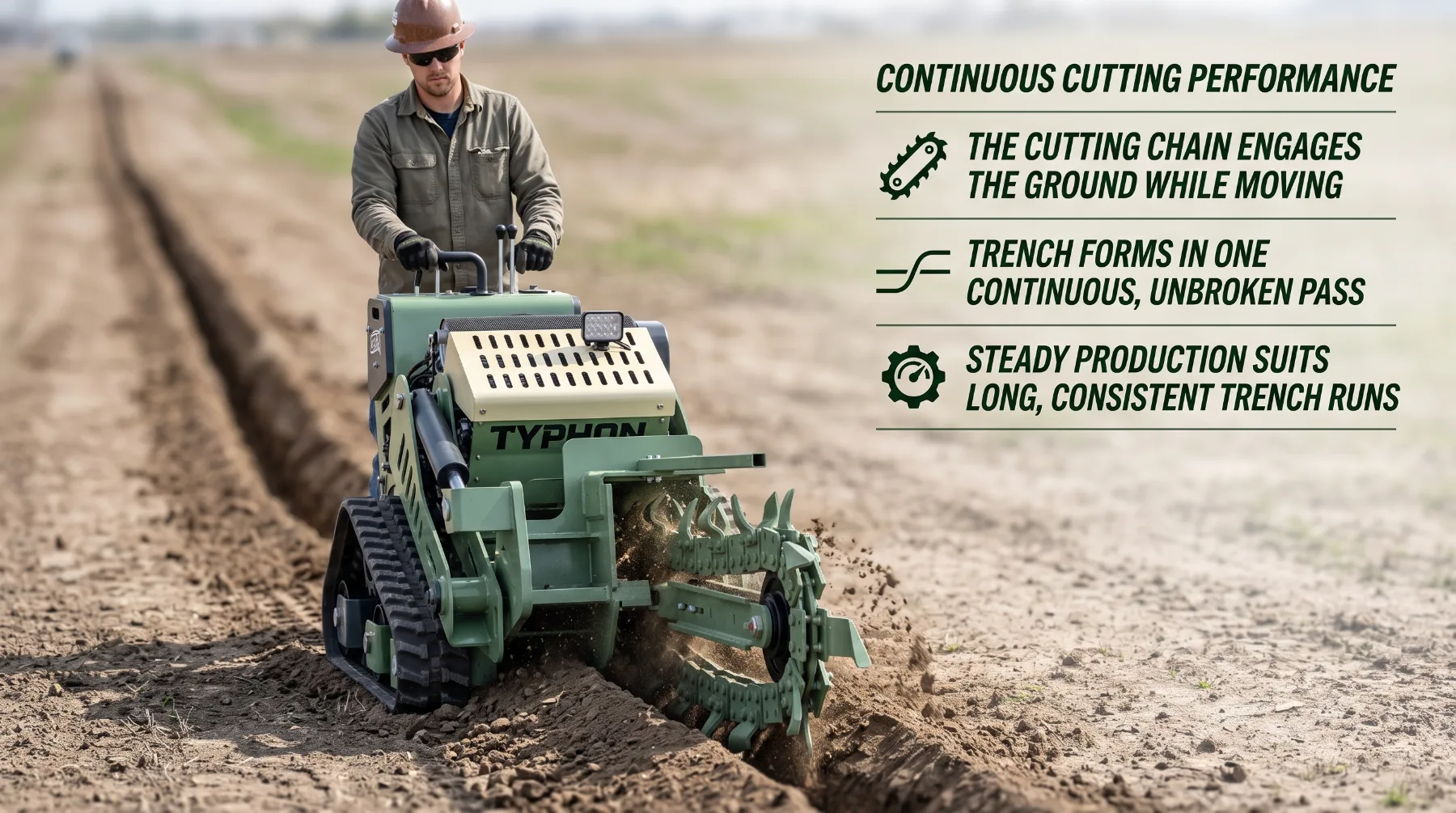
What sets a trencher apart from bucket-based equipment is how it excavates. Rather than digging one scoop at a time, a trencher cuts continuously as it moves. Its cutting chain or wheel engages the ground while the machine advances steadily along the route, producing trench in a single, unbroken pass rather than a series of separate digs.
That continuous action is what makes the equipment so well suited to long, consistent trench runs. Because the cutting system works while the machine travels, there’s no repeated cycle of digging, swinging, and repositioning to interrupt the flow. The trench forms behind the machine as it goes, at a steady rate the operator can maintain over distance. For work that calls for the same trench again and again across a route, that uninterrupted production is a genuine advantage.
Key takeaway: A trencher cuts continuously with a chain or wheel as it travels, producing trench in one unbroken pass rather than one bucket at a time.
Efficient Work Along Long Routes
Utility installations can stretch across hundreds or even thousands of feet, depending on the project, and the length of the run is where a trencher earns its place. Handling that kind of distance with general-purpose excavating equipment often means frequent repositioning and constant handling of removed soil, both of which slow the work and break up any rhythm the crew builds.
A dedicated trencher is built around continuous trench production, so it addresses that challenge directly. On suitable ground, the machine keeps producing trench as it moves, helping the crew hold a steady, predictable workflow rather than stopping and restarting every few feet. That consistency is what turns a long run from a drawn-out chore into a manageable, efficient operation. The longer the route, the more that steady output matters to keeping the project on schedule.
Key takeaway: A trencher’s continuous production suits the long runs common to utility work, helping crews maintain a steady workflow on suitable ground rather than repositioning repeatedly.
Easier Work in Limited Areas
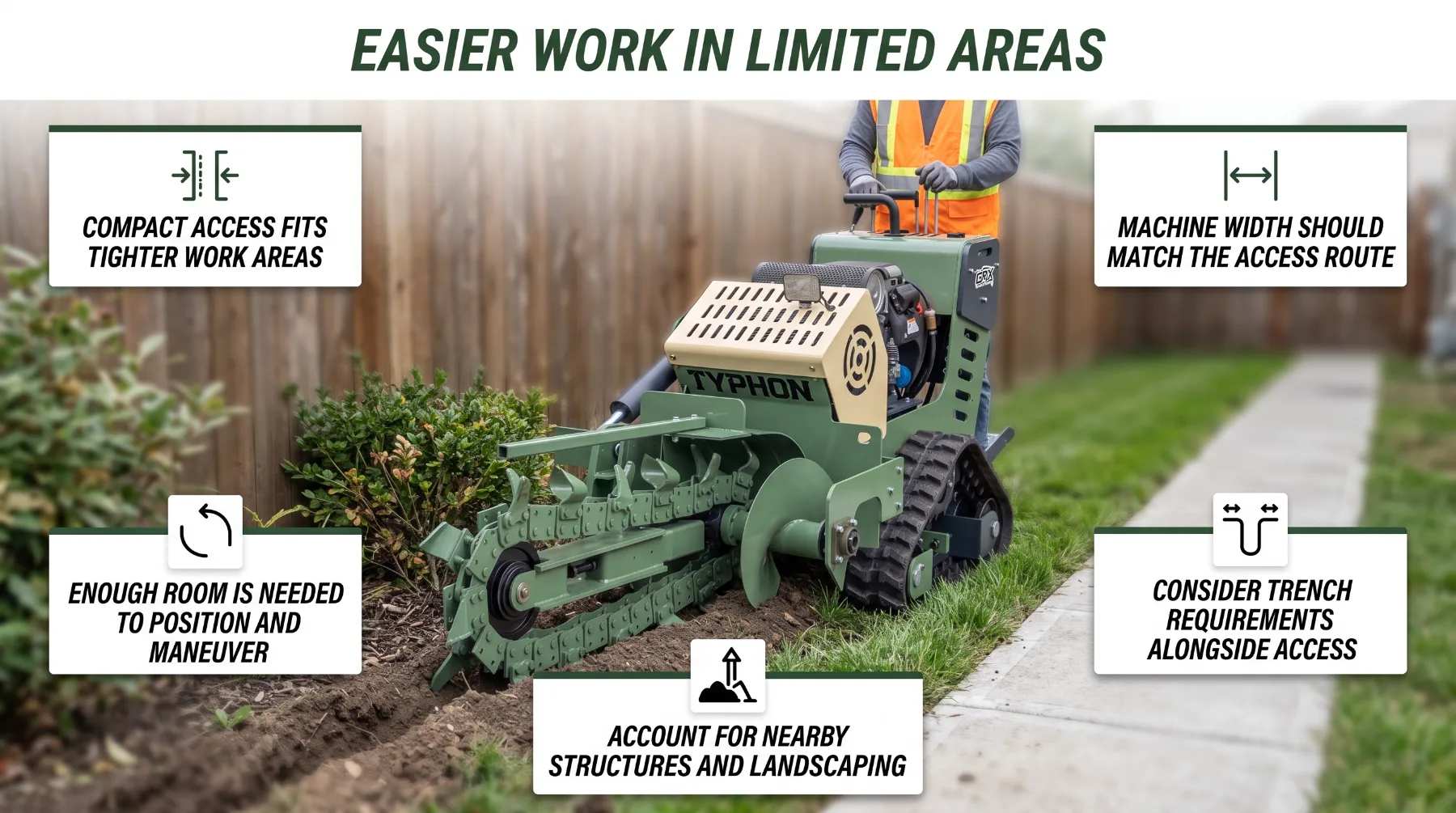
Many utility projects take place around homes, landscaping, sidewalks, driveways, and other existing features where working space is limited. Compact trenching equipment can access tighter areas where larger machines may have difficulty positioning or maneuvering. Its smaller working profile helps reach the trenching route while reducing the need to disturb surrounding areas.
Before starting, the machine’s width, available turning space, required trench dimensions, and nearby obstacles should be considered together. A machine that fits through the access point still needs enough room to operate and turn effectively.
- Compact Access: Fits into tighter work areas where larger equipment may struggle.
- Working Width: Machine dimensions should match the available access route.
- Turning Space: Enough room is needed to position and maneuver the trencher.
- Trench Requirements: The required trench size should be considered alongside machine access.
- Surrounding Obstacles: Nearby structures, landscaping, sidewalks, and overhead obstacles should be accounted for before work begins.
Key takeaway: Compact trenchers can access tight areas around homes and existing features where larger excavators struggle, but machine width, turning space, trench dimensions, and obstacles must be evaluated first.
Matching Cutting Equipment to Soil
Ground conditions have a major effect on how a trencher performs, and no single setup handles every soil equally well. Loose soil cuts very differently from compacted clay, and roots, gravel, and harder ground each present their own demands. Recognizing what the route holds is the first step toward getting clean, efficient cutting rather than a struggle.
This is where matching the cutting equipment to the material makes a real difference. Selecting a suitable chain and the right cutting teeth for the expected ground helps the machine cut effectively while reducing unnecessary wear on the digging components. The right teeth for hard or rocky ground protect both performance and the equipment, whereas a mismatched setup can slow the work and wear parts faster than they should. Choosing cutting equipment to suit the soil is a straightforward way to protect both productivity and the machine.
Key takeaway: Soil type strongly affects trenching, so selecting a suitable chain and cutting teeth for the expected ground improves cutting and reduces unnecessary wear on the digging components.
Maintaining Required Trench Dimensions
Utility installations usually call for a specific trench depth and width to suit the line going in, and holding those dimensions matters as much as cutting the trench in the first place. A trench that drifts off depth or width can leave the installation short of its requirements, creating problems that surface long after the machine has moved on.
The challenge is that ground conditions change along a route, and those changes can pull the cut off its target if the operator isn’t attentive. Consistent machine movement and proper depth control are what keep the trench true from start to finish. By advancing steadily and managing depth as the soil varies, the operator produces a trench that stays matched to the planned installation across its full length. That consistency is what makes the finished trench genuinely fit for the line it’s meant to carry.
Key takeaway: Utility work often requires a specific trench depth and width, so consistent machine movement and proper depth control help maintain those dimensions as ground conditions change along the route.
Reducing Unnecessary Excavation
A narrow trench disturbs less ground than a wider excavation method, and that reduction is more than a convenience. It has real consequences for the work that follows. When the cut stays focused, there’s simply less soil moved, less disruption to the surrounding area, and less to put right afterward.
This matters most when the route passes through finished areas, such as established lawns, landscaping, or paved surfaces, where excessive digging would create a substantial restoration job. Keeping the excavation narrow limits that downstream work and helps preserve the areas around the trench. That said, the excavation method should always be based on the project specifications and the actual site conditions. A trencher’s narrow cut is a strong option where it fits the requirements, but the right approach is the one the project and the ground call for.
Key takeaway: A narrow trench disturbs less soil than wider methods, reducing restoration work through finished areas, though the excavation method should always follow project specifications and site conditions.
Conclusion
Trenchers provide a dedicated method for producing narrow, continuous excavations for underground utility installation, using a digging chain or wheel to cut along a defined route while controlling trench depth and width. Narrow excavation reduces the volume of soil removed and can limit backfilling and surface restoration requirements when permitted by project specifications. Continuous cutting also supports steady production on long utility runs compared with intermittent bucket excavation, while compact machine dimensions can improve access in restricted areas when sufficient clearance and turning space are available. Cutting chain or tooth configuration should be matched to soil conditions because compacted soil, rock, roots, and abrasive material can increase cutting resistance and component wear. Consistent forward travel and depth control help maintain the required trench dimensions as ground conditions change. Before cutting, operators should verify underground utilities, confirm the required trench dimensions, inspect the route for obstacles and access limitations, and select cutting equipment suited to the material. Matching the trencher, cutting system, operating technique, and excavation requirements supports efficient trenching while maintaining the specified trench profile and minimizing unnecessary excavation.
Frequently Asked Questions
What types of utilities can a trencher install?
A trencher can prepare narrow, continuous trenches for electrical cables, communication lines, irrigation systems, pipes, and other utilities, provided the machine can meet the required trench dimensions. Different services need different depths and widths, so the trencher, cutting equipment, and settings should match the installation. A properly matched trencher can create the required trench while minimizing unnecessary excavation.
Why are trenchers useful for long utility runs?
Trenchers are effective for long runs because they cut continuously as the machine travels. Unlike bucket excavation, which requires repeated digging and repositioning, a trencher’s chain or wheel creates a continuous trench along the route. This steady cutting action can improve productivity and provide a more consistent work pace, especially on long utility installations.
Can trenchers work around residential properties?
Yes. Compact trenchers can access tighter areas around homes, landscaping, sidewalks, and driveways where larger equipment may have difficulty maneuvering. Before cutting, check available space, machine width, turning room, trench dimensions, and nearby structures. Existing underground utilities must also be located and verified before excavation. Proper planning helps minimize surface disturbance and supports safer trenching.
What affects trencher cutting performance?
Cutting performance depends on soil type, ground hardness, roots, rocks, cutting-chain configuration, teeth, machine power, and operating speed. Hard or obstructed ground places greater demands on the machine and cutting components. Matching the teeth and chain to the material and maintaining a steady travel speed helps produce cleaner cuts and reduce unnecessary wear. Good performance comes from matching the machine and cutting system to the actual ground conditions.