

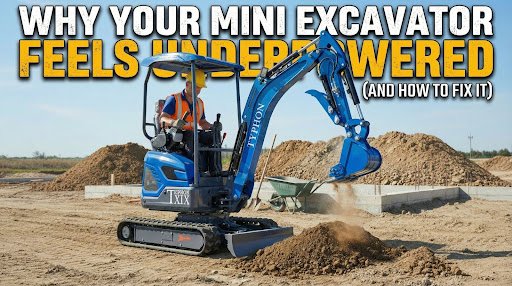
Few things are more frustrating on a job site than jumping into the cab of your mini excavator, ready to tackle a trench or load a truck, only to find the machine feeling sluggish and weak. You pull the joystick, expecting that familiar surge of hydraulic power, but instead, the arm moves slowly, the bucket struggles to curl, or the tracks barely have enough torque to turn in soft soil.
When a machine feels underpowered, it doesn’t just slow down your day; it creates a safety hazard and can indicate looming mechanical failure. Many operators immediately fear the worst—a blown engine or a destroyed hydraulic pump—but the reality is often much simpler. Power loss in compact equipment usually stems from a specific set of maintenance oversights or operational errors. Before you call for an expensive service truck, it is worth understanding the mechanics behind the muscle.
By troubleshooting the most common culprits of low performance, you can often restore your machine to full strength without a massive repair bill. Let’s break down why your mini excavator might be feeling weak and the practical steps you can take to get it back in fighting shape.
The Lifeblood of Power: Hydraulic Fluid Issues
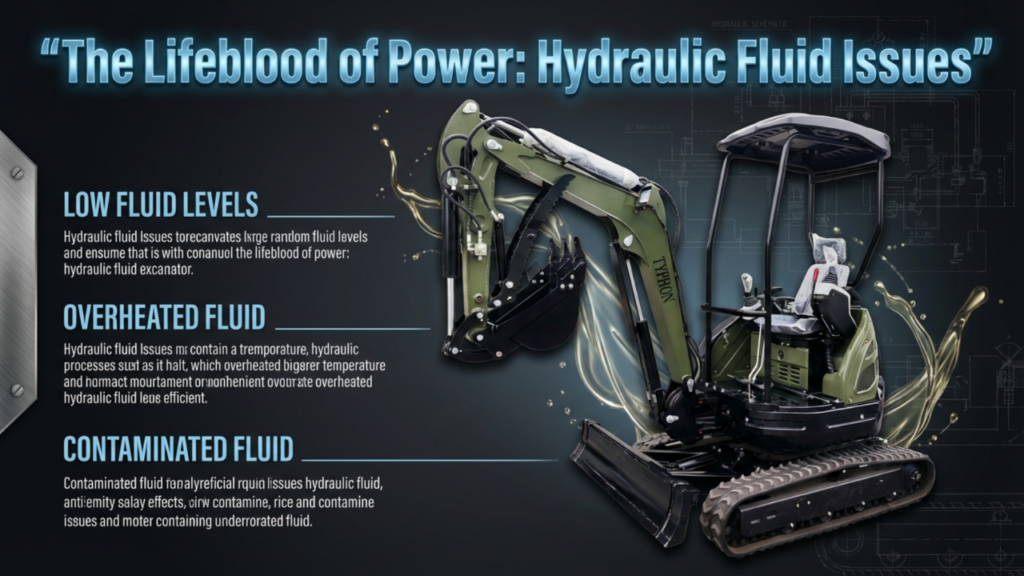
The hydraulic system is the heart of your mini excavator. The engine might provide the initial rotation, but the hydraulic fluid transmits that energy to the cylinders and motors that actually do the work. If your machine feels weak, the hydraulic fluid is the first place to look.
Low Fluid Levels
It sounds incredibly simple, but low hydraulic fluid is a leading cause of intermittent power loss. If the reservoir is low, the pump may suck in air along with the oil. Air is compressible, unlike fluid, which means the pressure that should be moving your boom is instead being wasted compressing air bubbles. This often results in “jerky” or spongy movements. Check your sight glass or dipstick with the machine on level ground and the arm in the service position. Top it off with the manufacturer-specified fluid if it’s low.
Overheated Fluid
Hydraulic fluid has an optimal operating temperature range. When the fluid gets too hot, its viscosity drops, turning it thin and watery. Thin oil slips past the internal seals of the pump and valves more easily, leading to a drop in system pressure. If your machine starts the day strong but gets progressively weaker as you work, overheating is a likely suspect. Check your hydraulic cooler for debris. Dust, leaves, and mud can clog the fins, preventing the system from shedding heat. A simple pressure wash of the radiator and cooler can often restore performance instantly.
Contaminated Fluid
Dirt is the enemy of hydraulic power. If your fluid is dark, milky, or smells burnt, it has been compromised. Contaminants can score the precision surfaces inside your hydraulic pump, leading to internal bypassing where fluid leaks back into the reservoir instead of going to the cylinders. Regular fluid changes are not just suggestions; they are essential for maintaining the pressure required for breakout force.
Restriction in the System: Filters and Lines
Even if your fluid is clean and full, it needs a clear path to flow. A blockage anywhere in the system acts like a kink in a garden hose—pressure builds up behind the blockage, but barely a trickle comes out the other end.
Clogged Hydraulic Filters
The hydraulic return filter and the pilot filter are designed to trap contaminants before they damage sensitive components. Over time, these filters get packed with debris. As they clog, they restrict the flow of oil. Modern machines often have bypass valves that open when a filter is clogged to prevent starvation, but this means unfiltered oil is circulating, and flow dynamics are altered. If you haven’t changed your hydraulic filters according to the maintenance schedule, do it now. It is one of the cheapest fixes for a sluggish machine.
Fuel Filters and Engine Starvation
Sometimes the problem isn’t the hydraulics at all; it’s the engine struggling to drive the pump. If your fuel filter is clogged, the engine won’t get enough diesel to maintain RPMs under load. You might notice the engine bogging down or sounding strained when you try to lift a heavy load. If the engine speed drops, the hydraulic pump speed drops, and you lose flow. Replace both the primary and secondary fuel filters to ensure your engine is delivering full horsepower to the pumps.
The Hidden Culprit: Pilot Control Issues
This version naturally weaves in your brand name and targets search phrases that people use when their machines are breaking down, and they are looking for solutions (or new equipment).
When troubleshooting a mini excavator with slow hydraulic functions, it’s crucial to understand how pilot controls work. In modern equipment, like the lineup from TYPHON Machinery, your joysticks don’t directly move the main valves. Instead, they send a low-pressure signal to open the main control valve.
If that pilot pressure is too low, the main spool valves only open partially, severely restricting hydraulic flow. If your excavator is experiencing weakness across all operations—including tracking, swinging, and digging—a drop in pilot pressure is usually to blame. This typically points to a clogged pilot filter or a failing pilot gear pump. By hooking a gauge to the pilot test port, a mechanic can quickly verify the issue. Often, a simple filter replacement or relief valve adjustment is all it takes to get your excavator running at peak performance again.
Wear and Tear: Internal Leakage
As machines age, the seals inside the hydraulic cylinders and motors wear out. This leads to internal leakage, where fluid bypasses the piston seal and moves to the low-pressure side of the cylinder without doing any work.
Cylinder Drift
A classic sign of internal cylinder leakage is “drift.” If you lift the boom and leave it suspended in the air with the engine off, does it slowly settle to the ground? If so, the seals in the boom cylinder are likely shot. When you are digging, that same leakage prevents the cylinder from holding pressure, making the machine feel weak when you try to curl the bucket through tough ground. Re-sealing a cylinder is a standard maintenance task that can drastically improve breakout force.
Worn Hydraulic Pump
The hydraulic pump is a wear item. Over thousands of hours, the tight tolerances inside the pump open up. When this happens, the pump can no longer generate the high pressure needed for heavy lifting. If you have ruled out filters, fluid, and engine issues, and the machine is still weak when the oil gets hot, a flow and pressure test will reveal if the pump itself is tired. While replacing a pump is a larger expense, it restores the machine to factory specs.
Operator Error: Modes and Attachments
Sometimes, the machine is fine, but the setup is wrong. Mini excavators are versatile tools, but they require the operator to configure them correctly for the task at hand.
Incorrect Working Mode
Many modern excavators feature different working modes, such as “Eco,” “Standard,” and “Power.” If you or a previous operator left the machine in “Eco” mode to save fuel, the engine RPMs and hydraulic response will be limited. Always check your display panel to ensure you are in the correct mode for heavy digging.
High-Flow vs. Standard Flow
If you are running a powered attachment like a brush cutter or an auger and it feels weak, check your flow settings. Trying to run a high-flow attachment on a standard-flow circuit will result in dismal performance and can damage the attachment. Conversely, if the auxiliary flow is set too low in the computer settings for a specific tool, it won’t spin at the rated speed. Verify that your machine’s flow output matches the attachment’s requirements.
Track Tension
While it doesn’t affect digging power, overly tight tracks can make the machine feel sluggish when traveling. High track tension creates immense friction in the undercarriage, robbing horsepower that should be used for movement. Check your track sag and adjust the tension grease valve to the manufacturer’s specifications.
Conclusion
A weak mini excavator is rarely a mystery; it is usually a symptom of a specific restriction or wear point. By systematically checking the basics—fluid levels, temperature, filters, and settings—you can often isolate the problem without needing a complete overhaul.
Start with the simple maintenance items. Change your filters, check your fluid quality, and clean your cooling package. If the problem persists, move on to pressure testing the pilot and main systems. Regular preventative maintenance is the best defense against power loss. Keeping your hydraulic system clean and cool ensures that when you pull that lever, the machine responds with the full force you paid for. Don’t let a sluggish machine slow down your business; take control of your maintenance and keep your operation moving.