
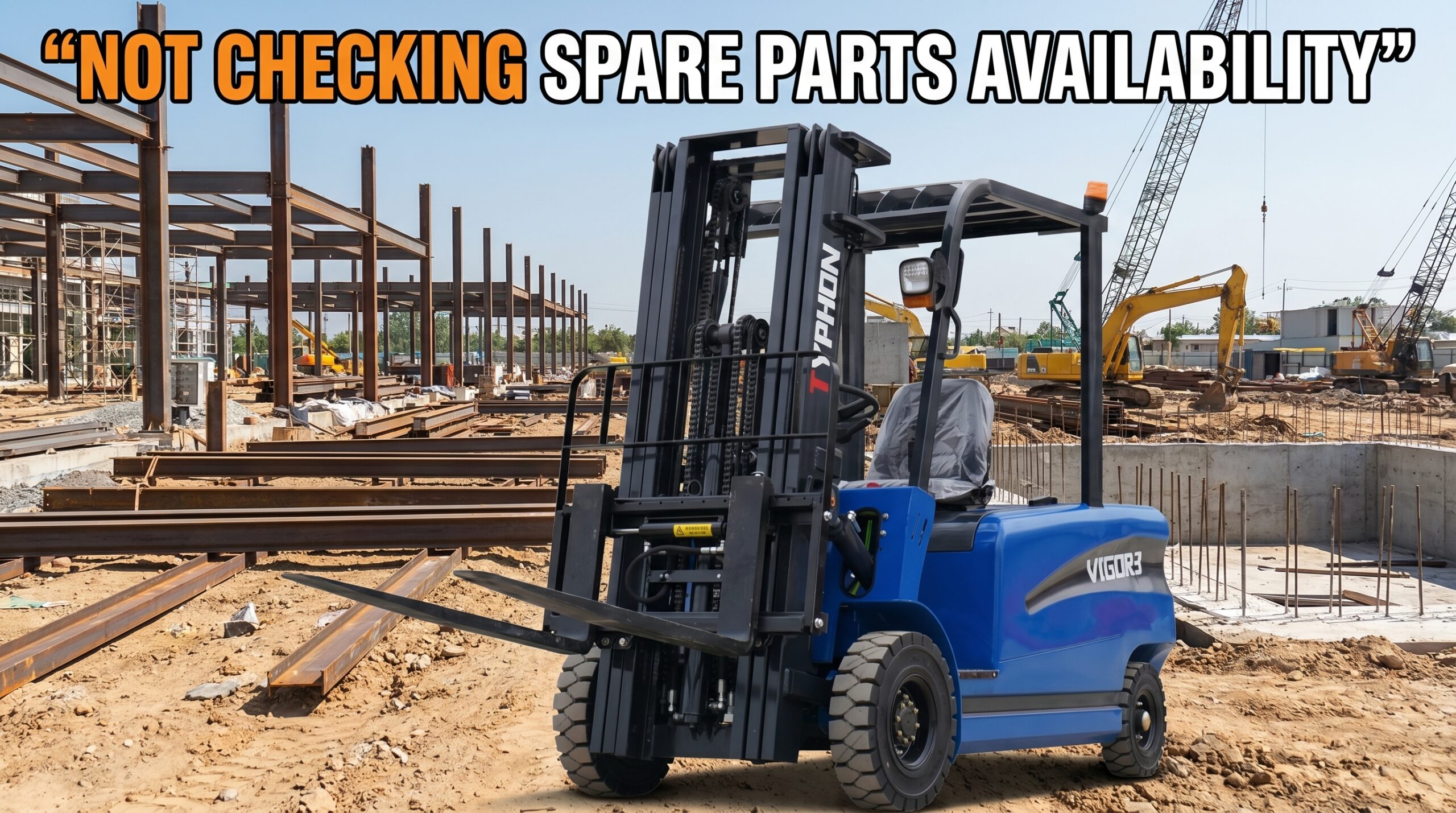
Purchasing a new piece of heavy machinery usually feels like a massive step forward for your contracting business. You review the impressive specifications, negotiate a great financing rate, and admire the shiny new asset as it arrives on your job site. However, many fleet owners completely overlook a hidden threat that can instantly turn a profitable investment into a massive financial liability.
Buying a machine without verifying the supply chain behind it is a dangerous gamble. When a critical component fails, the machine becomes completely useless until you secure the right replacement part. If that part sits in an overseas warehouse or faces massive production backlogs, your entire project grinds to a devastating halt.
We understand that your professional reputation and your bottom line depend entirely on keeping your fleet operational. In this comprehensive guide, we will explore the severe risks of ignoring equipment spare parts availability during the purchasing process. You will learn exactly how repair delays crush your profitability, and we will provide actionable strategies to evaluate dealer networks before you sign a contract.
The Hidden Danger of the Initial Purchase
Contractors frequently fixate entirely on the initial purchase price of a machine. You want the best deal possible, which often leads to considering lesser-known equipment brands or manufacturers with limited local support. While the upfront savings look great on paper, this short-sighted approach creates massive vulnerabilities for your company.
A machine only generates revenue when it actively moves dirt, lifts materials, or grades surfaces. The moment an excavator blows a proprietary hydraulic pump, the initial purchase savings completely evaporate. If the manufacturer does not maintain a robust domestic parts inventory, you suddenly face an operational nightmare.
Evaluating a machine requires looking far beyond the steel and the engine specifications. You must view the equipment as part of a much larger support system. Securing absolute confidence in equipment spare parts availability ensures that your crew can overcome inevitable mechanical failures quickly and efficiently.
How Unplanned Downtime Crushes Profitability
To truly understand this risk, you must accurately calculate the true cost of equipment downtime. The financial damage extends far beyond the price of the actual replacement part and the mechanic’s labor rate. When a machine stops working, it triggers a chain reaction of expenses that actively drain your working capital.
The Burden of Idle Labor and Wasted Resources
When a critical piece of machinery fails, the crew relying on that machine instantly stops working. If your primary trenching excavator breaks a specialized drive motor, your pipe-layers and operators stand around waiting. You still pay their hourly wages, but they produce absolutely zero revenue for your company.
Furthermore, surrounding equipment also becomes inefficient. The dump trucks scheduled to haul material away from the excavator now sit idle. You continue to pay fuel costs, insurance premiums, and finance charges on an entire fleet that cannot operate effectively. Poor equipment spare parts availability multiplies your financial losses across your entire job site every single hour the machine remains broken.
Emergency Rental Expenses
You cannot simply tell your clients that a project will halt for three weeks while you wait for a replacement part to clear customs. Your contracts feature strict deadlines and severe financial penalties for missing those milestones. To keep the project moving, you must immediately secure a temporary replacement machine.
Renting heavy equipment at the last minute forces you to pay premium daily rates. You absorb the cost of emergency delivery fees and the rental charges, all while continuing to make payments on your broken machine. This scenario aggressively eats away at your tightly calculated profit margins, transforming a highly profitable job into a break-even scenario or worse.
Paying Premium Prices for Emergency Shipping
Even if a manufacturer eventually locates the necessary part, poor local inventory forces you into another terrible financial position. If the part sits in a distribution center three states away, standard shipping takes days. You do not have days to wait, so you authorize expensive emergency overnight freight.
Heavy equipment parts often weigh hundreds of pounds. Overnighting massive steel gears, hydraulic cylinders, or engine blocks costs an absolute fortune. You end up paying shipping fees that sometimes rival the cost of the actual component.
When you prioritize equipment spare parts availability during your initial purchase, you completely eliminate these desperate shipping expenses. You partner with local dealerships that stock these heavy, critical components right in your local area. Your mechanic simply drives across town, picks up the part, and gets the machine running the very same day.
Evaluating the Dealer and Manufacturer Network
Protecting your business requires a proactive approach to fleet management. You must vet the dealership and the manufacturer just as rigorously as you vet the machine itself. Building a reliable fleet means demanding transparency from the people selling you the equipment.
Local Stock vs. Regional Warehouses
Before you agree to buy a machine, visit the local dealership’s parts counter. Ask specific, pointed questions about their inventory strategies. You need to know what percentage of replacement parts they keep physically in their building versus what they must order from a regional hub.
Ask them to run a quick inventory check on common high-wear items for the exact machine you want to buy. Request availability data on alternators, starter motors, primary hydraulic hoses, and specialized sensors. If the dealer admits they must order basic components from another state, you should seriously reconsider the purchase.
The Risk of Proprietary Components
Certain manufacturers intentionally design their machines using highly proprietary components. They do this to force you back to their dealership for every single repair. While this benefits their revenue stream, it puts your operations at severe risk if their supply chain falters.
Investigate whether the machine utilizes standardized components. For example, does it feature a globally recognized engine brand like Cummins or Kubota? If so, you have multiple avenues for securing engine parts if the primary equipment dealer runs out of stock. Machines that rely entirely on exclusive, single-source parts represent a massive gamble when global supply chains experience unexpected disruptions.
The Long-Term Impact on Fleet Reliability
Your commitment to your clients relies entirely on your ability to deliver consistent results. When you struggle constantly to source parts for your machinery, your professional reputation takes a direct hit. Project owners and general contractors notice when your equipment constantly breaks down and remains idle for days.
Protecting Your Professional Reputation
In the construction industry, trust and reliability win future contracts. If your company develops a reputation for missing deadlines due to broken equipment, clients will simply hire your competitors. They do not care why the machine is broken; they only care that the project has stopped.
Ensuring exceptional equipment spare parts availability allows you to project total professionalism. When a machine inevitably fails, you resolve the issue quietly and immediately. You keep the dirt moving, you meet your deadlines, and you prove to your clients that you possess the operational capacity to handle major projects smoothly.
Maximizing Resale Value
Eventually, you will need to sell the machine and upgrade your fleet. The secondary market places a heavy premium on machinery backed by robust parts networks. Buyers naturally avoid obscure brands or orphaned machine models because they know they will struggle to maintain them.
When you purchase equipment known for excellent parts support, the machine holds its financial value significantly better over time. You recover a much larger percentage of your initial investment when you sell it, driving down your total cost of ownership and strengthening your company’s balance sheet.
Actionable Steps Before Signing the Contract
Do not let the excitement of a new acquisition blind you to the operational realities of heavy construction. Take absolute control of the purchasing process by demanding proof of support.
First, request a parts availability guarantee in writing from the dealership. Many premium dealers offer programs that guarantee critical parts delivery within twenty-four hours, or they cover the cost of a rental machine. Securing this commitment proves the dealer stands firmly behind their product.
Second, speak directly with other local contractors who operate the same brand of equipment. Ask them unfiltered questions about their experiences with the dealer’s parts department. Real-world feedback from your peers provides the most accurate picture of what you can expect when you eventually need an emergency repair.
Conclusion
Securing the long-term success of your contracting business means managing risk at every possible level. Buying heavy machinery without confirming the supply chain is a completely preventable mistake that destroys project timelines and drains your profits.
By prioritizing equipment spare parts availability, you take total control over your operational costs. You protect your crew from crippling downtime, you eliminate desperate overnight shipping fees, and you guarantee your clients reliable, consistent performance. Always vet the local dealership, demand transparency regarding their inventory, and choose manufacturers that empower you to keep your fleet moving forward. When you buy a machine backed by an ironclad parts network, you invest in the permanent profitability of your business.