
Purchasing heavy machinery requires a massive capital investment. You expect that investment to generate revenue continuously and reliably. However, if your equipment only works for one specific type of job, it sits idle the moment that niche market slows down.
Smart business owners mitigate this financial risk by investing in multi industry construction equipment. Versatile machinery allows you to transition seamlessly between entirely different sectors. You can move from a municipal road repair project on Friday to a large-scale agricultural fencing job on Monday, all using the exact same machine.
In this comprehensive guide, we will explore the immense value of cross-functional heavy machinery. We will highlight the specific types of equipment that excel across various sectors, including agriculture, landscaping, and infrastructure. By the end of this post, you will understand how to maximize your fleet’s utilization and build a highly resilient, profitable business.
The Financial Power of Versatile Machinery
Building a fleet around highly adaptable machinery completely transforms your operational capabilities. You no longer restrict your company to a single revenue stream. Instead, you position your business to capture diverse contracts regardless of seasonal shifts or localized economic downturns.
Maximizing Asset Utilization
Every piece of equipment you own depreciates daily, regardless of whether the engine runs. To combat this hidden cost, you must keep your machines working. Multi industry construction equipment guarantees higher utilization rates because it serves multiple markets simultaneously.
When residential construction slows down in the winter, you can deploy your loaders to clear commercial parking lots of snow. When infrastructure spending dips, you can shift your excavators to support agricultural land clearing. High utilization directly accelerates your return on investment and strengthens your balance sheet.
Protecting Against Market Fluctuations
Relying entirely on one industry leaves your business vulnerable to economic turbulence. If you only own specialized paving machines, a sudden drop in highway funding halts your cash flow immediately. Versatility acts as a powerful financial shield.
Owning machines that work across agriculture, landscaping, and civil construction gives you unparalleled flexibility. You can pivot your operational focus to whichever sector currently holds the highest demand. This adaptability ensures your crews stay busy, your clients remain satisfied, and your company maintains steady growth.
Core Multi-Purpose Machinery Examples
Certain machines dominate the heavy equipment market specifically because of their incredible versatility. These assets serve as the foundational building blocks for a highly adaptable fleet. Here are the most effective pieces of multi industry construction equipment available today.
Skid Steer Loaders: The Ultimate Shape-Shifters
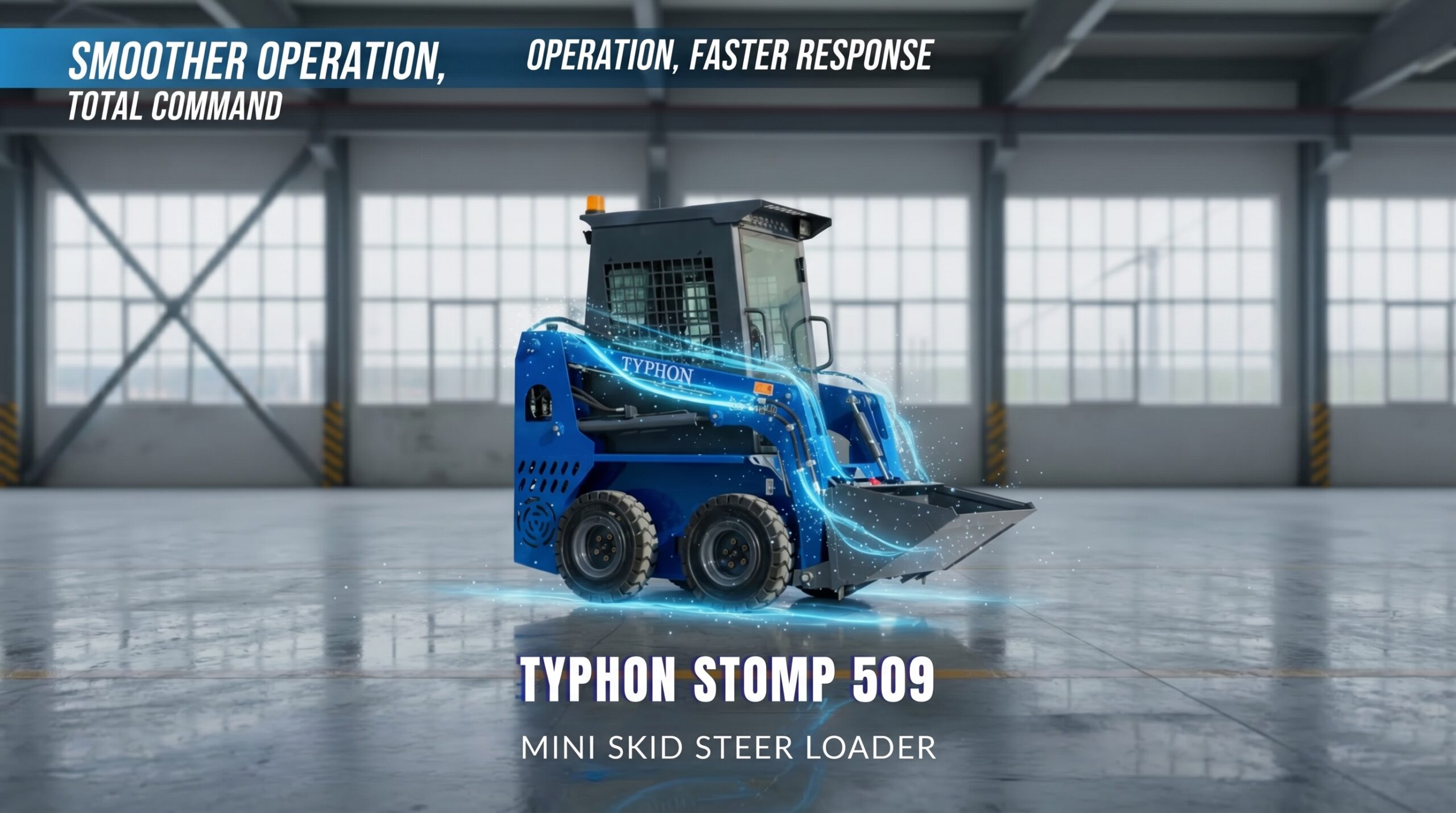
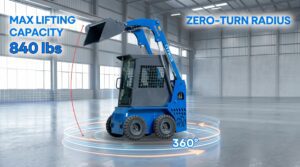
The skid steer loader represents the undisputed champion of versatility. Its compact frame allows it to navigate tight residential backyards just as easily as sprawling agricultural feedlots. The true power of the skid steer lies in its universal quick-attach system.
With the push of a lever, an operator can drop a standard dirt bucket and attach a specialized tool. You can equip a skid steer with a hydraulic auger for installing farm fencing, a trencher for laying irrigation pipes, or a forestry mulcher for clearing dense brush. A single skid steer effectively replaces three or four dedicated machines, saving you massive amounts of capital.
Mini Excavators: Precision in Tight Spaces
Mini excavators deliver relentless digging power in a remarkably compact footprint. Unlike full-sized excavators that require massive haul trucks and wide-open infrastructure sites, mini excavators easily access confined areas. They are essential tools for diverse applications.
Landscapers use them to sculpt retaining walls and plant large mature trees without destroying existing turf. Plumbers rely on them to trench precise water lines in established neighborhoods. Meanwhile, agricultural operations use mini excavators to maintain crucial drainage ditches and repair vital irrigation canals. Their rubber tracks minimize ground disturbance, making them highly desirable across all sectors.
Telehandlers: Lifting Beyond Boundaries
Telehandlers merge the lifting capacity of a forklift with the impressive reach of a small crane. This hybrid capability makes them invaluable across entirely different work environments. They move heavy materials safely, efficiently, and with incredible precision.
On a commercial infrastructure site, a telehandler lifts pallets of heavy block to third-story scaffolding. On a large-scale farm, the exact same machine stacks massive hay bales or loads feed hoppers with a high-capacity bucket attachment. By investing in a telehandler, you secure a reliable material-handling asset that commands high rental rates across multiple industries.
Backhoe Loaders: The Two-in-One Workhorse
The backhoe loader combines a front-end loader and a rear excavator into one highly mobile unit. Because backhoes operate on pneumatic tires, they can drive themselves between job sites on local roads. This eliminates the need for expensive transport trailers for short-distance moves.
Municipalities rely heavily on backhoes for emergency water main repairs and general street maintenance. Agricultural contractors use them to repair farm roads, load gravel, and dig utility trenches. The backhoe loader provides exceptional value by delivering two distinct operational functions within a single, reliable machine.
Sector Breakdown: Where Versatile Equipment Thrives
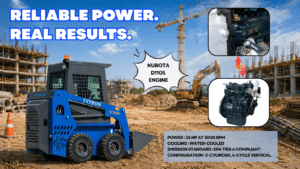
Understanding how to deploy your machinery across different sectors allows you to market your services more aggressively. Let us examine how multi industry construction equipment solves specific challenges in three major markets.
Expanding into Agriculture
Modern farming operations require massive amounts of earthmoving and material handling. However, many farmers do not want to purchase heavy construction equipment for occasional maintenance tasks. This creates a highly profitable gap for versatile contractors to fill.
You can deploy your skid steers to clear out livestock barns and manage manure stockpiles efficiently. Your mini excavators can reshape vital waterways and remove massive stumps from expanding crop fields. By marketing your versatile fleet to local agricultural producers, you unlock a steady stream of highly reliable, recurring work.
Scaling Landscaping Operations
Professional landscaping demands more than just lawnmowers and hedge trimmers. Large-scale hardscaping projects require serious mechanical muscle. Moving boulders, grading large estates, and installing massive water features require reliable heavy equipment.
Compact track loaders and mini excavators perfectly suit the landscaping industry. They maneuver through narrow residential gates and operate on delicate surfaces with minimal impact. When you equip these machines with specialized grapples and grading buckets, you empower your landscaping crews to complete massive projects in a fraction of the time.
Tackling Civil and Infrastructure Projects
Infrastructure development forms the backbone of the heavy equipment industry. Even small-scale municipal projects require a diverse range of machinery. Road repairs, sewer installations, and utility upgrades demand reliable, powerful equipment.
Your versatile telehandlers manage heavy pipe deliveries and stage materials safely along busy roadways. Your backhoe loaders handle rapid trenching and immediate backfilling for electrical conduit installations. When you maintain a versatile fleet, you position your company to win lucrative government and municipal infrastructure contracts.
How to Choose the Right Versatile Machinery
Selecting the best multi industry construction equipment requires careful planning and a deep understanding of your regional market. You must evaluate machinery based on its true operational flexibility rather than just its raw horsepower.
Prioritizing Attachment Compatibility
A machine is only as versatile as the attachments it can run. When evaluating a new loader or excavator, you must scrutinize its auxiliary hydraulic flow rates. High-flow hydraulics allow the machine to power demanding attachments like cold planers, rock saws, and heavy-duty brush cutters.
Ensure the brand you choose utilizes standard, non-proprietary attachment couplers. This allows you to rent specialized tools from local dealers rather than buying them outright. Maximizing your attachment compatibility guarantees your machine can adapt to future industry demands.
Assessing Transportability
Versatile machinery must move easily between different types of job sites. If a machine requires a specialized heavy-haul permit every time you move it, its versatility drops significantly. You must consider the logistical costs of deployment.
Focus on equipment that fits safely on standard heavy-duty utility trailers pulled by standard commercial trucks. Compact track loaders, mini excavators, and standard backhoes generally meet these criteria. Ensuring high transportability keeps your logistical costs low and your daily operational efficiency high.
Conclusion
Securing the long-term profitability of your business demands absolute operational flexibility. Relying on niche markets leaves your company vulnerable to unpredictable economic shifts and seasonal slowdowns. You must build a fleet capable of chasing revenue wherever it currently exists.
Investing in multi industry construction equipment provides the ultimate financial safeguard. By prioritizing versatile machines like skid steers, mini excavators, and telehandlers, you ensure your assets remain highly utilized across agriculture, landscaping, and infrastructure. Evaluate your current fleet today, invest in high-quality attachments, and empower your business to dominate multiple lucrative markets with unwavering confidence and reliability.