
Every construction, landscaping, and agricultural project depends on machines that can move heavy materials safely and efficiently. When investing in heavy equipment, it’s important to understand exactly how much weight a machine can handle before it becomes unsafe or unreliable. This is where Rated Operating Capacity (ROC) becomes one of the most important specifications to consider.
Knowing this measurement helps keep job sites both productive and safe. Some operators assume a machine can lift anything that fits inside the bucket, but this misconception can lead to equipment damage, reduced performance, and serious safety risks for workers nearby.
In this guide, we will explain what Rated Operating Capacity means for skid steer loaders. You will learn how ROC is determined, why it affects daily productivity, and how it helps prevent dangerous overloading. Understanding this concept will help you choose the right skid steer for your specific job requirements.
What Is Rated Operating Capacity?
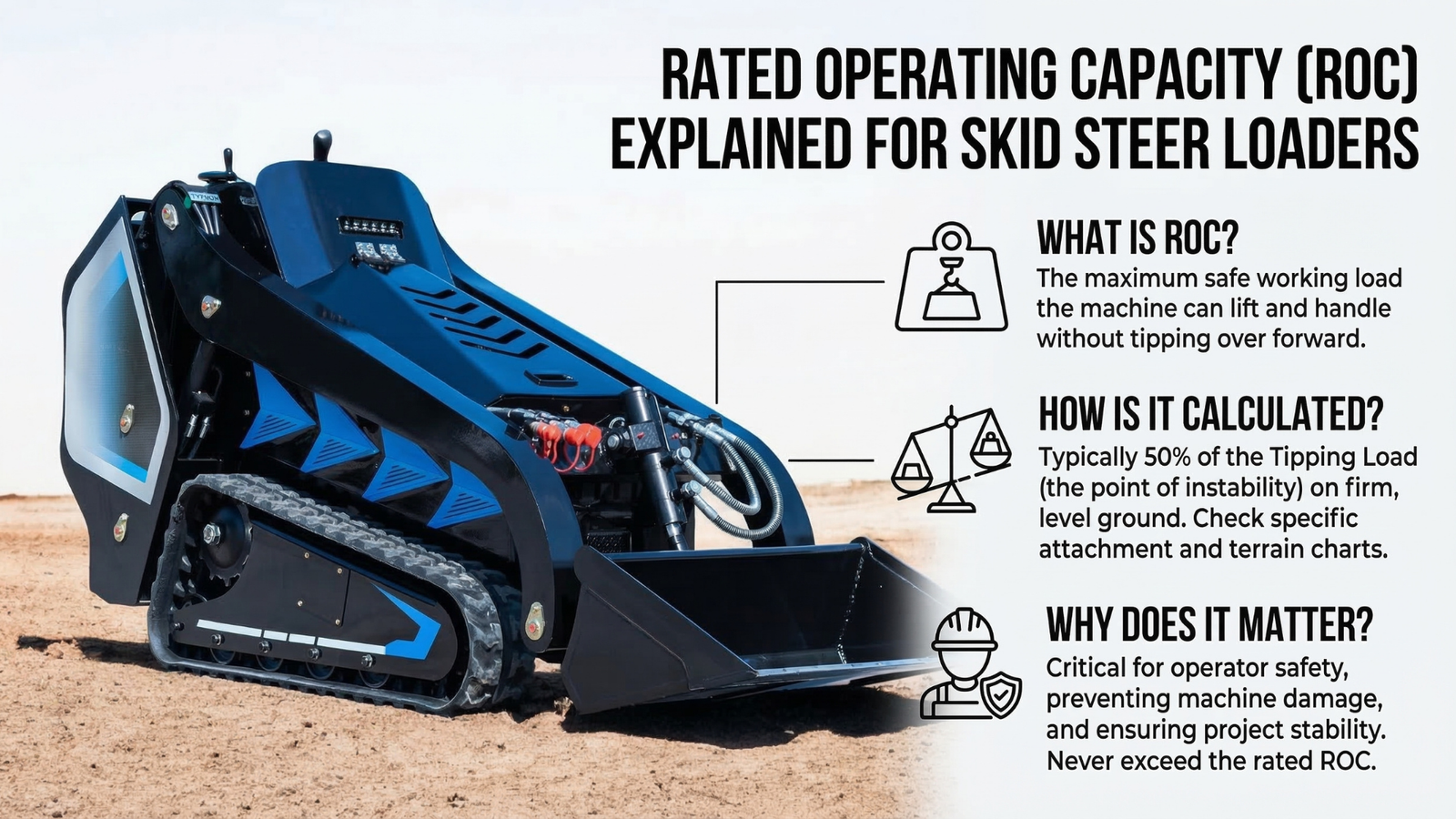
Rated Operating Capacity is a standardized measurement that dictates the maximum safe working load a machine can lift and maneuver. This number is determined through rigorous engineering tests and strict industry safety standards. For skid steer loaders, the industry standard calculates ROC as exactly 50 percent of the machine’s tipping load.
The tipping load is the absolute maximum weight a machine can lift before the rear wheels physically leave the ground. If a skid steer has a tipping load of 4,000 pounds, its Rated Operating Capacity is exactly 2,000 pounds. This 50 percent margin of error serves as a critical safety buffer for operators navigating uneven terrain or turning sharply with a heavy bucket.
When you see a skid steer loader capacity listed on a manufacturer’s brochure, it reflects this safe working limit. Operating within this limit ensures that the machine remains securely planted on the ground. This practice also ensures that the hydraulic systems, lift arms, and structural chassis operate within their designed stress tolerances.
The Science Behind the Numbers
The calculation of Rated Operating Capacity involves a careful balance of physics and mechanical engineering. Engineers must factor in the machine’s total operating weight, the length of its wheelbase, and the specific geometry of its loader arms. A machine with a longer wheelbase and more counterweight will naturally boast a higher ROC than a lighter, more compact model.
Hydraulic pressure also plays a significant role in determining how much a machine can lift. However, simply installing stronger hydraulic cylinders does not automatically increase the safe operating capacity. If the machine lacks the physical weight and structural footprint to anchor those strong hydraulics, the skid steer will simply tip forward when attempting to lift a massive load.
Why Skid Steer Loader Capacity Matters
Your job site performance relies entirely on matching your equipment’s capabilities to the materials you need to move. If your daily operations involve moving heavy pallets of retaining wall blocks, a low-capacity machine will severely bottleneck your progress. You will spend hours taking partial loads, wasting fuel, and burning through your labor budget.
Conversely, understanding skid steer loader capacity helps you optimize your fleet. A machine with an appropriately high ROC allows you to move maximum material with every single cycle. This efficiency translates directly into faster project completion times and higher profit margins for your operations.
Furthermore, knowing your capacity limits helps you utilize specialized attachments safely. Cold planers, forestry mulchers, and large augers are heavy tools that subtract from your overall lifting capacity. When you calculate the weight of the attachment alongside the weight of the material, you ensure that your machine remains stable and responsive.
The Dangers of Overloading Your Equipment
Ignoring the Rated Operating Capacity of your equipment is a guaranteed path to costly downtime and serious safety hazards. When you push a skid steer past its engineered limits, the immediate risk is a loss of stability. The rear wheels lose traction, making it impossible to steer the machine safely, which can easily lead to dangerous collisions or rollover incidents.
Overloading also inflicts severe, invisible damage on the machine’s internal components. The hydraulic pumps must work at maximum pressure just to hold the excessive weight, causing the hydraulic fluid to overheat rapidly. This excessive heat destroys seals and drastically shortens the lifespan of the entire hydraulic circuit.
Structurally, lifting loads heavier than the ROC places immense stress on the loader arm pivot pins and the main chassis. Over time, this constant abuse causes microscopic metal fatigue that eventually leads to catastrophic structural failure. Respecting your machine’s limits is the most effective way to ensure years of reliable service.
How ROC Impacts Job Site Performance
The agility and speed of a skid steer loader depend heavily on maintaining the correct weight balance. When you operate within the Rated Operating Capacity, the machine responds predictably to every joystick command. The weight remains centered between the axles, allowing the loader to pivot smoothly and accelerate without hesitation.
When you exceed the ROC, the machine becomes sluggish and incredibly difficult to maneuver. The heavy front end buries the front tires into the dirt, increasing rolling resistance and tearing up the job site terrain. This lack of control drastically slows down your cycle times and frustrates operators who must fight the machine to get the job done.
Maintaining proper capacity limits also preserves your fuel economy. A balanced machine glides across the site, requiring less engine horsepower to move from the material pile to the dump truck. By managing your loads carefully, you maximize your daily fuel efficiency while minimizing unnecessary wear on your tires and drivetrain.
Choosing the Right Skid Steer for Your Needs
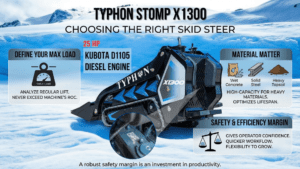
Selecting the right skid steer starts with analyzing the heaviest single object or material scoop you expect to lift regularly. You should never use a machine where your average load constantly pushes the absolute maximum limit of its ROC.
If you frequently move heavy, dense materials like wet concrete, solid steel beams, or saturated topsoil, investing in a higher-capacity machine is essential. Opting for a smaller machine simply to save on the initial purchase price can lead to substantially higher maintenance costs and reduced productivity over the equipment’s lifespan.
It is always better to have slightly more capacity than you need. A robust safety margin gives operators the confidence to work quickly and efficiently without constantly worrying about tipping the machine. It also provides the flexibility to take on heavier, more demanding projects as operations grow.
Evaluating Material Weights
To make an informed purchasing decision, you must familiarize yourself with the standard weights of common construction materials. A cubic yard of dry topsoil weighs significantly less than a cubic yard of wet gravel. Knowing these fundamental differences helps you calculate exactly how much Rated Operating Capacity you need on your site.
Always factor in the specific bucket size you plan to use. Using an oversized bucket on a low-capacity machine can increase the risk of overloading, as operators may be tempted to fill it completely. By pairing the right bucket size with an appropriate ROC, you create a perfectly balanced, highly efficient material handling system.
Maximizing Rated Operating Capacity Safely and Effectively
Reliable equipment with a well-engineered weight distribution provides exceptional Rated Operating Capacity in a compact, highly maneuverable footprint.
A well-designed chassis with heavy-duty counterweights and an optimized wheelbase keeps the skid steer firmly planted, even when the bucket is full. High-quality hydraulic systems deliver the breakout force required to tackle stubborn materials without over-stressing the engine or fluid circuits. Clearly labeled operating capacities help ensure operator safety and compliance with load limits.
A skid steer designed with structural integrity, operator comfort, and uncompromising lifting performance enables crews to move more material, finish jobs faster, and maximize operational efficiency on the job site.
Maintaining Your Skid Steer for Peak Performance
Even the most robust heavy equipment requires proactive maintenance to retain its factory-rated lifting capabilities. Over time, neglected maintenance can subtly decrease a machine’s safe operating capacity. The primary culprit for a loss of lifting power is degrading hydraulic fluid or failing hydraulic pump seals.
You must adhere strictly to recommended service intervals for hydraulic oil and filter changes. Contaminated fluid loses its ability to transmit maximum pressure, meaning your machine will struggle to lift loads it could previously handle with ease. Regular visual inspections of all hydraulic lines and lifting cylinders will help you catch minor leaks before they compromise your lifting power.
Additionally, you must maintain proper tire pressure on wheeled skid steers. Under-inflated tires drastically reduce the stability of the machine, artificially lowering your safe tipping load and putting your operator at risk. By keeping your machine in perfect mechanical condition, you ensure that your Rated Operating Capacity remains accurate and reliable day after day.
Conclusion
Understanding Rated Operating Capacity is fundamental to running a safe, efficient, and highly profitable heavy equipment operation. This critical metric dictates exactly what your machine can handle, protecting your operators from dangerous tipping hazards and safeguarding your equipment from severe mechanical damage.
By respecting these engineered limits, you guarantee smooth job site performance, extend the lifespan of your hydraulic components, and improve your overall operational efficiency. Take the time to evaluate the specific material weights your crew handles on a daily basis. Choosing the right skid steer requires matching these material demands with a machine that offers an adequate, confident safety margin.
When you are ready to enhance your material handling capabilities, look for equipment that offers the right balance of lifting power and stability to meet your project needs. Prioritize machinery that delivers reliable, heavy-duty performance and ensure your investment aligns with the demands of your operation.