

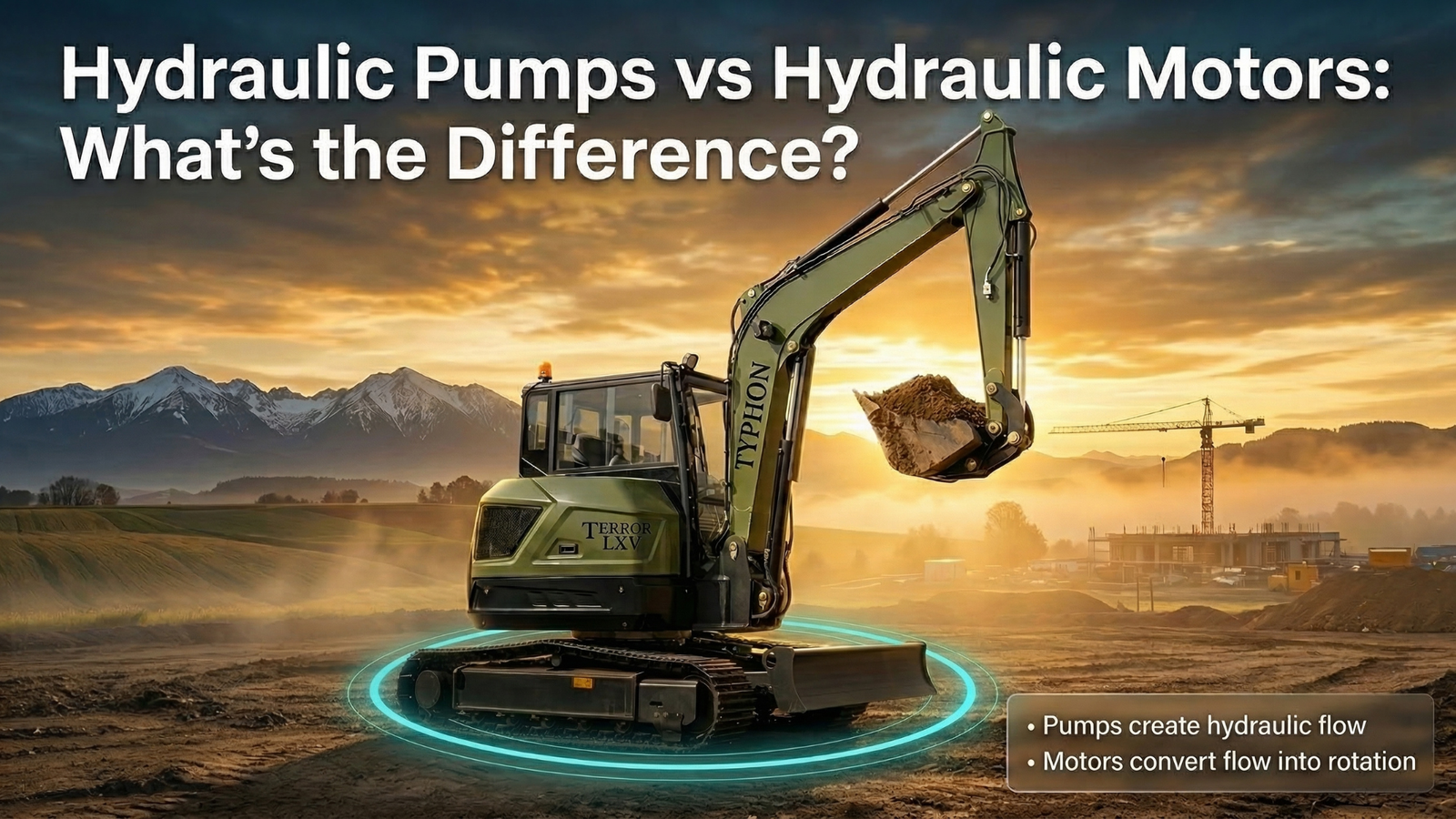
Heavy machinery relies on immense, precisely controlled force to tackle demanding tasks on construction sites, mines, and other heavy-duty environments. This force doesn’t come from the engine alone—it’s generated by a carefully engineered hydraulic system, where fluids, valves, and mechanical parts work together seamlessly. At the heart of this system are two critical components: the hydraulic pump and the hydraulic motor. While they may appear similar and share some mechanical principles, their functions are entirely opposite, and each plays a unique role in powering the machine.
Understanding the difference between pumps and motors is essential for operators, equipment owners, and maintenance professionals. A clear knowledge of how these components function not only improves efficiency and productivity but also allows potential problems to be spotted early, preventing minor issues from developing into costly repairs or downtime.
In this guide, we’ll take a detailed look at hydraulic pumps and motors, explaining how pumps generate the fluid flow that drives the system and how motors convert that flow into rotational force to perform work. We’ll also explore how these components work together to provide the smooth, reliable power necessary for heavy machinery operations, including advanced excavators and other equipment that demand precision, strength, and durability on every job site.
The Basics of Hydraulic Power Conversion
To understand the difference between a pump and a motor, you must first understand the fundamental principle of hydraulics. Hydraulic systems transmit power by using a pressurized fluid to multiply force. This process, known as hydraulic power conversion, relies on a continuous loop of energy exchange.
The cycle begins with a primary power source, typically a diesel engine. The engine provides raw mechanical energy by turning a heavy steel shaft. This rotating shaft connects directly to the hydraulic pump. The pump takes this mechanical rotational energy and converts it into fluid energy by pushing hydraulic oil through the system.
Once the fluid is in motion, it travels through high-pressure hoses and control valves until it reaches its destination. Often, that destination is a hydraulic motor. The motor receives this high-pressure fluid energy and converts it back into mechanical energy. This final mechanical energy drives the tracks, turns the cab, or spins an attachment, completing the power conversion cycle.
Understanding Hydraulic Pumps: The Heart of the Machine
The hydraulic pump acts as the heart of your heavy machinery. Just as a human heart circulates blood to power the body, a hydraulic pump circulates hydraulic oil to power the machine. The engine provides the initial force to turn the pump’s internal mechanisms, but the pump itself is responsible for moving the fluid.
A common misconception is that hydraulic pumps create pressure. In reality, pumps only create flow. They move a specific volume of fluid with every rotation of their internal gears or pistons. Pressure only develops when that flow meets resistance. This resistance comes from the heavy loads the machine is trying to lift or the friction of the fluid moving through narrow hoses.
When you command your excavator to lift a heavy bucket of compacted soil, you create massive resistance in the hydraulic circuit. The pump continues to push fluid against this resistance, causing the pressure to spike rapidly. A high-quality pump must withstand these extreme internal pressures without leaking or suffering structural failure, ensuring reliable performance under heavy loads.
Common Types of Hydraulic Pumps
Manufacturers utilize several different pump designs depending on the required flow rate and operating pressure of the machine. Gear pumps are the most common and robust option for many standard applications. They use two meshing gears to trap fluid and force it out the discharge port. They are incredibly reliable and cost-effective, making them a staple in many compact machines.
For applications requiring higher pressures and variable flow rates, manufacturers turn to piston pumps. These pumps use a rotating cylinder block containing several pistons. As the block rotates, the pistons move in and out, drawing in fluid and pushing it out under immense pressure. Piston pumps offer exceptional efficiency and power, making them the preferred choice for the main hydraulic systems in modern excavators.
Understanding Hydraulic Motors: The Muscle of the Machine
If the pump is the heart of the system, the hydraulic motor is the muscle. The motor is situated at the working end of the hydraulic circuit, where the actual labor happens. Its sole purpose is to take the high-pressure fluid flow generated by the pump and translate it into continuous rotational mechanical energy.
When pressurized hydraulic fluid enters the motor, it strikes internal gears, vanes, or pistons. Because the fluid is under extreme pressure and has nowhere else to go, it forces these internal components to move. This internal movement spins the motor’s output shaft. The amount of twisting force, or torque, the motor generates depends directly on the pressure of the fluid entering it.
The speed at which the motor rotates depends on the volume of fluid the pump delivers. If the operator increases the engine speed or opens a control valve further, more fluid flows to the motor, causing it to spin faster. This precise relationship between fluid flow and motor rotation gives operators incredible control over their heavy machinery.
Common Types of Hydraulic Motors
Just like pumps, hydraulic motors come in various designs to suit specific tasks. Gear motors are durable and simple, operating on the exact reverse principle of a gear pump. Pressurized fluid enters the housing, forces the gears to turn, and exits the other side. They are frequently used for spinning attachments like augers or rotary brush cutters.
Radial piston motors are highly specialized components designed to deliver massive torque at very low speeds. They feature pistons arranged like the spokes of a wheel around a central cam. As fluid pushes the pistons outward, they force the central shaft to rotate with immense power. These heavy-duty motors are ideal for driving the heavy steel tracks on large construction equipment.
Hydraulic Pumps vs Motors: A Direct Comparison
While a pump and a motor might use similar internal parts, their operational design is completely inverted. A pump absorbs mechanical horsepower from an engine to push fluid. A motor absorbs fluid horsepower from the pump to turn a mechanical shaft.
Because they perform opposite functions, their internal tolerances and sealing arrangements differ significantly. A pump draws fluid from a reservoir at normal atmospheric pressure, meaning its inlet side does not require extreme high-pressure seals. The outlet side, however, must contain the maximum pressure the system can generate.
A hydraulic motor, conversely, receives fluid at maximum system pressure right at its inlet. Therefore, the inlet side of a motor requires incredibly robust sealing to prevent the pressurized fluid from bypassing the internal mechanisms. Furthermore, many motors are designed to run in both directions, meaning both the inlet and outlet ports must be capable of handling high pressure.
Real-World Applications of Hydraulic Systems
To understand how hydraulic system components work together, it helps to look at a practical example in modern excavators. At the core of the machine’s movement and digging capabilities is the combination of a hydraulic pump and multiple hydraulic motors working in perfect coordination.
The main hydraulic pump, typically driven directly by the engine, continuously generates the fluid flow necessary to operate the entire system. It draws hydraulic oil from the reservoir and pushes it through the main control valve block, distributing high-pressure fluid to the parts of the machine that require it.
When the operator moves the travel levers, the control valves direct this pressurized fluid to the hydraulic drive motors located in the undercarriage. These motors convert the fluid energy into rotational torque, which turns the sprockets and moves the machine forward or backward across uneven or rough terrain. The precise control of fluid flow allows for smooth acceleration, braking, and maneuvering even under heavy load conditions.
Similarly, when the operator commands the upper structure to rotate, fluid is sent to the swing motor. This motor engages with a large ring gear attached to the chassis, enabling the upper house of the excavator to rotate smoothly and with precise control. This interplay between the pump and the various motors demonstrates the efficiency of hydraulic power conversion, turning pressurized fluid into controlled, mechanical motion that allows the machine to perform complex tasks with both power and precision.
Maintaining Essential Hydraulic System Components
Protecting your investment requires a commitment to proactive maintenance. Both pumps and motors rely on microscopic clearances between their moving parts to function efficiently. The single greatest threat to these components is fluid contamination.
Dirt, metal shavings, or water entering the hydraulic system will act as an abrasive paste. This contamination quickly scores the polished surfaces inside pumps and motors, causing internal leaks. As internal leakage increases, the pump loses its ability to generate flow, and the motor loses its ability to generate torque. The machine will become sluggish, unresponsive, and ultimately fail.
You must ensure that you change your hydraulic oil and filters strictly according to the manufacturer’s recommended intervals. Always clean the area around the hydraulic fill cap before adding fluid to prevent dirt from falling into the reservoir. By maintaining clean fluid and performing regular visual inspections for external leaks, you ensure the long-term reliability of your equipment.
Conclusion
The relationship between hydraulic pumps and motors is the foundation of modern heavy machinery. Understanding hydraulic pumps vs motors clarifies exactly how your equipment translates engine horsepower into raw, productive force. The pump faithfully generates the necessary fluid flow, while the motor expertly converts that flow into the mechanical action that drives your success on the job site.
By recognizing the distinct roles of these critical hydraulic system components, you can better appreciate the engineering behind your machinery. This knowledge empowers you to prioritize essential maintenance, recognize the early signs of component wear, and protect the profitability of your operation. When you invest in reliable equipment and maintain it with expertise, you ensure that your machinery always delivers the power and performance you demand.