
Buying a compact excavator is a major investment that can instantly change the speed and efficiency of your projects. However, walking into a dealership or browsing listings online can quickly become overwhelming. With machine weights ranging from less than 1 metric ton up to nearly 10 tons, the options are dense.
The most common mistake buyers make is focusing entirely on horse power or choosing a machine based on a single, unusually large project they might tackle once a year. If you buy an excavator that is too small, you will end up straining the hydraulic system, wearing out components prematurely, and wasting hours on slow cycle times. If you buy a machine that is too large, you will overspend on fuel, struggle to fit into tight workspaces, and potentially face expensive transport requirements.
Finding the sweet spot requires analyzing your daily jobsite realities, your transport setup, and the specific materials you handle. Here is a practical, grounded guide to choosing the right mini excavator size for your operation.
Understand the Main Weight Classes
Manufacturers categorize compact excavators by their operating weight in metric tons. While naming conventions vary slightly across brands, these machines generally fall into four primary size brackets, each suited to distinct types of work.
1 to 2 Metric Tons (Micro and Ultra-Compact)
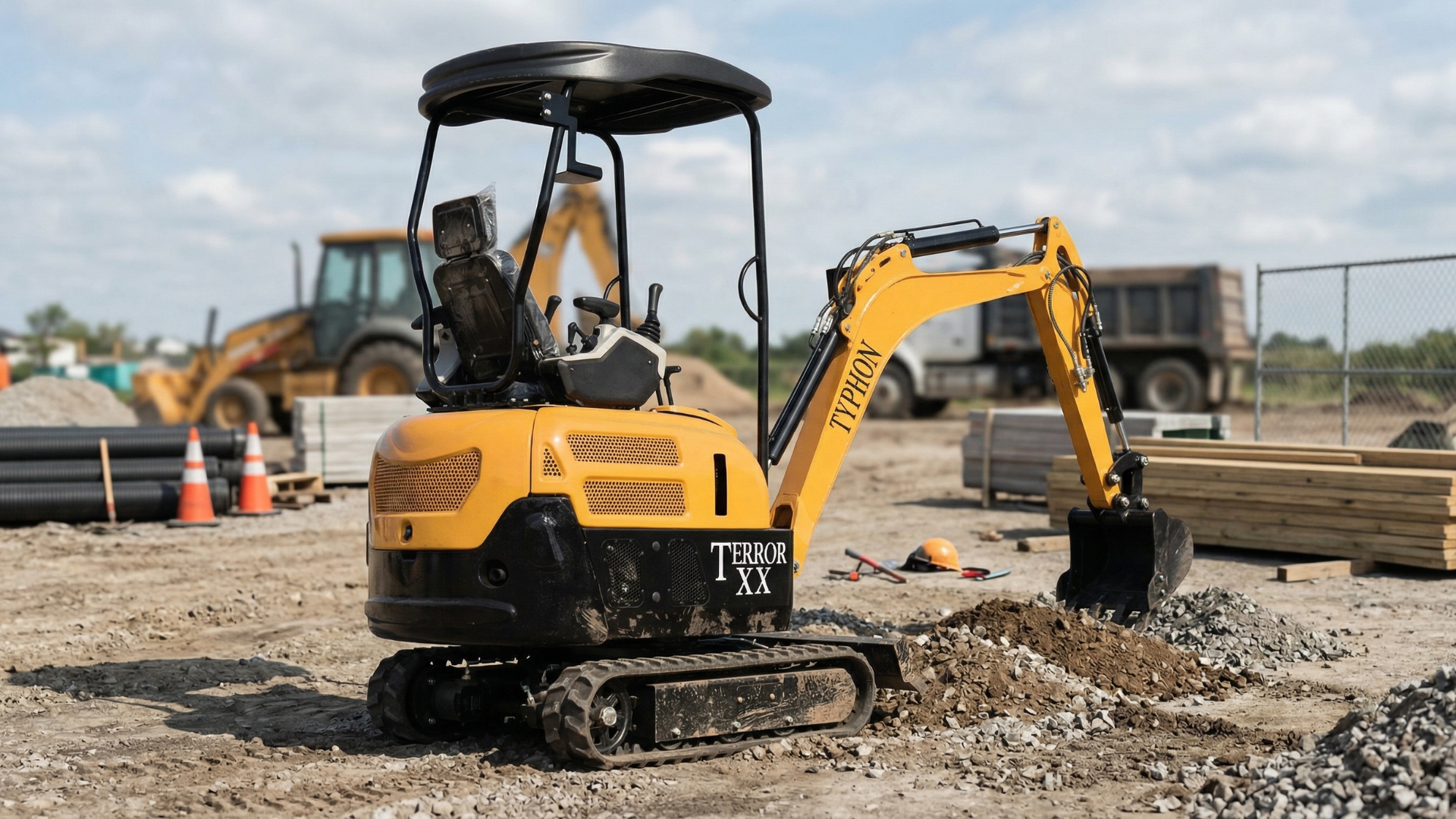
These are the smallest excavators on the market. They are designed specifically for tight residential areas, indoor demolition, and light landscaping. Many models in this class feature retractable tracks and a folding roll cage (ROPS), allowing them to pass through a standard yard gate or a domestic doorway. They exert very low ground pressure, which minimizes turf damage on established lawns. While incredibly nimble, their digging depth is usually limited to around 5 to 7 feet, and they lack the lifting power to move heavy stones or large concrete drainage pipes.
2 to 4 Metric Tons (The Residential Sweet Spot)
This bracket is highly popular among landscape contractors, residential utility crews, and serious property owners. These machines offer a substantial jump in hydraulic flow and bucket breakout force without becoming too heavy to manage. A 3-ton machine can comfortably dig trenches for water lines, clear small stumps, and load medium-duty dump trucks. They generally offer a digging depth between 8 and 10 feet, making them highly versatile for standard construction footings.
4 to 6 Metric Tons (The Contractor Standard)
If your daily work involves commercial site preparation, deep utility trenching, or setting heavy stone retaining walls, this class is often the ideal choice. These excavators bring serious production capabilities to the jobsite. They handle tough ground conditions, like hard clay or rocky soil, with much less strain. However, because they are wider and heavier, you lose the ability to slip through tight residential side yards, and you must look closely at your trailer capacity.
6 to 10 Metric Tons (Midi Excavators)
Often referred to as midi excavators, these machines sit on the border between compact and full-sized production equipment. They are common in civil construction, large-scale farming, and heavy roadwork. They offer deep digging depths, often exceeding 14 feet, and can handle large hydraulic attachments like heavy concrete breakers or tree shears. These are production-focused machines that require dedicated commercial transport.
Measure Your Tightest Jobsite Access Points
A machine can have the perfect hydraulic specifications, but it is useless if you cannot get it onto the workspace. Before choosing a size, take a hard look at where you actually work.
If you are a residential landscaper or a utility contractor working in established neighborhoods, your biggest constraint is often width. Fences, mature trees, structural walls, and overhead power lines dictate your maximum machine footprint. A 1.5-ton machine with an overall width of less than 40 inches can navigate a backyard gate easily, whereas a 5-ton machine will require removing sections of a customer’s fence to gain access.
Beyond physical width, consider tail swing configuration. Conventional tail swing machines feature a counterweight that extends past the tracks when the upper house rotates. This design provides excellent stability and lifting leverage, but it requires the operator to constantly watch the rear of the machine to avoid striking walls, trees, or vehicles. Zero tail swing (ZTS) machines keep the counterweight within the width of the tracks during rotation. ZTS models are perfect for tight spaces or working directly alongside traffic, though they sometimes carry a slightly wider track stance to maintain stability.
Evaluate Your Transport Limitations
Your transport setup should be a primary factor when choosing the right mini excavator size. Many buyers calculate the purchase budget for the machine itself but forget to factor in the cost of a new trailer or a larger tow vehicle.
Machines under 3.5 metric tons can typically be towed behind a properly equipped heavy-duty pickup truck using a standard dual-axle utility trailer. This makes logistics simple; a single worker can hook up the trailer, drive to the jobsite, and unload the machine without specialized licensing or heavy commercial haulers.
Once you move into the 5-ton class and above, the total package weight—including the excavator, trailer, fuel, and extra buckets—can easily exceed 14,000 to 15,000 pounds. Depending on your local jurisdiction and structural laws, hauling this weight may require a commercial driver’s license (CDL), a larger medium-duty dump truck, or specialized trailering permits. Always check your current truck’s towing capacity and trailer ratings before committing to a larger excavator size.
Match the Machine to Your Required Digging Depth and Reach
To ensure you buy a machine that can actually finish the work, look closely at the maximum digging depth, dump height, and overall reach. It is critical to give yourself a safety buffer here. If your primary task is digging 5-foot-deep utility trenches, do not buy a machine with a maximum digging depth of exactly 5 feet.
Operating an excavator at its absolute physical limit means you have to constantly reposition the machine, your bucket angles will be inefficient, and you will work at a much slower pace. To maintain high productivity, choose a size class where your average daily digging depth falls within roughly 60% to 70% of the machine’s maximum capability. This ensures you have plenty of reach to pile spoil piles far enough away from the trench edge to prevent cave-ins.
Furthermore, check the dump height if you plan to load trucks. A small 1.5-ton excavator may struggle to lift a full bucket high enough to clear the sideboards of a high-sided commercial dump truck, forcing you to build ramps or spend extra time spreading the load manually.
Analyze Hydraulic Flow and Attachment Needs
An excavator is fundamentally a mobile hydraulic power pack. If you only plan to dig dirt with a standard bucket, you can focus primarily on operating weight and reach. However, if you want to run demanding attachments, you must look at auxiliary hydraulic flow rates, measured in gallons per minute (GPM).
Attachments like hydraulic thumbs are relatively simple and work well on almost any size machine. They add immense value for picking up logs, rocks, or demolition debris. But if you plan to run high-demand tools such as a flail mower, an auger for deep post holes, or a concrete breaker, you need a machine with sufficient auxiliary hydraulic flow and pressure.
Smaller excavators often lack the hydraulic capacity to run these heavy attachments efficiently. If land clearing, brush cutting, or post-hole drilling is a core part of your business, stepping up to a 4-ton or 5-ton machine with a high-flow hydraulic option is usually necessary to keep those tools running without overheating the system.
Balancing Initial Cost Against Long-Term Value
Larger machines cost more upfront, consume more fuel, and require more expensive replacement parts, such as tracks and hydraulic hoses. However, they also complete jobs much faster, which reduces labor costs per project.
When making your decision, calculate your typical job duration. If a 2-ton machine takes eight hours to dig a foundation that a 5-ton machine can complete in two hours, the larger machine may justify its higher purchase price quickly through labor savings, provided you have enough consistent work to keep it busy. If the machine will sit idle in a yard for weeks at a time, a smaller, highly versatile model with lower overhead costs is often the safer financial choice.
Final Practical Advice
Before making a final purchase, try to rent the specific size class you are considering for a few days. Put it to work on an actual jobsite. Pay attention to how it handles your typical soil conditions, how easily it loads your trucks, and how comfortable the operator cab feels after a long shift. Checking daily service access points—like the oil dipstick, fuel filters, and grease zerks—is also crucial, as easy maintenance ensures the machine stays reliable for years to come.