
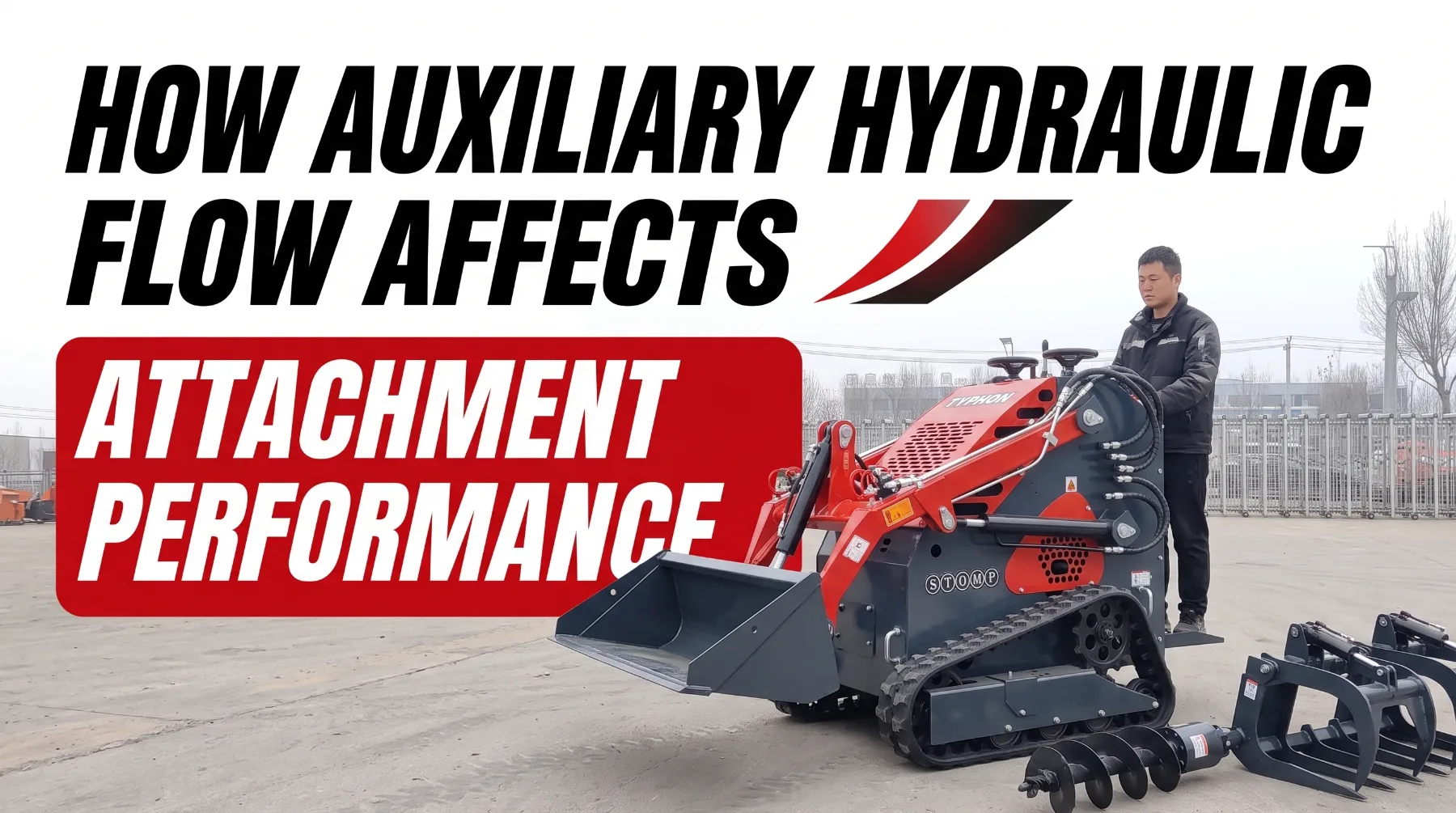
How Auxiliary Hydraulic Flow Affects Attachment Performance
A land-clearing contractor mounts a mulcher on a skid steer and rolls into a stand of thick brush, expecting the drum to chew through saplings the way the sales video promised. Instead, the drum bites in, slows, and stalls against the first cluster of dense growth, forcing the operator to back off and nibble at the work in small, frustrating bites. The engine has plenty of horsepower, the mulcher carries a solid reputation, and the operator knows the technique. Yet the tool keeps bogging down, turning a two-hour job into a half-day slog. The trouble hides in a number nobody checked closely before the machine left the lot: the auxiliary hydraulic flow feeding that drum. That single figure decides whether an attachment performs the way it was built to or fights the operator on every pass, and understanding the mechanics behind it is what separates a machine that earns its keep from one that disappoints.
Auxiliary hydraulic flow governs how well every powered attachment performs on a skid steer, because it delivers the working energy those tools convert into cutting, drilling, grinding, and sweeping. Knowing how that flow behaves, how it pairs with pressure, and what happens when it falls short helps operators, buyers, and fleet managers get real work out of every attachment they own.
What Auxiliary Hydraulic Flow Really Delivers to an Attachment
Energy is what auxiliary flow ultimately delivers, because a powered attachment does not run on the machine’s horsepower directly. Instead, the skid steer’s pump converts engine power into a stream of pressurized hydraulic fluid, and the auxiliary circuit routes that stream through the couplers to the attachment, where a hydraulic motor turns it back into mechanical work. The whole performance of a mulcher, auger, or planer depends on how much of that hydraulic energy arrives at the tool.
Flow describes the volume of that fluid stream, and it sets the pace at which an attachment’s motor can spin. A hydraulic motor turns faster when more fluid pushes through it each minute, so the flow the machine supplies determines how quickly a drum, bit, or brush rotates under working conditions. An attachment fed generous flow keeps its speed under load, while one starved of flow slows the moment the work grows demanding.
Continuous demand sets powered attachments apart from the machine’s own lift and tilt functions, which matters for performance. A bucket draws hydraulic power only in brief bursts to lift or curl, but a mulcher or cold planer draws steadily for minutes on end, so the auxiliary circuit must sustain its output rather than deliver a quick surge. Key takeaway: auxiliary flow delivers the continuous stream of hydraulic energy a powered attachment converts into work, so the volume that reaches the tool sets the pace and strength of its performance.
How GPM and PSI Work Together to Produce Power
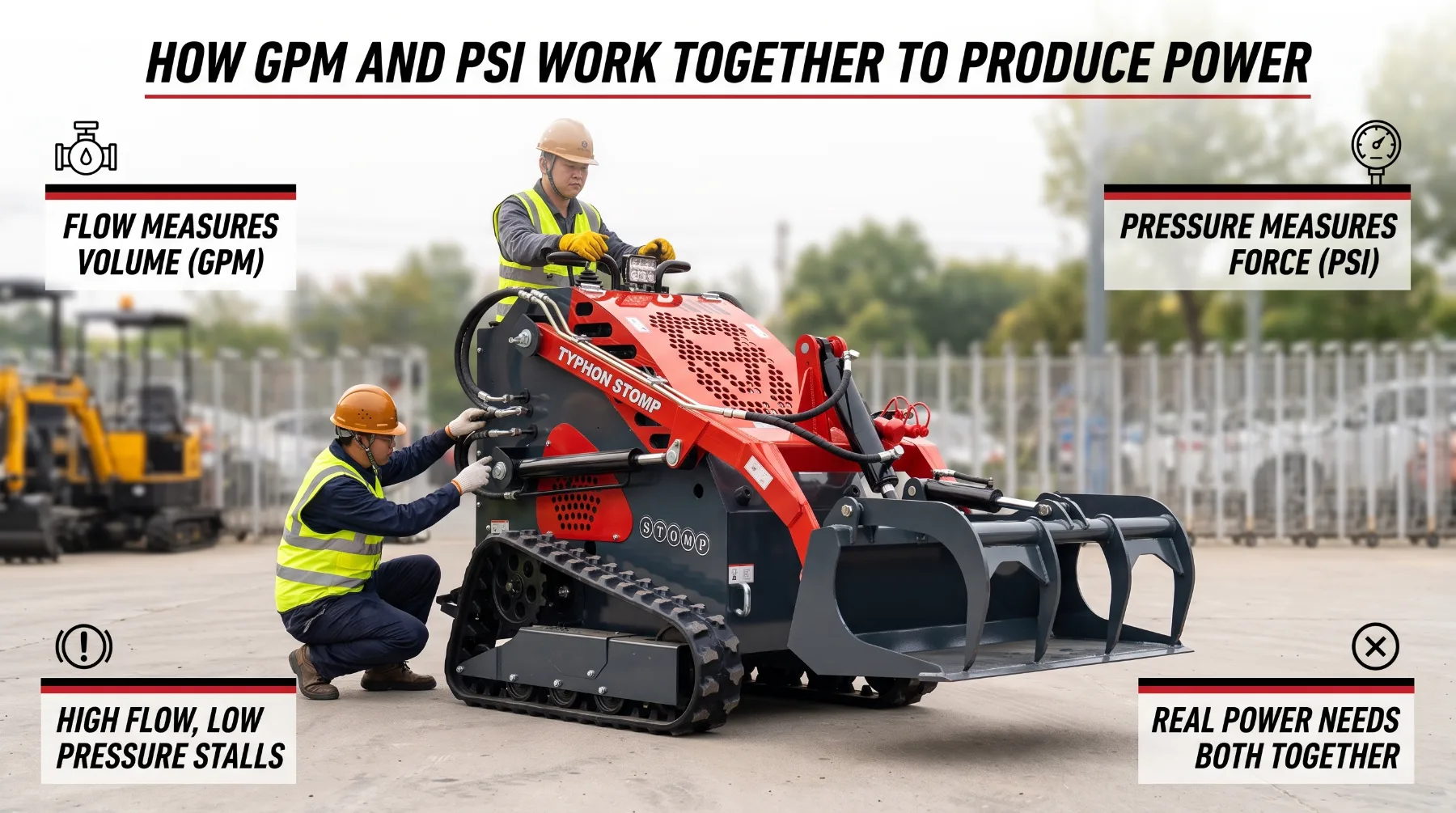
Two numbers define hydraulic power at the attachment, and reading only one tells half the story. Flow, measured in gallons per minute, describes how much fluid moves to the tool, while pressure, measured in pounds per square inch, describes the force behind that fluid. Neither figure alone reveals what an attachment can do, because the real working power comes from the two acting together.
Multiplication is the relationship that matters, since hydraulic power rises with both flow and pressure at once. High flow with little pressure spins a tool quickly but lets it stall the moment it meets resistance, while high pressure with little flow pushes hard but turns slowly, so genuine cutting or grinding power needs both a strong volume of fluid and enough force behind it. An attachment performs at its best only when the machine supplies flow and pressure in the balance the tool was designed around.
Speed and torque split neatly along these two figures, which helps explain what an operator feels. Flow governs how fast an attachment runs at no load, and pressure governs how much torque it can produce when the work pushes back, so a tool that spins fast yet bogs under load usually lacks pressure, while one that grinds slowly even when free usually lacks flow. Key takeaway: GPM sets an attachment’s speed and PSI sets its torque, and only when the machine delivers both in the right balance does the tool produce the working power it was built to.
How Flow Mismatches Cause Poor Attachment Performance
Underflow is the most common mismatch, and its symptoms show up fast in the field. When a machine supplies less flow than an attachment needs, the tool’s motor cannot reach its designed speed, so the drum or bit turns sluggishly, loses momentum under load, and stalls against material it should clear easily. The mulcher that bogged in the brush is a textbook case, starved of the flow its drum needed to hold speed through dense growth.
Overflow causes its own trouble, which surprises operators who assume more is always better. Feeding an attachment more flow than it was built to handle can drive its motor past safe limits, generate excess heat, and stress seals and components, so a tool rated for standard flow can suffer real damage when run on a high-flow machine without adjustment. Matching the supply to the tool’s rated range protects the attachment as much as it powers it.
Heat is the quiet consequence that ties both mismatches together, since energy that fails to become useful work becomes heat instead. A starved attachment forces the system to labor and warm, while an overfed one drives fluid harder than the tool can use, and in both cases rising temperature degrades the oil, stresses the seals, and shortens the life of the whole circuit. Key takeaway: too little flow leaves an attachment slow and stalling while too much overspeeds and overheats it, so a mismatch in either direction robs performance and risks damage.
Standard Flow Versus High Flow and What Each Unlocks
Standard flow is the baseline nearly every skid steer provides, and it defines the performance ceiling for the tools that run on it. Falling roughly in the high teens to mid-twenties GPM depending on the machine, standard flow drives the majority of everyday attachments at full performance, from augers and buckets to grapples and light-duty tools. For an operation built around those attachments, standard flow delivers everything the tools need.
High flow is an engineered upgrade that raises the supply substantially, often into the thirty-plus GPM range, and it unlocks a class of attachments that standard flow simply cannot run well. Power-hungry tools like large mulchers, cold planers, and heavy snow blowers depend on that greater volume to hold their speed under sustained heavy load, so a high-flow machine turns those demanding attachments from marginal performers into productive ones. The upgrade changes what work the machine can genuinely take on.
Performance headroom is the real value high flow provides, not just raw speed. A high-flow machine running a demanding attachment holds its drum or head speed through the toughest material rather than fading, which keeps production steady and finishes work faster, so the flow class a buyer chooses directly sets the tier of attachments the machine can drive at full strength. Key takeaway: standard flow runs everyday attachments at full performance while high flow unlocks power-hungry tools that need sustained volume, so the flow class sets the ceiling on what the machine can drive well.
Real Attachments and How Flow Shapes Each One
Augers show how modest flow needs still demand the right balance, since most drilling attachments run comfortably on standard flow. The tool needs enough flow to spin the bit at a productive speed and enough pressure to keep turning through dense or rocky soil, so a machine within the auger’s rated range drills clean holes without stalling. Fence and footing work rarely calls for more, which makes augers a natural fit for standard-flow machines.
Heavier attachments raise the stakes, and a few examples show the pattern clearly:
- Mulchers grind brush and small trees continuously, so they demand sustained high flow to keep the drum spinning at speed under constant load; starve them, and they bog and stall exactly as the field scenario showed.
- Cold planers mill asphalt and concrete, drawing steady flow and high pressure together to keep the cutting head rotating with force through hard surfaces, which is why most perform best on high-flow machines.
- Sweepers roll a brush that needs consistent flow to hold its speed across a surface, since a fading brush leaves debris behind and drags out the job.
Reading each tool’s rated flow range against the machine is the habit that ties these examples together. Every reputable attachment lists a recommended GPM range, and keeping the machine’s supply inside that window is what lets the tool perform as its maker intended. Key takeaway: light tools like augers thrive on standard flow while mulchers, planers, and heavy sweepers demand sustained high flow, so matching each attachment’s rated range to the machine is what delivers full performance.
How to Match Auxiliary Flow to the Job for Peak Performance
Attachments should drive the decision, because the tools you plan to run define the flow the machine must supply. List every powered attachment your work involves, note each one’s recommended flow and pressure range, and identify the most demanding tool in the group, since that hungriest attachment sets the flow class the machine truly needs. Buying around the toughest tool ensures every lighter attachment runs comfortably as well.
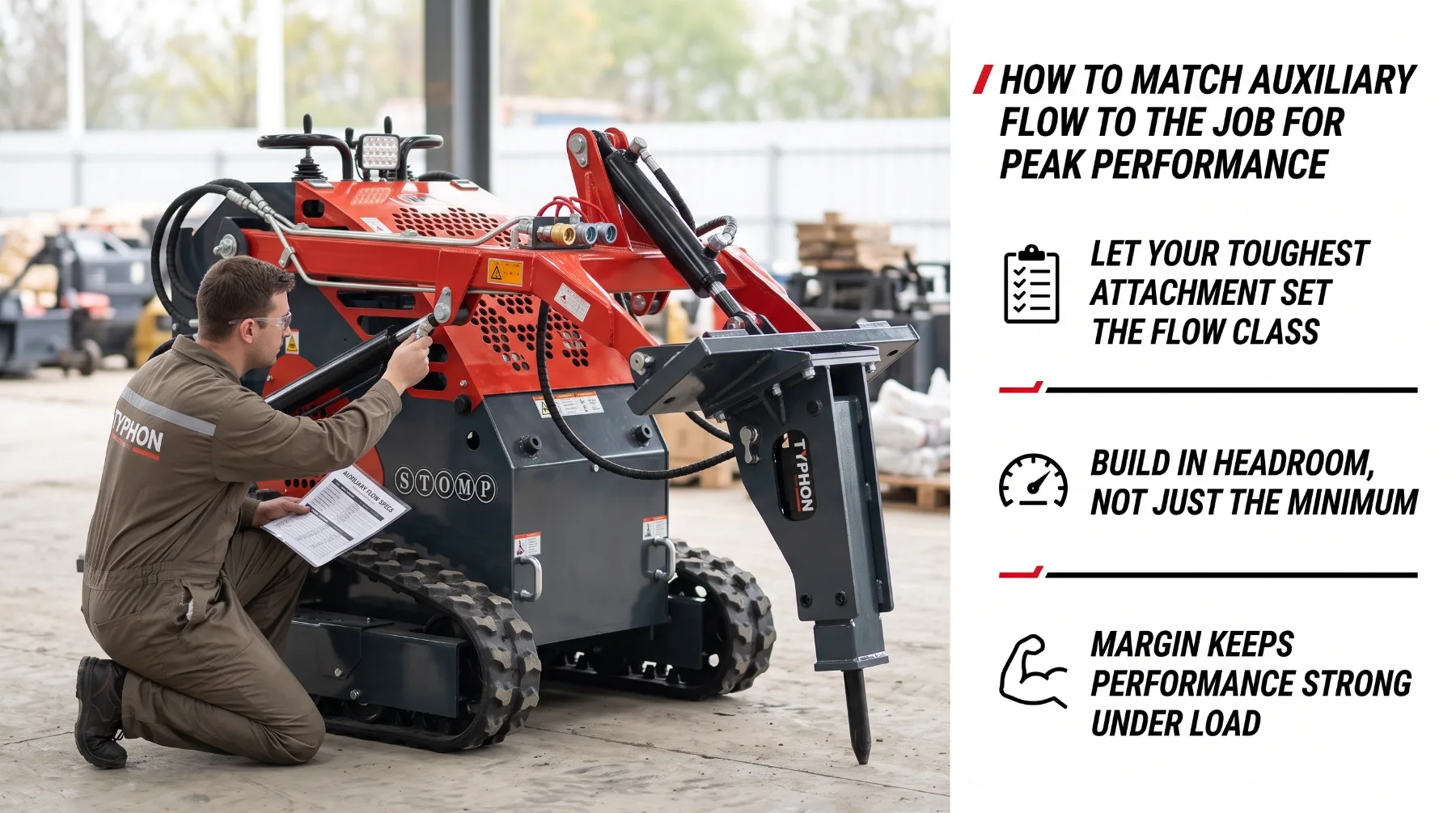
Headroom deserves deliberate thought, because a machine sized to just barely meet an attachment’s minimum leaves nothing in reserve when the work turns heavy. Choosing a machine that sits comfortably within a demanding tool’s range, rather than at its lower edge, keeps the attachment performing under the hardest conditions instead of fading when the material gets thick. That margin is what separates a tool that finishes strong from one that struggles by the end of a pass.
Compatibility and guidance close the gap between specification and real performance, since flow figures alone do not guarantee a clean match. Confirm that the couplers and connection types align between machine and attachment, verify that a high-flow tool is paired with a genuine high-flow circuit rather than a standard one pushed too hard, and lean on a knowledgeable equipment specialist to read your attachment list against candidate machines. Key takeaway: match auxiliary flow to your most demanding attachment with room to spare, confirm compatibility, and draw on expert guidance so every tool performs at full strength on the job.
Conclusion
Auxiliary hydraulic flow shapes attachment performance through a chain that runs from the machine’s pump to the tool doing the work, and the full picture holds once you follow each piece in turn. Start by understanding that auxiliary flow delivers a continuous stream of hydraulic energy an attachment converts into work, setting the pace and strength of what the tool can do. Recognize how GPM and PSI act together, with flow governing speed and pressure governing torque, so only the right balance produces real working power. See how a mismatch in either direction robs performance, since too little flow stalls a tool while too much overspeeds and overheats it. Learn how standard flow runs everyday attachments while high flow unlocks power-hungry ones, then read real tools like augers, mulchers, planers, and sweepers against their rated ranges. Finish by matching the machine’s flow to your most demanding attachment with headroom to spare, confirming compatibility along the way. This approach helps every powered attachment you own perform the way its maker intended rather than fighting you through the job. Before your next purchase or attachment addition, list your powered tools, note each one’s flow and pressure needs, and confirm the machine supplies them with room to spare so the work goes right from the first pass. When you’re ready to put a dependable skid steer with the auxiliary flow your attachments demand to work, or need help matching flow to the tools your projects require, reach out to a trusted equipment specialist who can match reliable equipment to the results your work depends on.
Frequently Asked Questions
Why does my attachment bog down even though my skid steer has plenty of horsepower?
Attachments depend on hydraulic flow and pressure, not horsepower alone. If auxiliary flow or pressure is too low, the attachment can slow or stall under load. Check the attachment’s requirements against the skid steer’s hydraulic ratings.
What is the difference between GPM and PSI, and why do both matter for attachments?
GPM controls hydraulic motor speed, while PSI provides force and torque. Both must match the attachment’s requirements for proper performance.
Can too much auxiliary flow damage an attachment?
Yes. Excessive flow can overspeed the hydraulic motor, create heat, and damage components. Keep flow within the attachment manufacturer’s recommended range.