

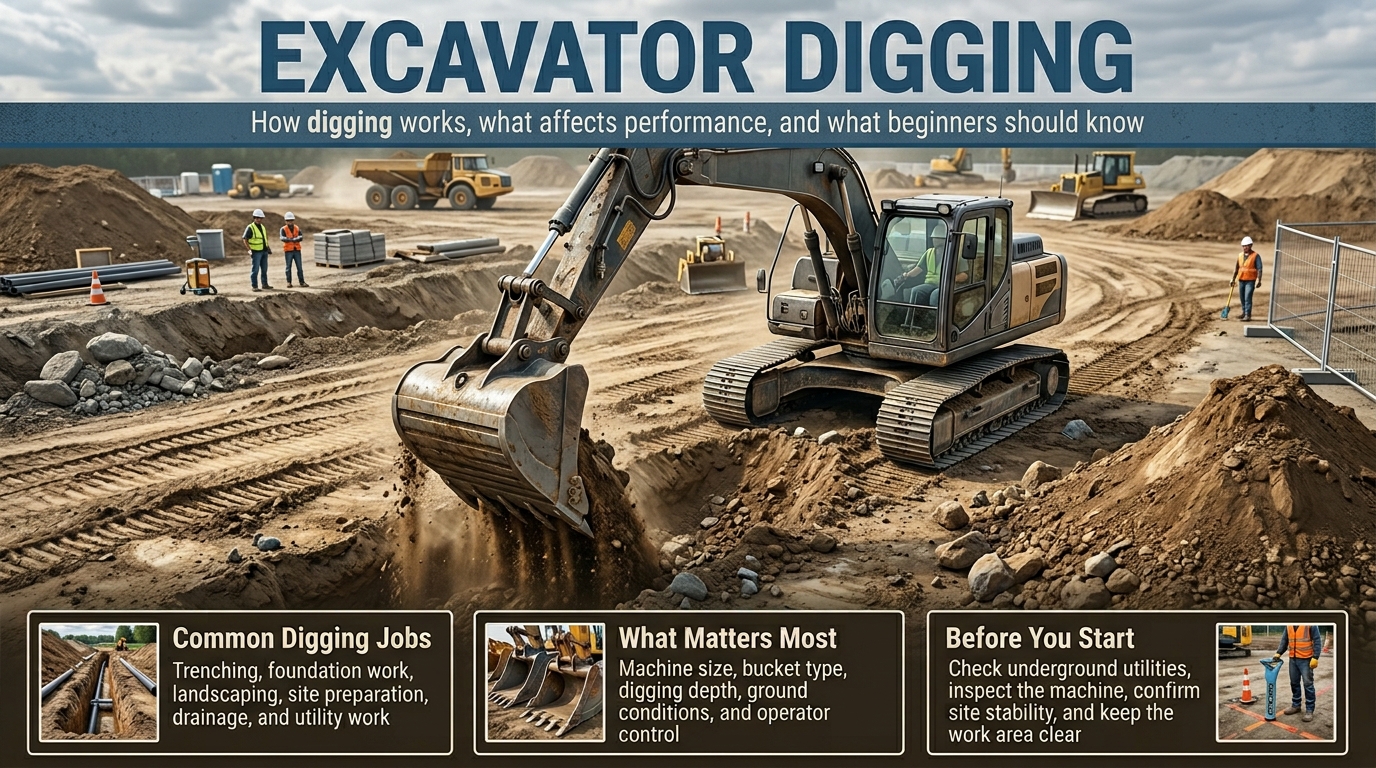
Excavator digging is one of the most common jobs on construction, landscaping, farming, utility, and demolition sites. It may look simple from the outside, but good digging depends on the right machine, the right bucket, proper ground checks, and steady operator control.
For a beginner buyer, operator, or business owner, understanding how excavator digging works can help avoid slow work, machine damage, unsafe conditions, and poor results. This guide explains the basics in a clear way, without making the topic harder than it needs to be.
What Excavator Digging Really Means
Excavator digging is the process of using an excavator boom, arm, and bucket to cut into soil, clay, gravel, sand, rock, or mixed ground. The machine pulls material toward itself, lifts it, and places it beside the trench, into a truck, or into another work area.
The digging power comes from the hydraulic system. When the operator moves the controls, hydraulic cylinders move the boom, arm, and bucket. This gives the excavator enough force to break into the ground and move heavy material.
Good digging is not only about power. It also depends on balance, bucket angle, machine position, and how the operator controls each movement. A strong excavator can still dig poorly if the setup is wrong.
Common Jobs That Need Excavator Digging
Excavators are used for many digging jobs because they can work in open areas, tight spaces, and uneven ground. The type of job usually decides what size of excavator and bucket should be used.
Common digging jobs include trenching for pipes, cables, and drainage lines. These jobs need clean, straight cuts and controlled depth. Mini excavators are often used for this work because they can fit into smaller areas and cause less ground damage.
Excavators are also used for foundation digging. This work may need a larger machine, especially when the ground is hard or the hole is deep. For landscaping, smaller excavators are used to dig ponds, remove stumps, shape land, and prepare garden or driveway areas.
On farms and rural sites, excavators help with ditch cleaning, water control, fence line work, and small earthmoving tasks. For demolition or site clearing, digging may involve removing old concrete, pulling out buried debris, or preparing the ground after a structure is removed.
Choosing the Right Excavator Size for Digging
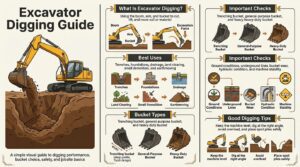
The right excavator size depends on the job, working space, digging depth, and ground condition.
A mini excavator is a good choice for smaller digging jobs, residential work, landscaping, utility trenches, and tight job sites. It is easier to move, easier to transport, and usually causes less damage to finished areas.
A mid-size excavator works better for deeper trenches, larger foundations, and heavier daily digging. It gives more reach, lifting power, and bucket capacity than a small machine.
A large excavator is used when the job involves heavy earthmoving, deep excavation, quarry work, road projects, or large construction sites. These machines can move more material faster, but they need more space, a larger transport setup, and a trained operator.
For most buyers, bigger is not always better. A machine that is too large can be hard to use in tight areas and may cost more to run. A machine that is too small may work too slowly or struggle in hard ground. The best choice is the smallest machine that can safely and efficiently handle the digging depth, reach, and material weight.
Why Bucket Choice Matters
The bucket has a big effect on excavator digging performance. Many beginners focus only on the machine size, but the wrong bucket can slow down the work or make the machine feel weak.
A narrow trenching bucket is useful for digging pipe trenches, cable trenches, and drainage lines. It removes less material, which helps keep the trench clean and reduces backfilling work.
A general-purpose bucket is used for common digging, loading, and site preparation. It is a practical choice for mixed jobs where the machine needs to handle soil, gravel, and loose material.
A heavy-duty bucket is better for hard ground, clay, rocky soil, and rough job sites. It is built stronger and usually has tougher teeth, but it may be heavier. A bucket that is too heavy for the machine can reduce digging speed and control.
Bucket teeth also matter. Sharp teeth cut into soil better than worn teeth. If the bucket edge is dull, the excavator may use more fuel and take longer to dig. For clean grading work, a smooth-edge bucket may be better than a toothed bucket.
Basic Digging Tips for Cleaner Work
Good digging starts with machine position. The excavator should sit on stable ground, with enough room to swing safely. When possible, the tracks should be level and the machine should face the digging area directly.
The operator should avoid forcing the bucket straight down like a hammer. Excavators dig best when the bucket cuts into the ground at a controlled angle and pulls material back toward the machine. Smooth movement usually works better than aggressive jerking.
For trenches, it helps to mark the digging line before starting. This keeps the trench straighter and reduces mistakes. Digging in layers also gives better control, especially when working near pipes, cables, foundations, or finished surfaces.
The bucket should not be overloaded every time. A full bucket is useful, but an overloaded bucket can slow the cycle, spill material, and put extra stress on the machine. Clean, steady bucket loads often make the job faster over the full day.
Operators should also place spoil piles carefully. Soil should not be dumped too close to the trench edge because the weight can cause the edge to collapse. Keeping the work area clean makes the job safer and easier to finish.
Safety Checks Before Digging
Before any excavator digging job starts, the site should be checked carefully. Underground utilities are one of the biggest risks. Gas lines, water pipes, electrical cables, and communication lines can be buried in areas that look clear from the surface.
The work area should be marked, and the operator should know where underground services may be located. If there is any doubt, the site should be checked before digging begins.
Ground condition is also important. Soft soil, wet areas, slopes, and filled ground can affect machine stability. An excavator can tip or sink if it is used on weak ground without care.
The operator should keep people away from the swing area. Even a small excavator can cause serious injury if someone walks too close while the machine is working. Clear communication on site is important, especially when trucks, workers, and other machines are nearby.
Other basic checks include looking for overhead wires, checking visibility, wearing proper safety gear, and making sure the machine is in good working condition before use.
Maintenance That Helps Digging Performance
A well-maintained excavator digs better and lasts longer. Digging puts pressure on the boom, arm, bucket, pins, bushings, tracks, and hydraulic system, so regular checks are important.
Bucket teeth should be inspected often. Worn or broken teeth reduce cutting ability and make the machine work harder. Pins and bushings should also be checked because loose parts can affect digging control and cause faster wear.
Hydraulic oil, hoses, and cylinders should be inspected for leaks. Weak hydraulic performance can reduce digging power and make the machine slower. Filters should be changed based on the service schedule, not only when there is a problem.
Tracks also matter. Loose or damaged tracks can reduce stability and make the machine harder to position. For compact excavators, track condition is especially important when working on soft ground, slopes, or finished surfaces.
Daily cleaning helps too. Mud, rocks, and debris can build up around the undercarriage and bucket area. Removing buildup makes inspections easier and helps prevent avoidable damage.
Conclusion
Excavator digging is simple to understand, but it takes the right machine, bucket, setup, and safety checks to do it well. Beginners should focus on matching the excavator to the job, choosing the correct bucket, working with steady control, and checking the site before digging.
A good digging setup saves time, protects the machine, and helps the operator finish the job with fewer problems.