
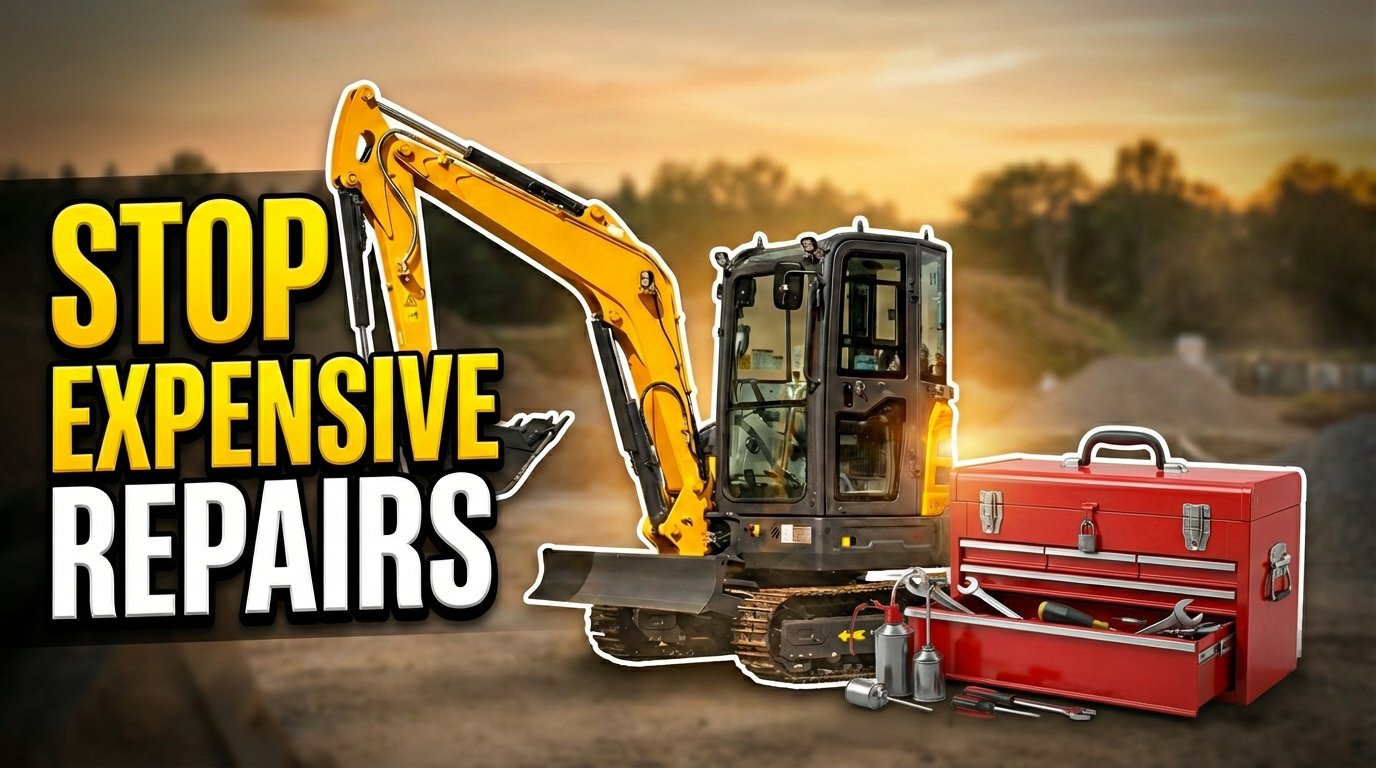
Mini excavators look simple from the outside. Boom, stick, bucket, tracks, and a compact engine compartment. But in real work, the machine is a tight bundle of hydraulics, heat management, steel-on-steel pivot points, and undercarriage wear. When something gets neglected, it usually does not fail in a dramatic instant. It fails the way most expensive equipment fails: slowly, quietly, then all at once at the worst possible time.
Why mini excavators get expensive when small problems are ignored
A mini excavator is designed to work hard, but it depends on a few systems stayinghealthy.
Hydraulic oil must stay clean and cool
Pins and bushings must stay lubricated
Undercarriage must stay clear of debris and correctly tensioned
Cooling systems must stay open to airflow
Controls must stay smooth instead of shock-loaded. When any of those areas is neglected, wear accelerates. The tricky part is that the machine often still works. It just works less efficiently. That is where cost grows, because inefficiency turns into heat, heat turns into seal wear, seal wear turns into leaks, and leaks turn into downtime.
The number one habit that destroys pins and bushings
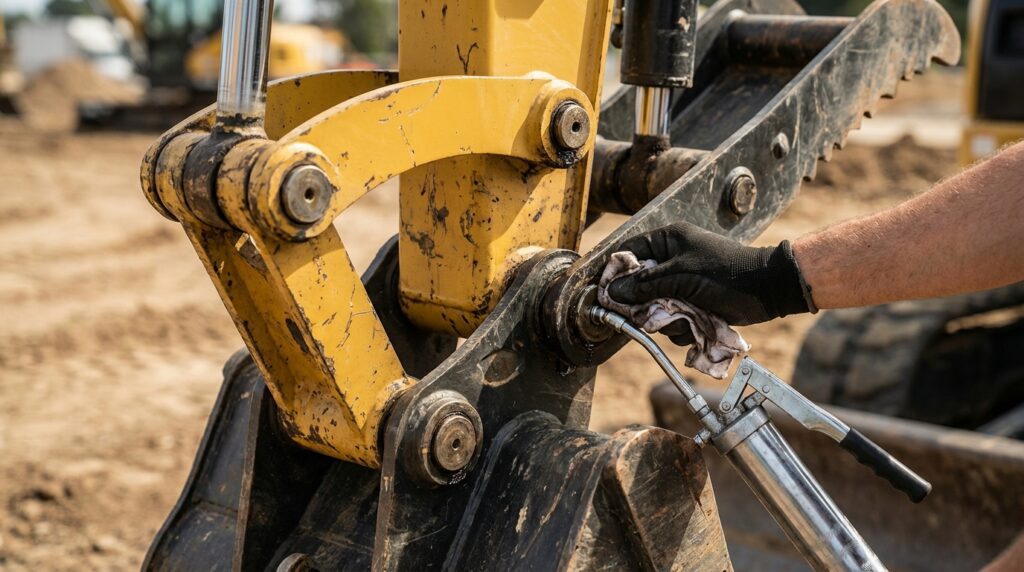
The fastest way to create sloppy linkage is simple: not greasing consistently.
Pins and bushings are high pressure contact points. Without grease, metal rubs metal. It starts as minor looseness, then turns into visible play at the bucket. Once the bucket has play, trench walls look messy, grading becomes harder, and the operator starts compensating with harsher movements. Those harsher movements create even more wear.
Greasing is not about being perfect. It is about being consistent.
A machine that is greased properly stays tight and precise
A machine that is greased randomly becomes loose and expensive
Also, grease technique matters. Dirt around a grease fitting is not harmless. Pumping grease into a dirty fitting can push contamination into the joint. The joint will wear faster even if grease is being used.
The undercarriage mistake that costs more than people expect
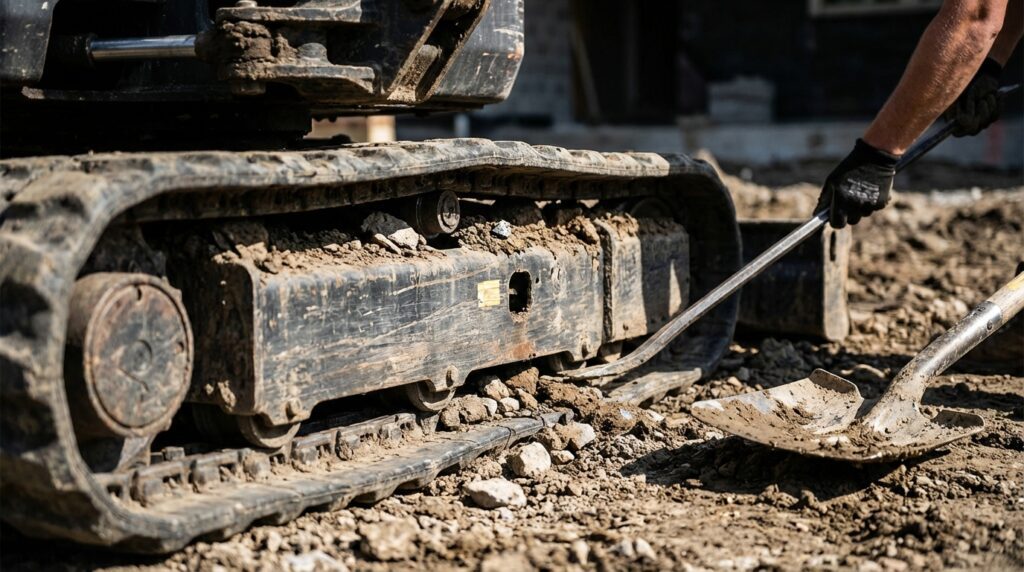
The undercarriage is the most ignored cost center in compact equipment ownership. People pay attention to engines and hydraulics, then act surprised when tracks and rollers wear out early.
Two common undercarriage problems cause most of the pain.
First is debris packing. Rocks, clay, and construction waste pack into the track frame. That increases friction and stress, and it can force a track off when turning. A track-off is not only inconvenient. It can damage components if the machine continues to move or if the track gets twisted under load.
Second is track tension being wrong. Tracks that are too tight increase wear on rollers and sprockets. Tracks that are too loose increase derailment risk. Correct tension is not a suggestion. It is a wear management tool.
A mini excavator that is used in mud, gravel, or demolition rubble should have undercarriage cleaning treated like routine maintenance, not occasional cleanup.
The hydraulic truth that separates good machines from frustrating machines
Hydraulics are the personality of a mini excavator. When the hydraulic system is healthy, the machine feels smooth and predictable. When it is unhealthy, the machine feels inconsistent.
Most hydraulic problems come from two sources.
Heat
Contamination
Heat builds when coolers are clogged, when the machine is worked at high load continuously without airflow, or when the hydraulic system is being forced into inefficient movements like prying and shock loading.
Contamination enters through damaged seals, dirty couplers, worn hoses, or poor service practices. Once contamination is in the system, it circulates. That is when valves start to stick, cylinders start to seep, and pumps start to sound different.
Hydraulic trouble often gives early signs.
Controls feel slightly less crisp than usual
The machine feels slower when multiple functions are used together
Hydraulic noise increases under load
Hoses show wetness at fittings
Oil looks darker than normal or smells overheated
These signs do not always mean a major failure is coming tomorrow. They do mean the machine is asking for attention now, while the fix is still small.
The operator behavior that causes cracks, leaks, and structural stress
Mini excavators are strong, but they are not pry bars. One of the most damaging habits is using the bucket to pry sideways.
Side loading happens when the bucket is used to push laterally against a rock, root, or concrete edge, or when an operator tries to twist material out of the ground instead of digging it out.
Side loading stresses:
Bucket linkage
Stick and boom joints
Cylinder rods and seals
Pins and bushings
Boom structure over time
It also creates sudden pressure spikes in the hydraulic system. Pressure spikes generate heat and can shorten seal life. The machine may feel powerful in that moment, but the damage is cumulative.
The correct approach is slower but cheaper.
Break material with controlled digging angles
Reposition the machine instead of twisting the bucket
Take smaller bites in compacted ground
Use teeth and proper bucket selection for penetration rather than prying
This is one of those truths that experienced operators understand immediately. The machine always pays the bill for side loading later.
Why cooling systems deserve more respect
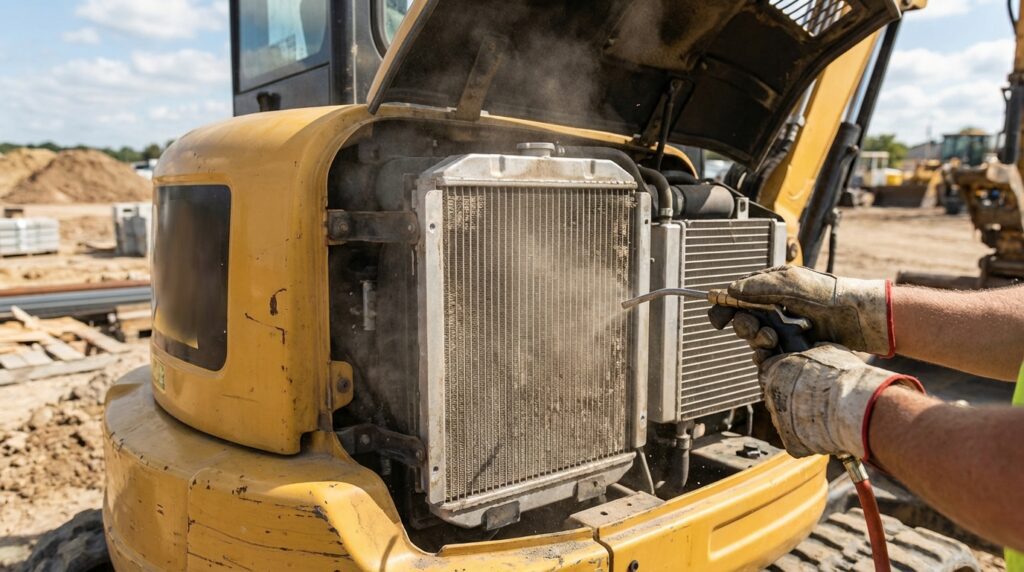 A mini excavator can overheat without warning if airflow is restricted. It does not have to be extreme. A cooler can be partially clogged with dust and still run for a while. Then the workload increases, ambient temperature rises, or the machine is forced to work at high demand for longer, and suddenly temperatures climb.
Cooling system maintenance is simple but often ignored.
Keep radiator and cooler fins clear
Remove debris and dust regularly
Avoid bending fins during cleaning
Pay attention to temperature behavior during long cycles
Overheating is not only about engine shutdown. Heat shortens the life of hydraulic seals, hoses, and oil. It can reduce hydraulic efficiency and make the machine feel less responsive.
A clean cooling pack is cheap insurance.
The travel habit that wears tracks and rollers faster
Mini excavators are not designed to travel long distances all day. Some jobs require it, but travel should still be managed intelligently.
The wear accelerates when:
The machine turns sharply on abrasive surfaces
The machine pivots in place repeatedly on rough ground
The tracks are forced to spin against high resistance
Travel is done with packed debris in the undercarriage
Turning scrubs the tracks. Scrubbing increases wear. It also increases heat in the undercarriage components.
When possible, wide turns are kinder than pivot turns. Thoughtful travel paths reduce unnecessary turning. This is not about being gentle. It is about being efficient and reducing avoidable wear.
Lifting mistakes that create unsafe moments and mechanical stress
Mini excavators lift more often than people admit. Moving rocks, placing pipes, setting small structures, loading debris, pulling stumps. Lifting becomes routine fast.
The dangerous part is that lifting capacity changes with reach. The farther the load is from the machine, the lower the safe capacity becomes. This is basic physics and it is not negotiable.
The mechanical stress increases when:
Loads are lifted and swung quickly
Loads are handled on slopes
Loads are carried high while traveling
The machine is lifted over the side without stability discipline
Even when nothing tips, the machine can still take damage. Shock loading can stress cylinders and linkage. A stressed operator can make sudden corrections. Sudden corrections can create pressure spikes.
Safe lifting is calm lifting.
Keep loads close
Move slowly
Avoid sudden swing
Keep the attachment low while traveling
Use the blade for stability when available
These habits protect people and protect the machine.
Why bucket choice affects machine wear and job quality
Bucket selection is not only about speed. It influences how the machine is used.
A bucket that is too wide for trench work encourages overdigging and extra spoil handling. Extra handling means more cycles, more travel, and more wear.
A bucket that lacks proper cutting ability for the soil encourages prying and shock loading. That is where pins and hydraulics pay the price.
Correct bucket choice supports clean technique. Clean technique reduces abuse. Reduced abuse extends machine life.
For trenching, narrower buckets reduce unnecessary disturbance and backfill volume.
For finish work, a clean cutting edge supports smoother grading.
For compacted ground, proper teeth reduce the temptation to slam and pry.
The bucket is the interface between the machine and resistance. When the interface is wrong, the machine gets forced into bad habits.
A realistic daily routine that prevents most problems
A daily routine should be short enough to actually happen. The goal is not perfection. The goal is early detection and consistent lubrication.
Walkaround inspection for leaks and damage
Check hoses for rubbing and wetness
Clear packed debris from tracks when needed
Grease key pivot points consistently
Check cooling pack for visible clogging
This does not take long. It prevents a surprising amount of downtime.
A realistic weekly routine that protects hydraulics and undercarriage
Weekly checks are where small wear gets caught before it becomes expensive.
Inspect track condition and tension
Check for loose hardware on bucket linkage and boom area
Clean cooler fins more thoroughly if working in dust
Inspect hydraulic couplers and keep them clean
Look for unusual wear patterns on tracks and rollers
Weekly attention prevents the slow drift into sloppy operation.
The ownership truth that matters most
Mini excavators are durable when treated like production tools, not like indestructible toys. Most expensive repairs are not bad luck. They are the result of repeated small abuse and skipped maintenance.
A well-run mini excavator feels smooth, digs cleaner, grades better, and holds value longer. A neglected mini excavator feels rough, leaks sooner, and becomes a downtime machine.
The difference is not the brand name. It is the habits.
Bottom line
A mini excavator stays reliable when hydraulics stay cool and clean, when pins stay lubricated, when the undercarriage stays clear and correctly tensioned, and when the machine is not shock-loaded through prying and harsh movement. These are not opinions. These are job site realities that show up in repair bills and downtime.