
Mini Excavator Uses Beyond Digging: 12 Jobs You Didn’t Know It Could Handle
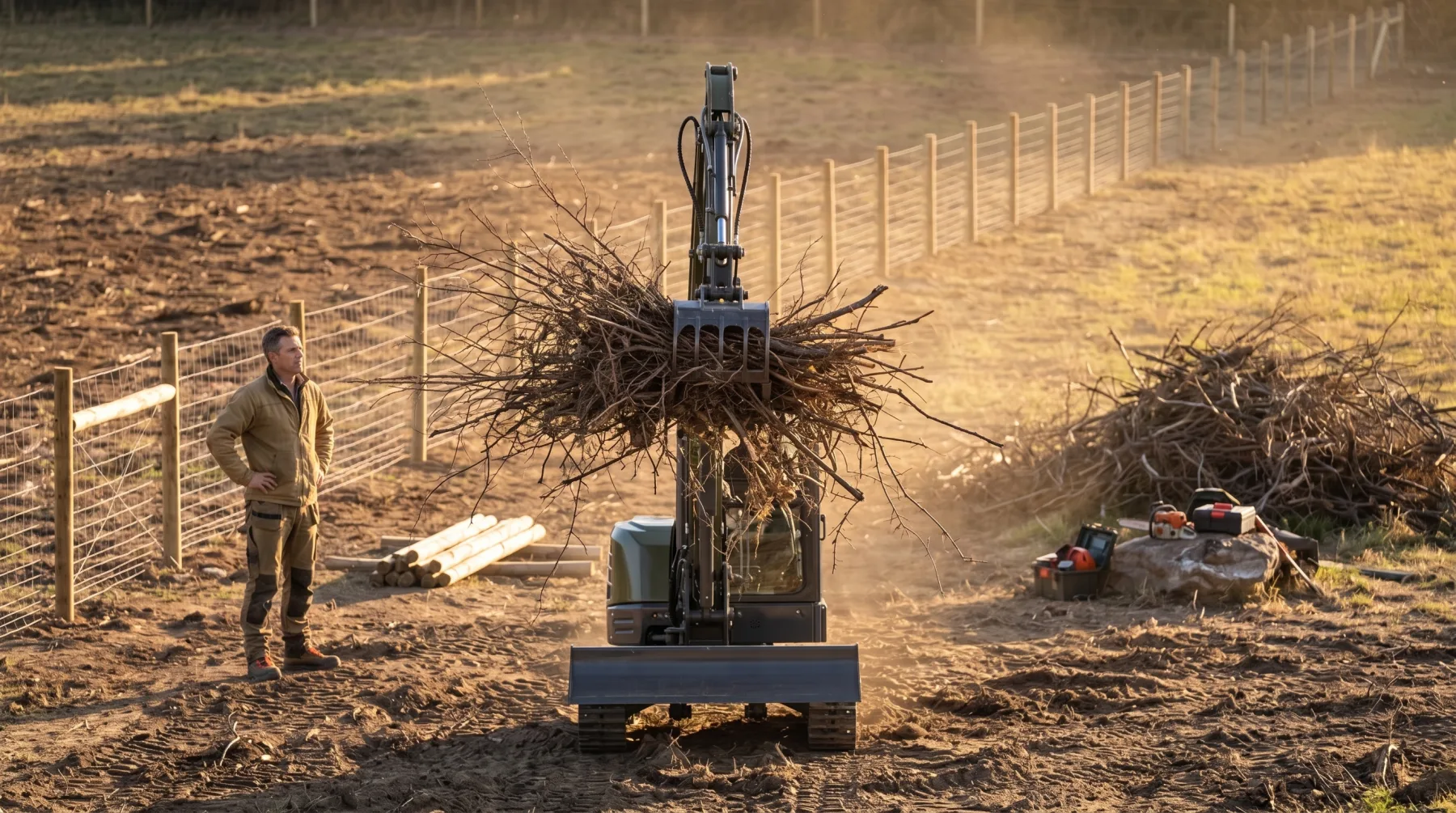
You bought the mini excavator to dig a trench and backfill a foundation, and it did both beautifully. Then a storm dropped a tree across your access road, the fence line grew over with brush, and the gravel pile needed moving before the weekend. You almost called around for a second machine before you realized the truth: the excavator sitting in your yard could handle every one of those jobs. Most owners use a fraction of what these machines can do.
The digging is just the start. Swap the bucket for the right attachment, and a mini excavator becomes a clearing tool, a lifter, a planter, a compactor, and more. This guide walks through 12 jobs a mini excavator handles beyond digging, the attachment that makes each one possible, and the time and labor you save. Whether you manage acreage or run job sites, you’ll find work you can knock out with the machine you already own.
1. Land Clearing
Overgrown lots stall every project behind them, and clearing brush and saplings by hand burns days you don’t have.
Fit a mulching head or brush cutter to the boom, and the machine shreds dense growth in a single pass. For heavier material, a grapple grips and stacks brush, branches, and roots fast.
- Mow through saplings and thick brush without hand tools.
- Grip and pile debris for burning or hauling.
- Reach over obstacles the boom clears easily.
- Clear steep or uneven ground a walk-behind can’t manage.
Time saved: A week of chainsaw work often wraps in a day.
2. Demolition
Demolition work can quickly become slow, labor-intensive, and hazardous when concrete, masonry, or small structures have to be torn down by hand. A skid steer equipped with a hydraulic breaker delivers controlled power to break through concrete slabs, foundations, rock, and asphalt with precision, making demolition faster, safer, and more efficient than manual methods.
After the material is broken apart, a grapple or demolition bucket allows the operator to collect, sort, and load debris directly into dumpsters or haul trucks without relying on a large cleanup crew. Its compact size also makes it easy to work in confined areas where larger demolition equipment cannot fit, helping contractors complete projects that might otherwise take several days in as little as a single shift.
3. Stump Removal
Removing tree stumps by hand is one of the most time-consuming and physically demanding jobs on any property, especially when deep, stubborn roots refuse to let go. A skid steer fitted with a stump bucket or grapple makes the task much easier by digging around the root ball, cutting through major roots, and using the machine’s lifting power to free the entire stump in minutes.
Once the stump is removed, the same attachment can lift and transport it away before backfilling the hole, eliminating the need for additional equipment or manual labor. What can take hours of digging, chopping, and prying by hand can often be completed in just a few minutes per stump, allowing crews to clear land much more efficiently.
4. Grading and Leveling
Creating a smooth, level surface by hand is slow and often produces inconsistent results, leading to drainage issues, unstable building pads, and uneven finished grades. A skid steer equipped with a grading bucket or tilt bucket provides the precision needed to cut high spots, fill low areas, and shape the ground accurately for construction and landscaping projects.
The machine can efficiently level building pads, prepare equipment bases, shape driveways for proper water drainage, backfill around completed structures, and fine-tune slopes with the added control of a tilt bucket. Jobs that would typically require days of manual grading can often be completed in just a few hours, improving both productivity and project quality.
5. Material Handling
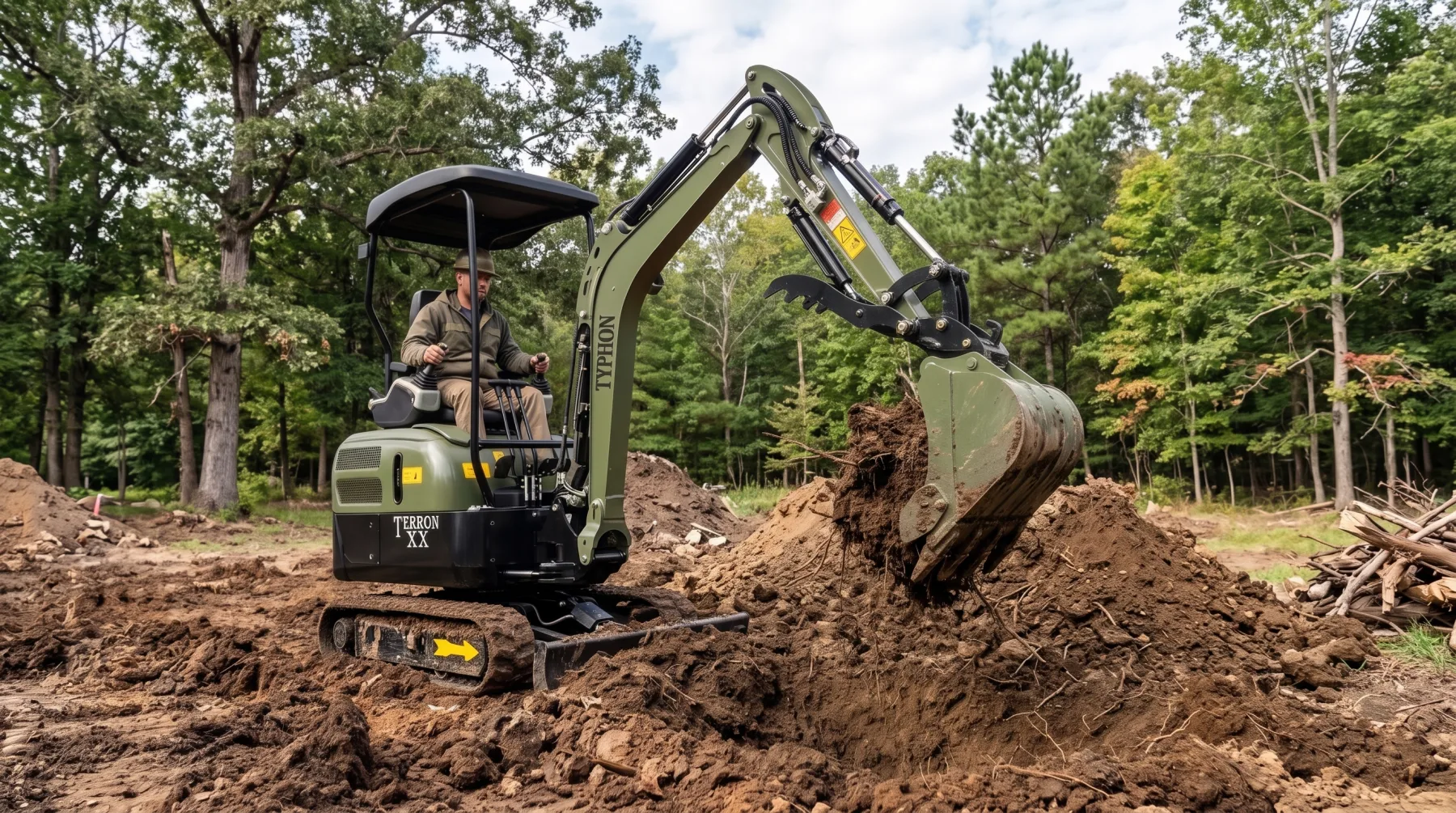
Moving soil, gravel, rocks, pipe, timber, and other jobsite materials by hand is time-consuming and physically demanding, especially when supplies need to be transported repeatedly throughout the day. A skid steer equipped with a bucket, grapple, or thumb attachment can lift, carry, and place heavy or awkward materials quickly, reducing manual labor and keeping projects moving efficiently.
Whether loading trucks, transporting boulders, carrying pipe and timber, or staging materials exactly where the crew needs them, the machine completes tasks in far fewer trips than manual methods. What might require dozens of wheelbarrow loads or multiple workers can often be finished with just a handful of machine cycles, saving significant time and effort on every project.
6. Tree and Shrub Planting
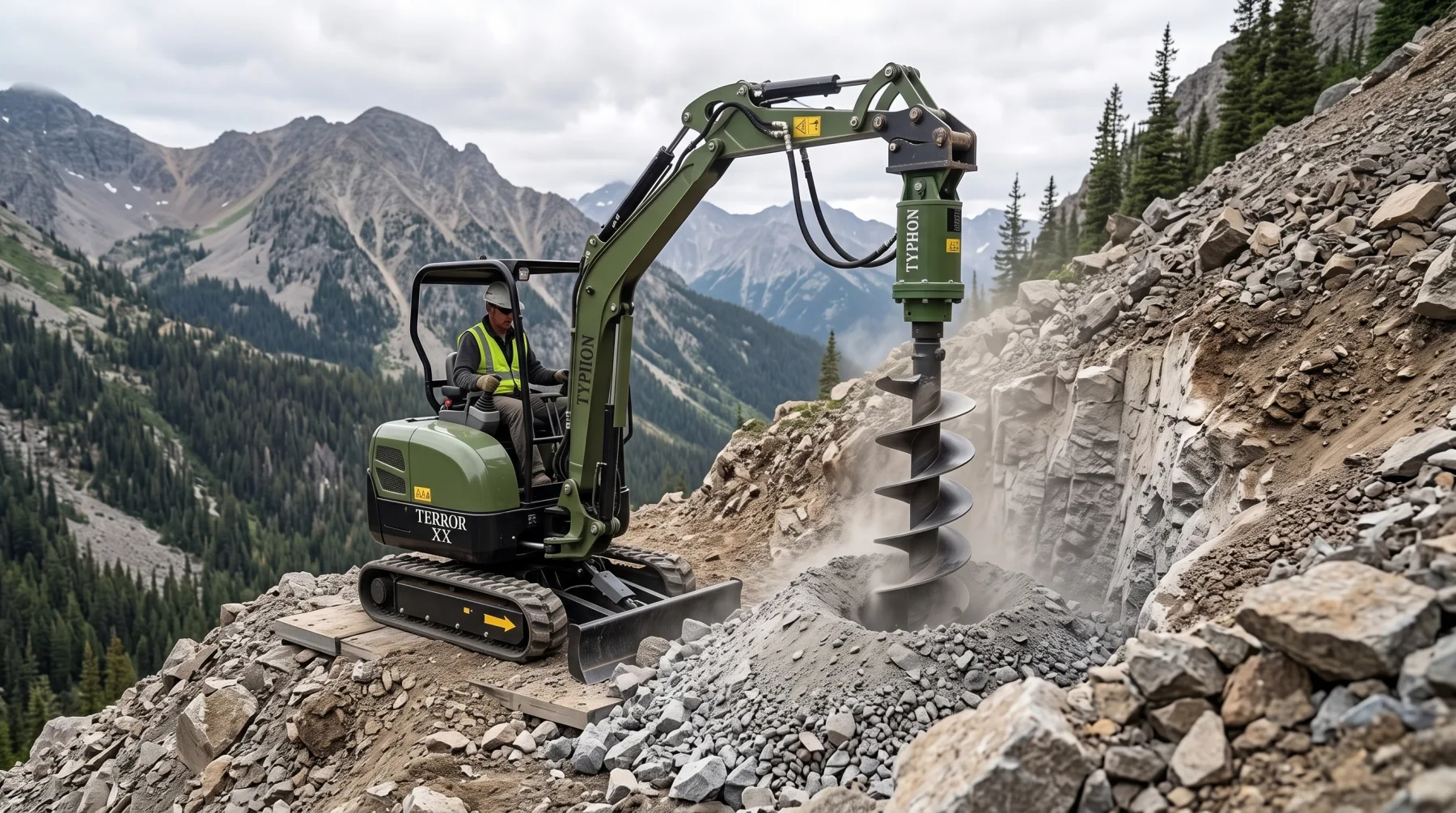
Planting trees and shrubs by hand is time-consuming, especially when digging dozens of consistent holes in hard or compacted soil. A skid steer with an auger attachment drills clean, uniform holes in seconds, making large landscaping, orchard, and reforestation projects much more efficient.
After planting, the same machine can quickly backfill and compact the soil using its standard bucket. Tasks that would normally require a full day of manual digging can often be completed in just a few hours.
7. Pond Dredging and Cleaning
Over time, ponds collect silt, mud, and overgrown vegetation that reduce water depth and restrict water flow. A skid steer equipped with a standard bucket or long-reach attachment can quickly remove built-up sediment, clear weeds and cattails, and restore the pond’s function without extensive manual labor.
The same machine can reshape pond banks, reinforce shorelines, and clean hard-to-reach areas from the edge. Jobs that once required days of hand labor or specialized dredging equipment can often be completed in just a day or two.
8. Snow Removal
Heavy snowfall can quickly block driveways, parking lots, sidewalks, and access roads, making manual shoveling slow, exhausting, and impractical for large areas. A skid steer equipped with a snow bucket, blade, or angle plow clears snow efficiently while its lifting capability allows operators to stack snow higher and maneuver around buildings, gates, and other tight spaces that larger plow trucks may struggle to reach.
The machine can also break up compacted snow and light ice using the bucket edge or a hydraulic breaker, helping restore safe access more quickly. Instead of spending hours or even an entire day shoveling by hand, contractors and property owners can clear large areas in just a few passes, minimizing downtime and keeping roads, driveways, and worksites accessible.
9. Fence Post Drilling
Installing fence posts by hand is labor-intensive, especially on long fence lines where maintaining consistent hole depth and spacing can be challenging. A skid steer equipped with an auger attachment drills clean, straight post holes in seconds, delivering the accuracy and speed needed for fencing, sign installation, decks, and other construction projects.
With a variety of auger bit sizes available, the machine can match different post diameters while easily boring through compacted soil, clay, hardpan, and even rocky ground that would slow or stop manual digging. What could take an entire day with shovels and hand augers can often be completed in a fraction of the time, helping contractors improve productivity while achieving more consistent results.
10. Brush Cutting
Clearing overgrown fence lines, ditches, field edges, and light vegetation by hand is slow, physically demanding, and difficult to maintain over large areas. A skid steer equipped with a flail mower or rotary cutter can quickly cut through tall grass, thick brush, weeds, and light saplings while reaching places that conventional mowers and handheld tools cannot safely access.
Its boom allows operators to work efficiently along steep slopes, ditch banks, and areas near water without putting workers at risk. By covering uneven terrain with ease and cutting vegetation in a single pass, the machine transforms jobs that would normally require days of manual trimming into work that can often be completed within a few hours.
11. Pipe Laying Assistance
Installing pipe, culverts, and drainage systems requires both lifting power and precise placement, making manual installation slow, physically demanding, and potentially unsafe. A skid steer equipped with a hydraulic thumb and bucket securely grips each section, lowers it into the trench with accuracy, and holds it steady while connections are made.
After positioning the pipe or culvert, the same machine can assist with backfilling and site cleanup, reducing the need for additional equipment and labor. By combining lifting, placement, and material handling in one versatile machine, a single operator can accomplish work that would otherwise require several workers, improving efficiency while reducing strain on the crew.
12. Compaction
Proper compaction is essential for preventing settling, improving stability, and creating a solid foundation, but achieving consistent density with hand tampers is slow and labor-intensive. A skid steer equipped with a plate compactor or compaction wheel attachment delivers powerful, uniform compaction directly from the operator’s seat, making the process faster and more reliable.
The machine can efficiently compact trench backfill, strengthen building pads and foundation bases, reach deep excavations with its boom, and safely densify slopes that are difficult for walk-behind equipment to access. Instead of spending hours manually tamping soil, contractors can achieve deep, even compaction in just minutes, helping ensure long-lasting results and keeping projects on schedule.
Conclusion
Owning a mini excavator is only part of the equation. The real advantage comes from how many different tasks it can take on throughout the year. A few well-chosen attachments can transform one machine into a practical solution for excavation, landscaping, property maintenance, utility work, and seasonal projects, helping you keep more jobs in-house and reduce unnecessary downtime.
Instead of adding more equipment to your fleet, consider how expanding your attachment options could increase productivity on every project. If you’re ready to get more from your machine, talk with an equipment specialist who can recommend the best attachment combination for your workload, budget, and operating conditions, so your mini excavator is prepared for whatever the next job demands.
Frequently Asked Questions
How many attachments can one mini excavator realistically run?
Most mini excavators can run a wide range of attachments, limited mainly by your machine’s hydraulic flow, weight rating, and coupler type. Powered attachments like augers, breakers, mulchers, and compactors need auxiliary hydraulics, so confirm your machine has them and that the flow matches each tool. Non-powered attachments like grapples and buckets are simpler to add. Build your lineup around the jobs you do most, then expand as your workload grows.
Do I need auxiliary hydraulics for these non-digging jobs?
For many of them, yes. Simple attachments such as standard buckets, stump buckets, and grapples without hydraulic actuation can work off the basic setup, but powered tools like augers, breakers, flail mowers, plate compactors, and hydraulic thumbs require auxiliary hydraulic lines. Before buying any attachment, check its flow and pressure requirements against your machine’s rating so it performs at full strength instead of bogging down.
Can a small mini excavator handle heavy attachments like breakers and compactors?
It depends on the machine’s size and rated capacity. Smaller one-ton machines run light augers, small breakers, and compaction wheels well, but heavy breakers and large compactors demand more weight and hydraulic power to work safely and effectively. Matching the attachment to your machine’s operating weight and flow rating is essential; an oversized attachment strains the hydraulics and can make the machine unstable. Always check the rated pairing before you buy.