
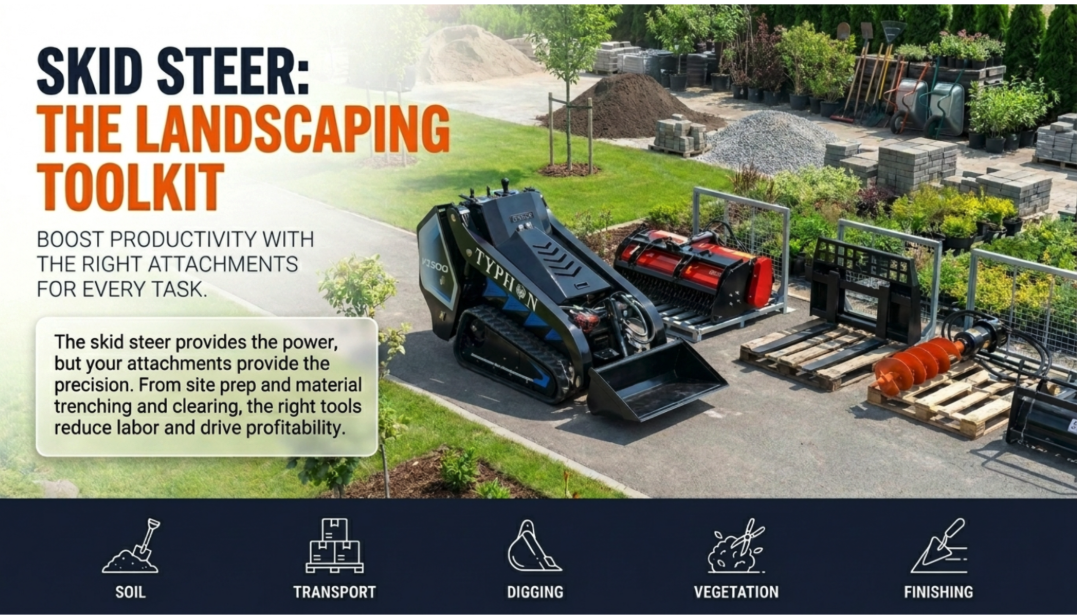
A skid steer is one of the most adaptable machines a landscaping crew can own, but its real value comes from the attachments bolted to the front. The base machine provides the power and mobility, while the right attachment turns that power into precise, productive work. With a smart selection of tools, a single skid steer can prepare soil, move heavy material, dig clean trenches, clear stubborn brush, and finish a site to a professional standard. That versatility translates directly into lower labor costs, faster project timelines, and stronger profitability on every job. This guide walks through five essential categories of landscaping attachments, explains what each one does, and shows where it earns its place in your toolkit. Choosing equipment built for your most common tasks is the surest way to reduce manual effort and get more done in every shift.
Soil Preparation and Grading Attachments
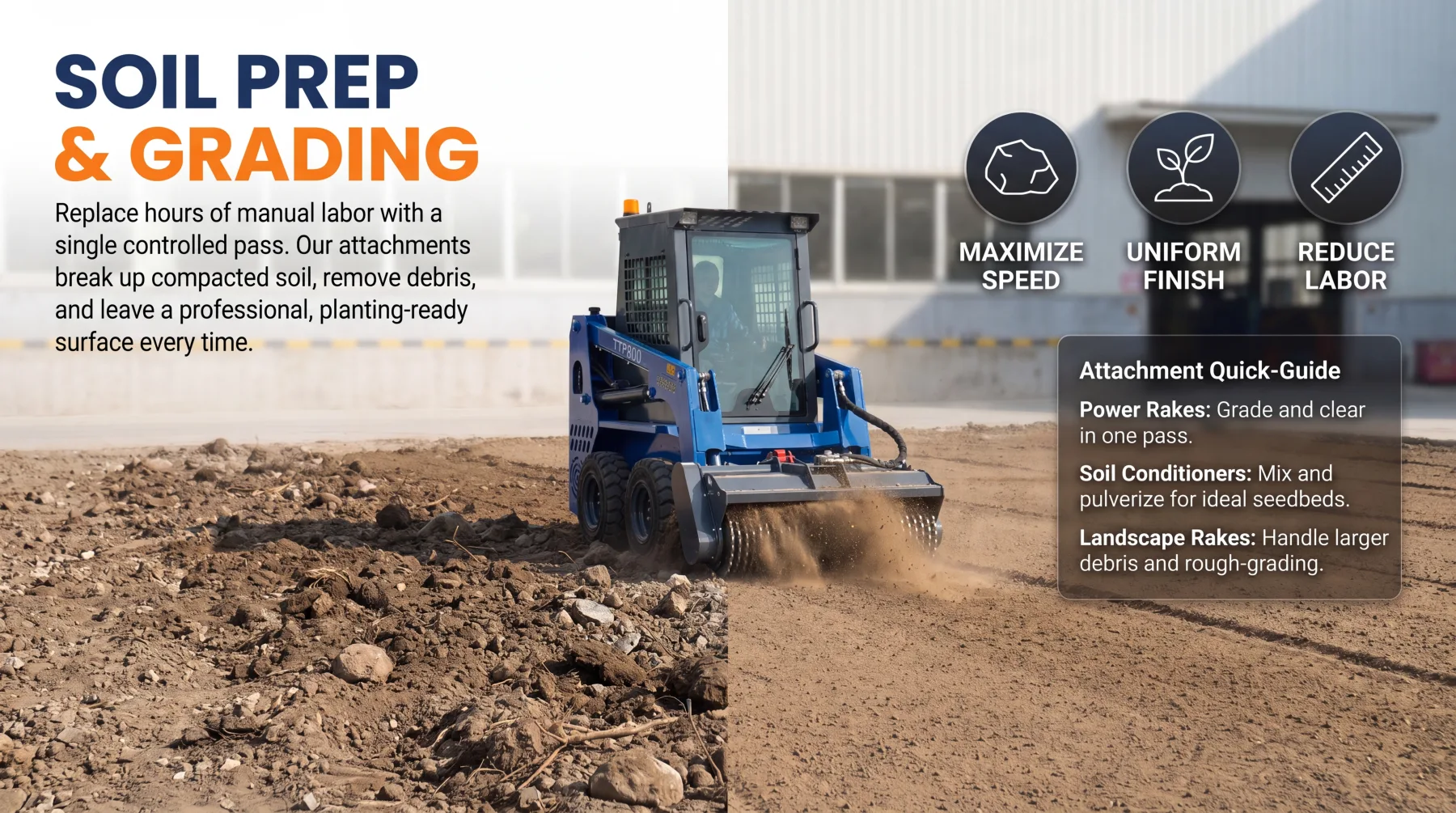
Soil preparation sets the foundation for nearly every landscaping project, and the right attachments make this demanding work fast and consistent. Power rakes, soil conditioners, and landscape rakes are built specifically to prepare seedbeds and level uneven terrain, replacing hours of backbreaking manual labor with a single controlled pass. These tools break up hard-packed dirt, pull out rocks and debris, and leave behind a smooth, even finish that is ready for seed, sod, or planting. For crews that handle lawn installations, grading, and site cleanup, these attachments are among the most frequently used tools in the entire kit.
What makes this category so valuable is the combination of speed and quality it delivers. A power rake can windrow debris to one side for easy collection, while a soil conditioner blends and levels material in a single operation. The result is a uniform surface that improves seed germination and creates a professional appearance from the moment the work is done.
Consider these soil preparation and grading tools and what they offer:
- Power rakes break up compacted soil, remove rocks and roots, and grade the surface in one pass.
- Soil conditioners mix, pulverize, and level material to create an ideal seedbed.
- Landscape rakes clear larger debris and rough-grade terrain before finer finishing work.
- Adjustable angling on many models lets you windrow material exactly where you want it.
By replacing manual raking and hand leveling, these attachments cut preparation time dramatically while producing a more consistent finish. Crews can move from raw, uneven ground to a planting-ready surface in a fraction of the time, which keeps projects on schedule and improves the quality of the final result clients see.
Material Handling and Transport Tools
Moving heavy material across a job site is one of the most time-consuming parts of any landscaping project, and material handling attachments solve that problem directly. Pallet forks and grapple buckets form the backbone of site efficiency, letting a single operator transport stone, mulch, soil, irrigation supplies, and bagged products with ease. Tasks that once required several workers and a fleet of wheelbarrows can be handled in minutes by one person and a properly equipped skid steer. That shift in efficiency has a real effect on labor costs and on how quickly a crew can stage materials and begin productive work.
Pallet forks excel at lifting and carrying palletized goods such as pavers, sod, and bagged mulch, moving them from the delivery point to exactly where they are needed. Grapple buckets take on loose, bulky, and irregular loads, clamping down on brush, rock, logs, and debris that a standard bucket simply cannot hold securely. Together, they cover nearly every material transport a landscaping crew encounters.
These material handling tools deliver clear advantages on site:
- Pallet forks move palletized stone, sod, pavers, and supplies safely and quickly.
- Grapple buckets grip loose material like brush, rock, and logs that loose buckets drop.
- Reduced manual labor means fewer injuries and less crew fatigue over a long day.
- Faster staging gets materials in place so productive work can start sooner.
Streamlining transport this way frees your crew to focus on skilled tasks rather than hauling. Heavy and awkward loads cross the site in a fraction of the time, which improves both productivity and safety while keeping the overall project moving at a steady, profitable pace.
Digging and Trenching Equipment
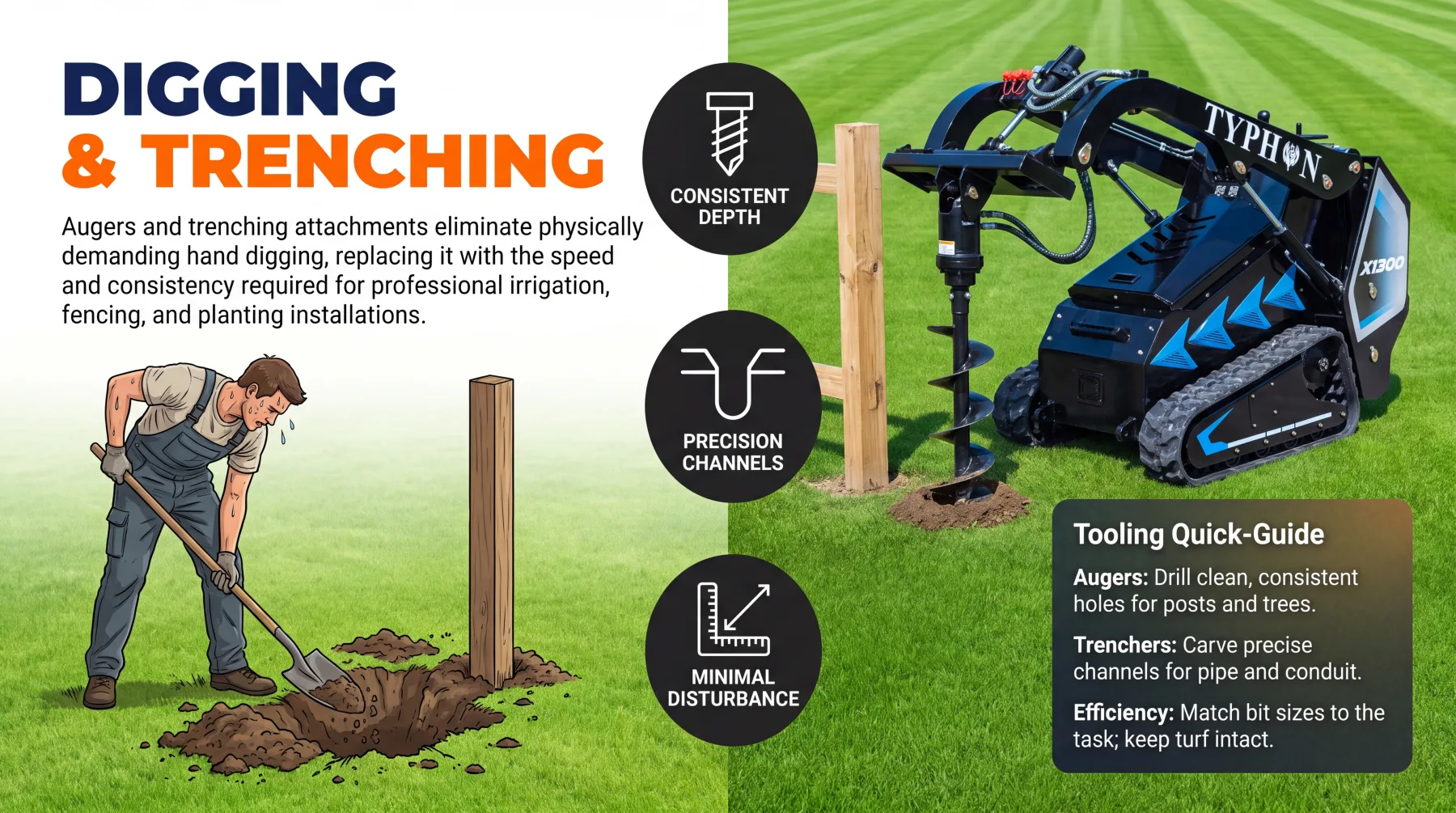
Precise digging and trenching are essential for irrigation systems, fencing, lighting, and planting work, and dedicated attachments handle these jobs with a speed and consistency that hand digging cannot match. Augers and trenching attachments let a skid steer bore clean holes and cut straight, uniform trenches in a fraction of the time manual labor would require. For any crew that installs sprinkler lines, sets fence posts, or plants trees and shrubs, these tools eliminate one of the most physically demanding parts of the job while improving the quality of the finished work.
Augers are ideal for repetitive hole digging, producing consistent depth and diameter every time. This consistency matters for fence posts that need to sit level and for plantings that require uniform holes. Trenching attachments, meanwhile, carve narrow channels at a controlled depth, which is perfect for burying irrigation pipe, electrical conduit, or drainage lines without tearing up more of the site than necessary.
Here is how these digging and trenching tools support landscaping work:
- Augers drill clean, consistent holes for fence posts, trees, shrubs, and deck footings.
- Multiple bit sizes let you match hole diameter to the exact task at hand.
- Trenching attachments cut precise, uniform channels for irrigation and utility lines.
- Minimal site disturbance keeps surrounding turf and landscaping intact during installation.
By removing the need for shovels and post-hole diggers, these attachments protect your crew from exhausting manual work and keep installations accurate. Holes and trenches come out consistent in depth and width, which speeds up the work that follows and reduces the cleanup and rework that sloppy hand digging often leaves behind.
Vegetation Management Attachments
Clearing overgrown land and maintaining property lines call for rugged tools built to handle heavy growth, and vegetation management attachments are designed for exactly that challenge. Brush cutters and hydraulic mowers turn a skid steer into a powerful clearing machine capable of cutting through thick brush, tall grass, and small saplings that would quickly overwhelm a standard mower or hand tools. For crews handling lot clearing, fence line maintenance, or large-property upkeep, these attachments convert a wild, overgrown area into a clean, workable space in a remarkably short time.
Brush cutters are built tough, with heavy blades that slice through dense vegetation, woody stems, and young trees up to several inches thick. Hydraulic mowers handle wide swaths of tall grass and lighter brush, making quick work of fields, ditches, and roadside areas. Both attachments let an operator clear difficult terrain safely from inside the cab, away from the hazards that come with manual clearing.
These vegetation management tools bring clear benefits to demanding clearing work:
- Brush cutters power through thick brush, woody growth, and small saplings with ease.
- Hydraulic mowers clear wide areas of tall grass and light brush efficiently.
- Operator safety improves since the work is done from the protected cab.
- Rapid clearing transforms overgrown lots into usable space in minimal time.
By taking on jobs that would otherwise require chainsaws, string trimmers, and significant manual effort, these attachments save enormous amounts of time and reduce the physical risk to your crew. A property that looked impassable in the morning can be cleared and ready for the next phase of work by the end of the day, which keeps large projects moving and profitable.
Specialized Finishing and Cleanup Tools
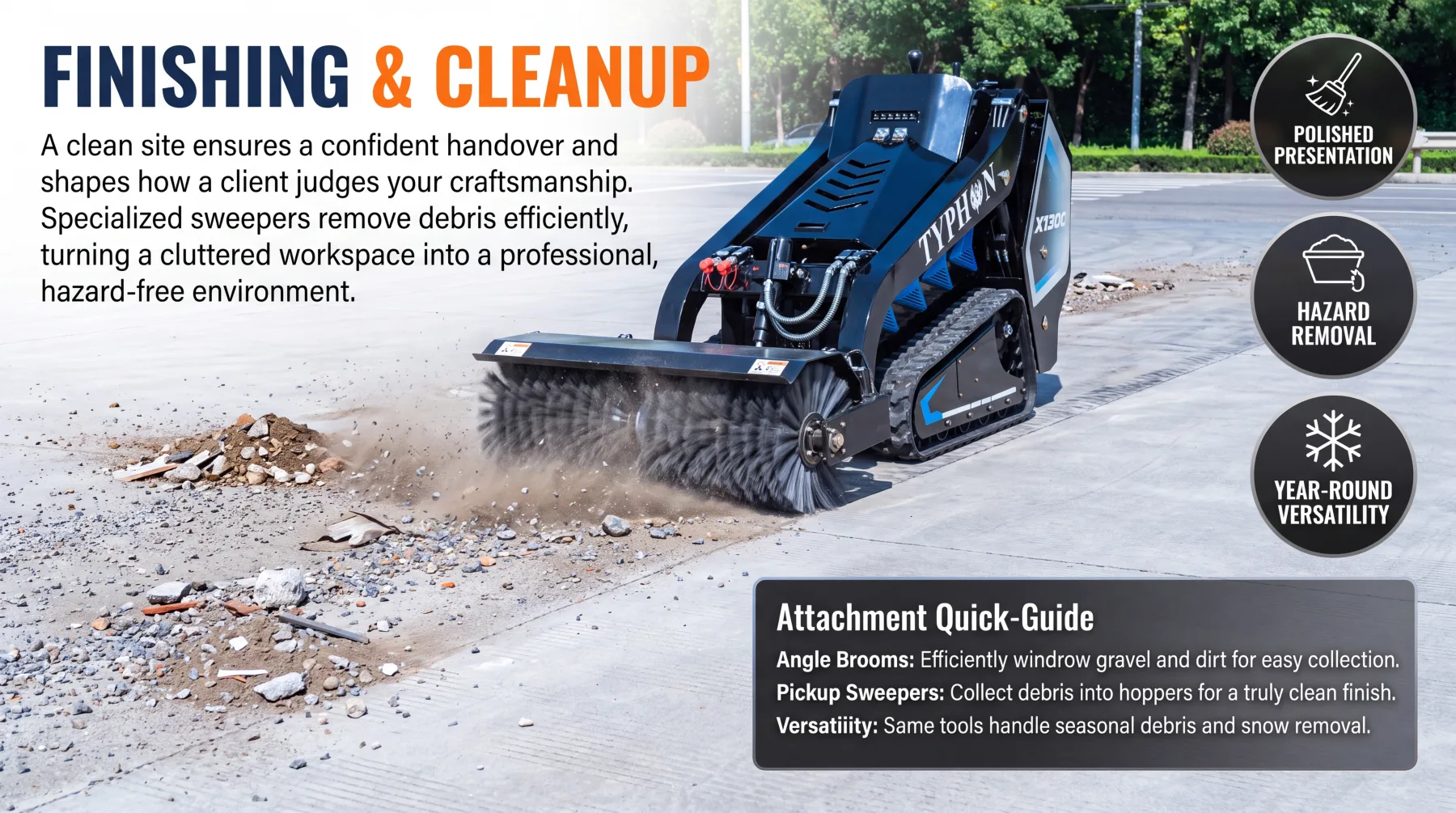
The final appearance of a job site often shapes how a client judges the entire project, which makes finishing and cleanup attachments far more important than they might first seem. Angle brooms and specialized sweepers help a crew maintain a professional, polished look by quickly clearing gravel, dirt, debris, and even snow from walkways, driveways, and hardscaped surfaces. A clean site not only impresses the client but also removes safety hazards and ensures a smooth, confident handover at the end of the work.
Angle brooms are especially useful because they can be tilted to sweep material to one side, gathering debris into neat rows for easy collection. This makes them ideal for clearing paved surfaces, parking areas, and entryways without the slow, repetitive effort of manual sweeping. Specialized pickup sweepers go a step further by collecting debris into a hopper, leaving surfaces genuinely clean rather than simply pushing material from one spot to another.
These finishing and cleanup tools round out a complete landscaping toolkit:
- Angle brooms sweep gravel, dirt, and debris efficiently and windrow it for collection.
- Pickup sweepers gather and contain debris for a truly clean finished surface.
- Snow clearing capability extends the usefulness of these tools into the winter season.
- A professional presentation leaves a strong final impression on every client.
Investing in proper cleanup attachments protects the value of all the work that came before it. A spotless, hazard-free site reflects the quality of your craftsmanship and reinforces the trust clients place in your crew. It also adds year-round versatility, since the same broom that finishes a summer project can clear snow when the season turns.
Conclusion
The right attachments are what transform a skid steer from a single machine into a complete landscaping operation. Soil preparation and grading tools create the foundation, material handling attachments keep the site moving, digging and trenching equipment handle precise installations, vegetation management tools tame overgrown ground, and finishing attachments deliver the polished result clients expect. Each category replaces hours of manual labor with fast, consistent, professional work, which protects your crew, speeds up your timelines, and strengthens your bottom line. Building your toolkit around the tasks you perform most often is the smartest way to get full value from your machine. Start by identifying the jobs that eat up the most labor on your projects, match them to the attachments that solve them best, and add the tools that will keep your skid steer working hard and your business running profitably all year long.