
Nothing slows down a construction project faster than a skid steer getting stuck in soft, muddy ground. When a machine loses traction on a wet or unstable surface, it can cause serious delays and disrupt your entire workflow. This is why understanding skid steer ground pressure is so important for operators and fleet managers working in challenging site conditions.
Every skid steer applies a certain amount of weight to the ground through its tires or tracks. If that pressure is too high for the soil to handle, the machine begins to sink, creating deep ruts and reducing efficiency. Learning how ground pressure affects skid steer performance can help you avoid these problems and operate more safely on soft or uneven terrain.
In this guide, we’ll break down the basics of skid steer ground pressure and why it matters on real job sites. You’ll also discover practical tips to reduce ground pressure, improve traction, and keep your equipment moving smoothly—even in muddy or low-bearing soil conditions. By applying the right techniques, you can prevent downtime, protect your machine, and keep your project on schedule.
What is Skid Steer Ground Pressure?
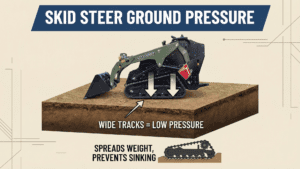
Ground pressure is a fundamental engineering concept that measures the amount of force a machine exerts on a specific area of the earth. We typically measure this force in pounds per square inch (PSI). To calculate ground pressure, you divide the total operating weight of the machine by the total area of the tires or tracks making contact with the ground.
A machine with a massive operating weight can actually have a remarkably low ground pressure if that weight spreads out over a large enough surface area. Conversely, a relatively light machine balanced on narrow, high-pressure tires will exert a tremendous amount of force on a very small area. Understanding this mathematical relationship is the first step toward optimizing your equipment for challenging terrains.
When working on solid concrete or thick asphalt, ground pressure rarely causes operational issues. These rigid surfaces easily support high-PSI loads without yielding. However, when you move the exact same machine onto a muddy field, a sandy beach, or a pristine residential lawn, the ground pressure dynamics change everything about how the equipment performs.
The Impact of Ground Pressure on Soft Soil
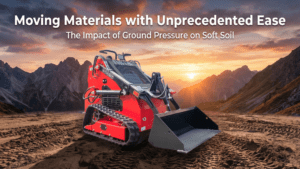
Working in dirt, mud, and sand presents unique challenges that demand careful equipment management. Ground pressure on soft soil directly dictates whether your machine will float across the surface or dig itself into a deep, inescapable hole. When the downward force of your equipment exceeds what the soil can support, gravity takes over.
High ground pressure forces the tires or tracks to slice down through the top layer of earth. This sinking action creates deep, hazardous ruts across your job site. Rutting not only destroys the existing landscape but also creates massive rolling resistance for the machine. The engine must work twice as hard just to push the equipment forward through the heavy mud, resulting in sluggish performance and severely reduced fuel efficiency.
Furthermore, excessive ground pressure causes severe soil compaction. As the machine compresses the earth, it destroys the natural capillary structures within the soil that allow water to drain and plant roots to grow. On agricultural sites or sensitive landscaping projects, this hidden damage can ruin crop yields and kill expensive turf long after the construction project finishes.
The Risk of Unexpected Downtime
Beyond environmental damage and poor fuel economy, ignoring ground pressure guidelines frequently leads to stuck equipment. A machine buried to its axles in wet clay cannot lift, load, or grade. It instantly becomes a massive, immovable obstacle that blocks other workers and grinds site productivity to a halt.
Recovering a stuck machine requires intense effort, heavy towing equipment, and substantial financial expense. Operators often waste hours attempting to dig the machine out by hand or waiting for a specialized recovery vehicle to arrive. By proactively minimizing ground pressure before entering a challenging environment, you protect your business from these highly disruptive and expensive delays.
Maintaining a low PSI footprint also enhances job site safety. A machine struggling through deep mud operates unpredictably. It can easily slide sideways on uneven terrain or tip forward if the front wheels suddenly break through a soft pocket of soil. Keeping the machine floating securely on top of the soil maintains stability and protects your operators.
Practical Strategies for Minimizing Ground Pressure
Equipping your crew with the knowledge to manage ground pressure ensures reliable performance across any terrain. Operators and fleet managers can implement several highly effective strategies to alter the footprint of their machinery. By adjusting your equipment and your operational habits, you can conquer soft soil with absolute confidence.
Upgrade to Wider Tracks or Tires
The most direct method for minimizing ground pressure involves increasing the surface area touching the ground. If you operate traditional wheeled skid steers, consider installing wider, high-flotation tires. These specialized tires feature a broad profile that distributes the machine’s weight over a significantly larger footprint, preventing the rubber from slicing deeply into the dirt.
For sites with extreme mud or sensitive turf, utilizing a compact track loader represents the ultimate solution. Tracks provide massively more surface contact area than four independent wheels. Upgrading to the widest track option available for your specific machine model drops the overall PSI dramatically. This wide stance allows heavy loaders to glide effortlessly over wet, unstable ground that would instantly trap a standard wheeled unit.
Adjust Your Load Distribution
The advertised ground pressure of a machine only accounts for its static, unloaded weight. The moment an operator scoops a heavy bucket of wet gravel, the center of gravity shifts forward, and the pressure beneath the front wheels or tracks spikes exponentially. Understanding this dynamic weight shift is critical for safe operation on soft soil.
To minimize ground pressure while moving materials, operators must balance the machine carefully. Avoid overloading the bucket beyond the machine’s rated capacity. Carry heavy loads as low to the ground as possible and keep the weight pulled back tightly against the machine’s frame. This low, balanced posture distributes the downward force more evenly across the entire length of the tracks or wheelbase, preventing the front end from diving into the mud.
Monitor and Manage Tire Inflation
If you must use a wheeled machine on soft soil, your tire pressure plays a vital role in determining your ground pressure footprint. Overinflated tires bulge at the center, creating a hard, narrow crown that slices into soft earth like a dull knife. This narrow contact patch guarantees deep ruts and poor traction in muddy conditions.
Consult your equipment manual to determine the lowest safe operating tire pressure for your specific tires. By slightly reducing the air pressure, you allow the tire casing to flatten and widen where it meets the ground. This deliberate flattening increases the contact area and reduces the overall PSI. Always remember to re-inflate the tires to their standard pressure before returning to hard surfaces like concrete or asphalt to prevent excessive rubber wear.
Utilize Track Mats for Extreme Conditions
Some job sites feature soil so incredibly soft or environments so highly sensitive that even wide-track machines risk causing damage. In these extreme scenarios, operators should deploy heavy-duty track mats to create a temporary, floating roadway. These large, interlocking composite panels act as a rigid bridge over the unstable earth.
When a machine drives onto a track mat, the mat absorbs the equipment’s weight and disperses it across an enormous surface area. This effectively drops the ground pressure to near zero, entirely protecting the soil beneath. Using mats allows you to navigate pristine residential lawns, swampy marshlands, and delicate historic sites without leaving a single permanent trace of your heavy equipment.
Operator Habits and Site Assessment
Technology and equipment modifications can only do so much; the operator’s judgment remains your most valuable asset. Train your operators to assess the soil conditions thoroughly before driving off the pavement. Walking the site allows them to identify hidden wet spots, soft drainage areas, and unstable inclines that might trap a heavy machine.
Operators should also adjust their driving habits when navigating soft soil. Aggressive acceleration, hard braking, and sharp, zero-radius turns tear up the topsoil instantly and destroy the structural integrity of the ground. Smooth, deliberate movements and wide, gradual turns protect the surface layer and keep the machine safely afloat.
Conclusion
Understanding skid steer ground pressure is not just a technical specification; it is a fundamental requirement for efficient, professional earthmoving. High ground pressure on soft soil leads to destructive rutting, severe soil compaction, and the costly frustration of buried equipment. By mastering the relationship between machine weight and surface area, you maintain total control over your job site environment.
Commit to minimizing ground pressure by evaluating your current fleet and operational habits. Consider outfitting your machines with wider tracks or high-flotation tires before tackling your next wet-weather project. Train your crew on the importance of proper load distribution and careful site assessment.
Take a moment today to review your upcoming project sites. If you anticipate working on soft clay, loose sand, or sensitive turf, proactively prepare your equipment for those challenges. Prioritizing low ground pressure ensures your machinery operates safely, your project timelines remain intact, and your business continues to deliver reliable, exceptional results.