

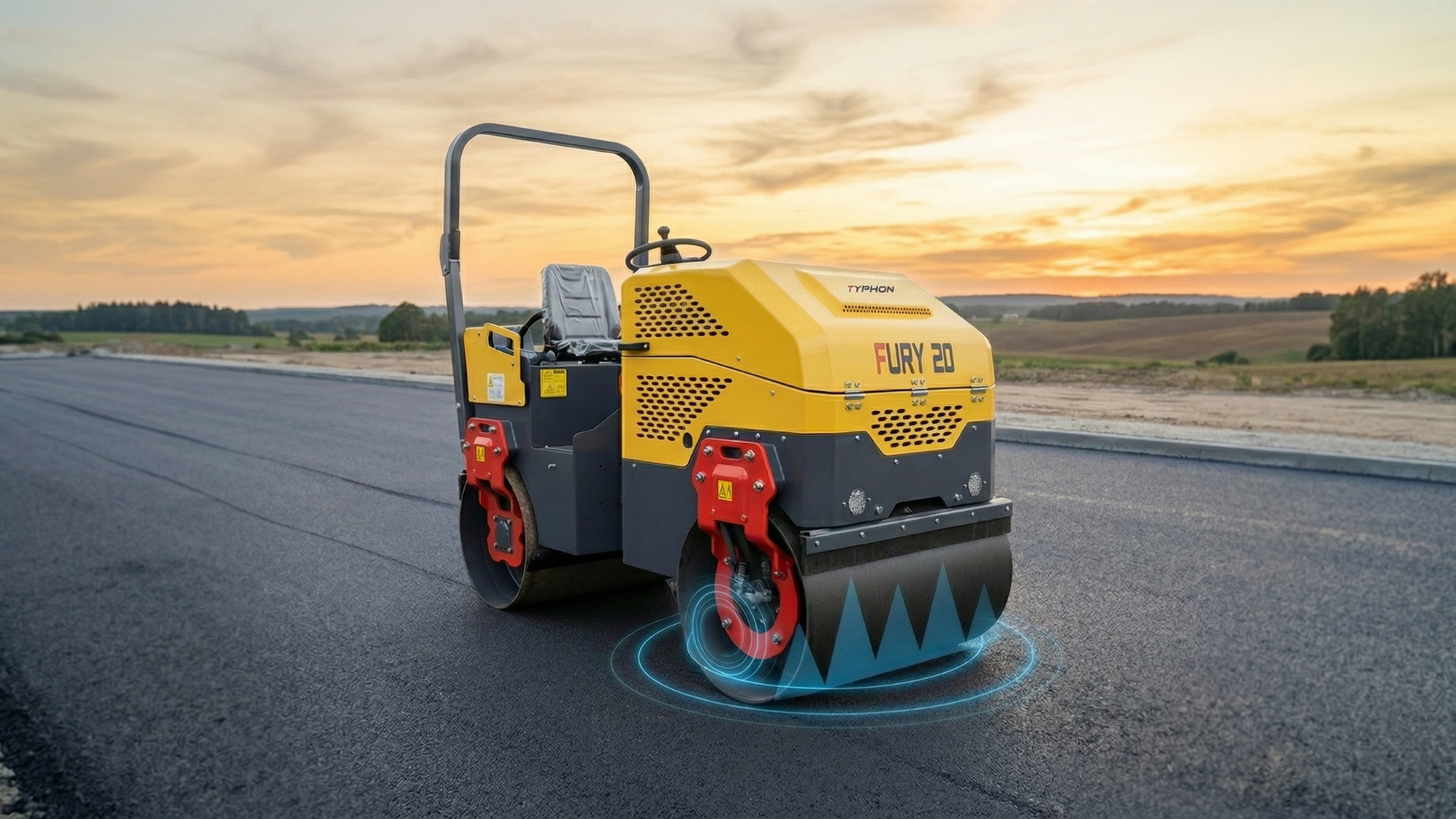
Common Compaction Mistakes and How to Avoid Them With Road Rollers
Establishing a rock-solid foundation dictates the success of your entire construction project. When you build on poorly compacted dirt, you invite structural failure, deep asphalt cracking, and massive financial liabilities. Professional contractors understand that operating heavy machinery requires precise technical knowledge, not just raw driving skills. Even experienced operators occasionally fall into bad habits that compromise the structural integrity of the ground beneath them.
We want to empower your crew with the exact knowledge required to deliver flawless, reliable results on every single job site. Identifying and eliminating common compaction mistakes protects your professional reputation and secures your profit margins. When you understand how the machine interacts with different materials, you guarantee a base that will support immense weight for decades.
This comprehensive guide breaks down the most frequent soil compaction errors contractors face in the field. We will explore how to correct wrong vibration settings, manage your compaction passes, control your driving speed, and optimize your soil moisture conditions. For a deeper understanding of the mechanical forces behind this process, read our foundational guide on How Road Rollers Ensure Long-Lasting Road and Soil Compaction.
The High Cost of Soil Compaction Errors
Ignoring the science of soil consolidation leads directly to catastrophic infrastructure failures. When you fail to compress the ground properly, microscopic air voids remain trapped deep within the earth. As heavy buildings or constant highway traffic apply pressure to this unstable base, the air pockets collapse. This causes the ground to sink unevenly, fracturing the expensive concrete and asphalt resting directly above it.
Furthermore, these structural failures rarely happen immediately. They often reveal themselves months or even years after you finish the contract, completely destroying your warranty budget. Water seeps into the uncompacted voids, freezing and expanding during the winter months to tear your pavement apart from the inside.
You must treat the compaction phase as the most critical step of your entire build. Equipping your operators with authoritative road roller tips ensures they execute their duties with absolute precision. By avoiding the specific mistakes detailed below, you guarantee a finished product that exceeds your client’s highest expectations.
Mistake 1: Using the Wrong Vibration Settings
Modern road rollers rely heavily on intense drum vibration to force soil particles together. However, treating vibration as a simple “on/off” switch serves as one of the most destructive compaction mistakes you can make. Different materials require vastly different dynamic forces to achieve maximum density.
Understanding Amplitude and Frequency
Inside the heavy steel drum, rotating weights generate the massive vibratory force. Operators can typically adjust two main settings: amplitude and frequency. Amplitude controls how high the drum jumps off the ground, delivering a heavy, deep-penetrating blow. Frequency dictates how fast the drum strikes the ground per minute.
If you use high amplitude on a thin layer of delicate asphalt, you will violently crush the aggregate stones and destroy the pavement’s interlocking structure. Conversely, using a low-amplitude setting on a thick lift of heavy clay will fail to send the shockwaves deep enough to compress the bottom of the layer.
The Solution for Optimal Vibration
You must match your vibration settings directly to the material and the specific lift thickness you are rolling. For thick layers of cohesive soil or heavy granular base, utilize a high amplitude and a lower frequency to drive the compaction force deep into the earth.
When you transition to thinner lifts, or when you are rolling the final finishing passes on hot mix asphalt, switch to a low amplitude and a high frequency. This setting prevents aggregate crushing while sealing the surface perfectly smooth. Always consult your project engineer’s specifications to determine the exact vibratory requirements for your specific materials.
Mistake 2: Executing Too Few (or Too Many) Passes
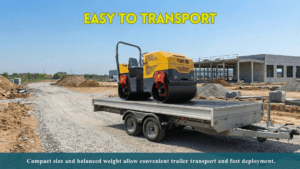
Achieving the required structural density requires a systematic, disciplined driving pattern. Every time the machine travels over a specific strip of ground, you complete a compaction pass. Failing to manage your pass count correctly leads to severe inconsistencies across your job site.
The Danger of Under-Compaction
Many operators rush through the compaction phase, driving over the material only once or twice before moving to the next section. This severe lack of passes leaves the soil loose and highly susceptible to future settlement. The ground might look flat and smooth on the surface, but it completely lacks the deep, load-bearing strength required to pass a commercial density test.
The Risks of Over-Compaction
Interestingly, executing too many passes causes just as much damage as executing too few. Once the soil reaches its maximum possible density, the ground literally cannot compress any further. If your operator continues to vibrate the heavy drum over this rigid surface, the dynamic force has nowhere to go but back up into the machine.
This over-compaction fractures the soil particles, reducing them to fine dust and destroying their structural friction. It also causes massive mechanical damage to your expensive roller, shattering the heavy rubber isolators that protect the cabin from the vibrating drum. You avoid this entirely by using a nuclear density gauge to test the soil after a set number of passes. Once you achieve the target density, stop rolling that section immediately.
Mistake 3: Driving at the Incorrect Speed
Time remains your most valuable asset on any active commercial site, but speeding during the compaction phase guarantees failure. Road rollers require time to transfer their immense energy into the ground. When your operators press the accelerator to the floor, they completely sabotage the machine’s mechanical capabilities.
Why Rushing Ruins Compaction
Vibratory rollers strike the ground at a specific frequency, usually measured in impacts per foot. If the machine travels too fast, the distance between these individual impacts stretches out significantly. This leaves microscopic, uncompacted gaps in the soil between every single drum strike.
Furthermore, driving too fast on hot mix asphalt pushes the material forward, creating a series of uneven ripples known as a washboard effect. This destroys the ride quality of the finished road and requires highly expensive milling to fix.
Finding the Sweet Spot
Professional road roller tips always emphasize maintaining a slow, highly consistent travel speed. For most soil applications, operators should drive between 1.5 and 2.5 miles per hour. This deliberate pace ensures the drum strikes the ground closely and consistently, transferring maximum dynamic force into the earth.
Train your operators to rely on the machine’s speedometer rather than their physical feeling. They must also execute perfectly smooth directional changes. Jerking the steering wheel or slamming the machine into reverse tears the material and creates deep ruts that take hours to smooth out properly.
Mistake 4: Ignoring Poor Soil Moisture Conditions
You cannot achieve commercial-grade compaction based on mechanical force alone. The physical condition of the dirt plays a massive role in how the particles react to the heavy roller. Ignoring the moisture content of your material represents one of the most common soil compaction errors in the contracting industry.
The Optimum Moisture Content (OMC)
Water acts as a critical lubricant during the compaction process. When the soil contains the exact right amount of water, the particles easily slide past one another and lock tightly together under the weight of the drum. This specific, perfect balance is known as the Optimum Moisture Content (OMC).
If the soil is far too dry, the friction between the particles remains too high. No matter how many passes your roller makes, the dry dirt will simply bounce around and refuse to bind together. Conversely, if the soil is too wet, the water completely fills the voids. Because water cannot be compressed, the heavy roller simply creates a massive mud pit, pushing the soft earth out to the sides.
Testing and Adjusting Moisture Levels
You must identify your material’s OMC by performing a standard Proctor test before you begin rolling. Once you know the target, your crew must actively manage the job site conditions.
If the heavy clay is too wet from a recent rainstorm, you must use a disk harrow to aerate the soil. Flipping the dirt allows the sun and wind to dry it out before you attempt to roll it. If the granular base is completely dried out from intense summer heat, you must deploy a commercial water truck. Spray an even layer of moisture across the lift, mix it thoroughly, and then deploy your vibratory roller to lock it down perfectly.
Secure Your Compaction Success
Delivering a flawless, unyielding foundation separates elite contractors from the rest of the industry. You now understand exactly how to identify and avoid the most common compaction mistakes on your job sites. By mastering your vibration settings, carefully counting your passes, controlling your travel speed, and balancing your soil moisture, you guarantee exceptional results.
Take time this week to review these strategies directly with your heavy equipment operators. Ensure they understand the science behind their machinery and why discipline matters during every single pass. When you commit to superior compaction techniques, you eliminate costly callbacks, protect your professional reputation, and ensure your projects stand strong for generations to come.