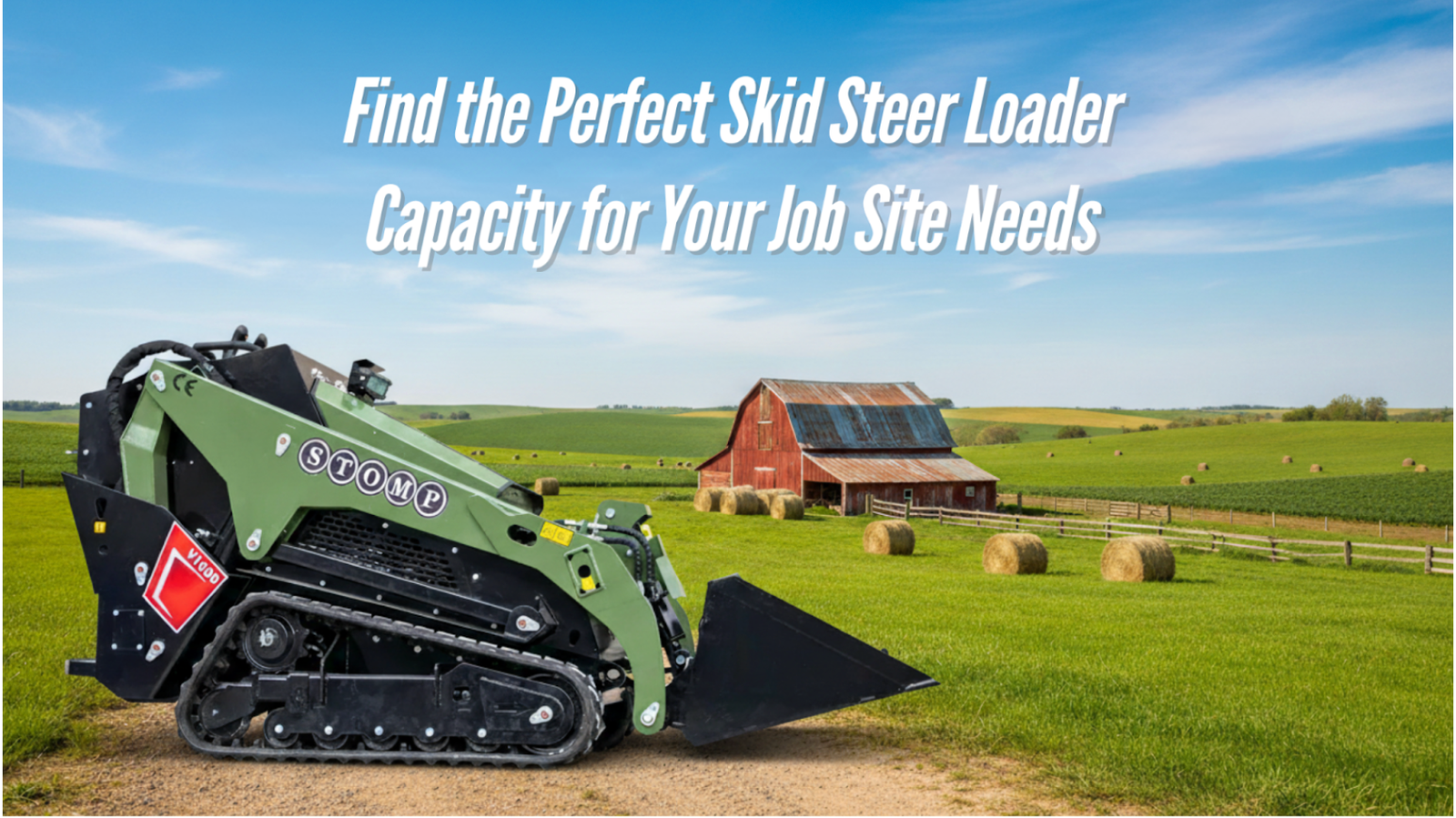
In particular, the Rated Operating Capacity (ROC) determines how much weight you can safely lift, carry, and handle on a daily basis. Selecting the wrong capacity can result in reduced efficiency, increased safety risks, and excessive strain on your equipment. Understanding ROC ensures you invest in a skid steer loader that delivers both performance and long-term reliability.
This guide provides a comprehensive framework for choosing the right skid steer loader capacity. We will break down the technical definitions, analyze how job site requirements influence your choice, and offer actionable steps to ensure you invest in a machine that meets your current and future needs.
Understanding Rated Operating Capacity (ROC)
Before you browse listings or visit a dealership, you must understand what “capacity” actually means in the context of skid steers. The Rated Operating Capacity (ROC) is not the maximum weight the machine can lift before tipping over; that is the Tipping Load.
The ROC is a safety standard. For skid steer loaders, the ROC is typically 50% of the Tipping Load. This means if a machine tips forward with a 4,000-pound load, its safe operating capacity is rated at 2,000 pounds. This safety margin accounts for dynamic forces—like bouncing over rough terrain, turning quickly, or lifting loads to full height—that can shift the center of gravity and reduce stability.
The Three Main Capacity Classes
Skid steers generally fall into three size categories based on their ROC:
-
- Small Frame (Under 1,750 lbs): These compact machines are designed for tight spaces, backyard landscaping, and interior demolition. They are easy to transport but limited in lifting power.
-
- Medium Frame (1,750 lbs – 2,200 lbs): This is the most common class. These machines offer a balance of power and maneuverability, capable of handling standard pallets of pavers or sod and loading dump trucks.
-
- Large Frame (Over 2,200 lbs): Built for heavy-duty excavation, road work, and lifting dense materials like wet concrete or large boulders. They require more space to operate but deliver maximum productivity.
Assessing Your Job Site Requirements
Your work environment dictates the physical constraints your machine must operate within. A high-capacity machine is useless if it cannot fit through the gate or is too heavy for the surface you are working on.
Space and Dimensions
Measure the narrowest points of your typical job sites. If you frequently work in residential backyards, a large-frame skid steer might be too wide to pass through standard gates or between structures. Height is also a factor; if you need to operate inside barns or low-clearance garages, you must ensure the cab height and lift arm geometry fit the space.
Surface Conditions
Ground pressure is an important factor when selecting equipment. Larger, high-capacity machines place more weight on the surface, which can damage finished turf, soft soil, or other sensitive ground conditions. Repairs from excessive ground disturbance can quickly add unexpected costs.
If you frequently operate on delicate surfaces, a smaller machine may be the better choice. Alternatively, a compact track loader distributes weight more evenly across tracks rather than wheels, reducing ground pressure — though it typically comes at a higher purchase price.
Calculating Material Weight
The most common mistake buyers make is underestimating the weight of the materials they handle. You need a machine that can lift your heaviest load, not just your average load.
Know Your Densities
Different materials have vastly different weights per cubic yard.
-
- Dry Topsoil: ~2,000 lbs per cubic yard
-
- Gravel: ~2,600 – 3,000 lbs per cubic yard
-
- Wet Sand: ~3,000+ lbs per cubic yard
-
- Concrete: ~4,000 lbs per cubic yard
If your bucket holds half a cubic yard, you must calculate the weight of that material plus the weight of the bucket itself.
Palletized Loads
If you move palletized materials like brick, block, or sod, you need to know the standard pallet weights. A pallet of sod can weigh between 2,000 and 3,000 pounds, depending on moisture content. A standard cube of brick can weigh even more. Ensure your machine’s ROC can handle these specific loads safely, keeping in mind that the load center on the forks extends further out than a bucket, which effectively reduces your lift capacity.
Lift Height and Geometry
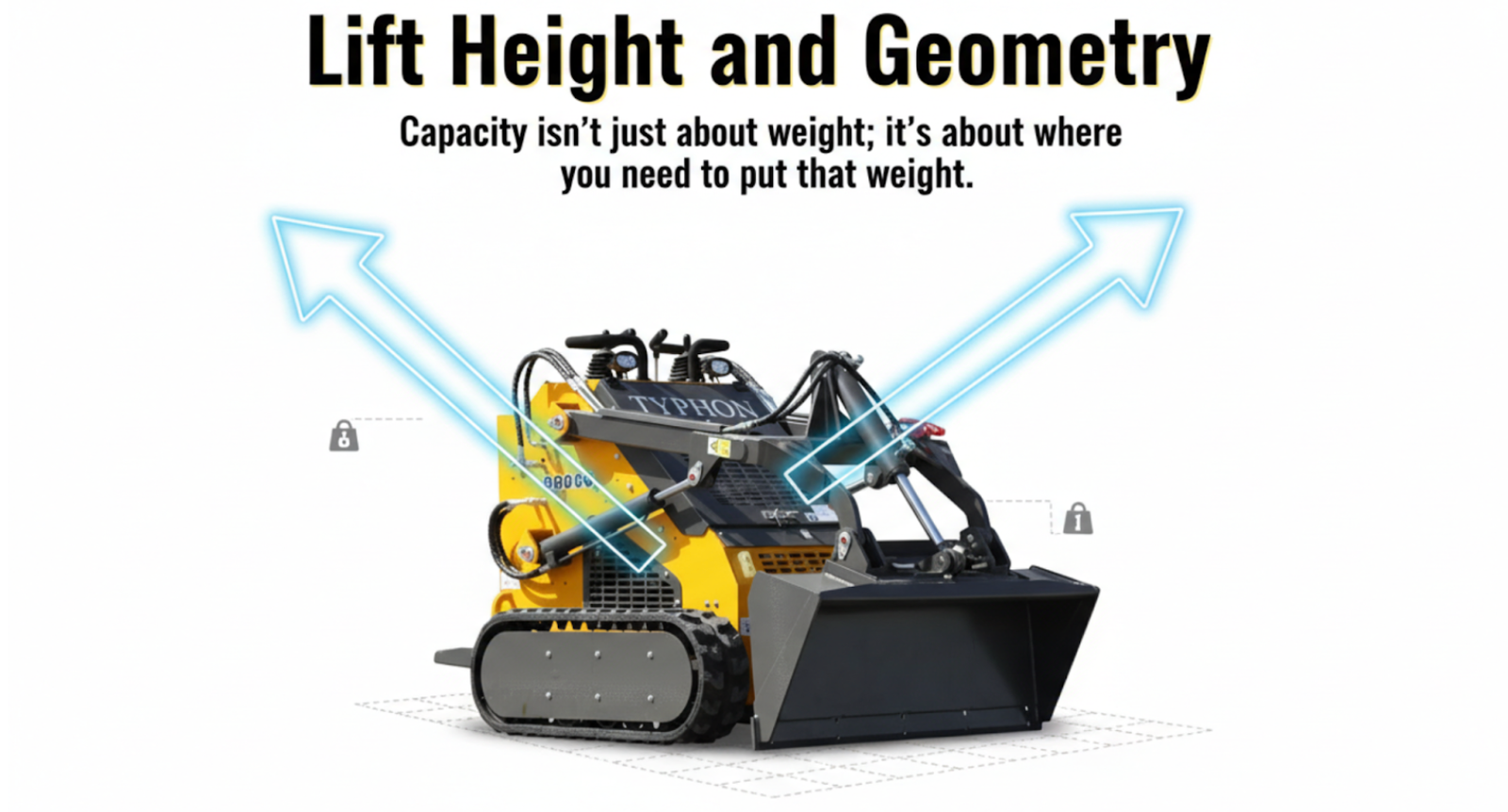
Capacity isn’t just about weight; it’s about where you need to put that weight.
Radial vs. Vertical Lift
Skid steers come with two types of lift arm designs: radial lift and vertical lift.
-
- Radial Lift: The bucket moves in an arc. These machines offer excellent reach at mid-range heights (like dumping over a low wall or flatbed truck) and are generally better for digging and grading.
-
- Vertical Lift: The bucket moves straight up. These machines keep the load closer to the machine’s center of gravity, allowing for a higher ROC relative to machine weight. They provide maximum reach at full lift height, making them superior for loading high-sided dump trucks or stacking pallets.
If your primary task involves lifting heavy loads to significant heights, a vertical lift machine with a higher ROC is usually the safer and more efficient choice.
Operational Efficiency and Future-Proofing
Buying a machine that barely meets your current needs leaves no room for growth. Operating a machine at 99% of its capacity constantly is hard on the hydraulics, the engine, and the structural components. It also leaves zero margin for error.
The 80% Rule
A good rule of thumb is to size your machine so that your typical heaviest load represents about 80% of the machine’s Rated Operating Capacity. This buffer ensures the machine isn’t constantly strained, provides better stability on uneven ground, and allows for occasional heavier lifts without compromising safety.
Hydraulic Flow for Attachments
While ROC measures lifting power, hydraulic capacity (measured in gallons per minute, or GPM) determines which attachments you can run. Larger capacity machines typically come with higher hydraulic flow rates. If you plan to use high-performance attachments like cold planers, forestry mulchers, or large trenchers, you will need a machine with “High Flow” hydraulics. Ensure the skid steer you choose has both the lift capacity to carry the attachment and the hydraulic capacity to power it effectively.
Actionable Steps for Buyers
Ready to make a decision? Follow these steps to narrow down your options:
-
- Audit Your Loads: List the three heaviest materials you move. Calculate their weight per scoop or per pallet.
-
- Check Your Trucks: Measure the side height of the dump trucks or hoppers you load. Ensure the skid steer’s hinge pin height exceeds this measurement.
-
- Measure Access Points: Determine the maximum width and height available on your smallest job sites.
-
- Demo the Machine: Never buy off a spec sheet alone. Test the machine with a load similar to what you handle daily. Feel the stability when lifting and turning.
-
- Consult with Experts: Speak with a reputable dealer who understands your industry. They can help match specific models to your unique workload.
Conclusion
Choosing the right skid steer loader capacity is a balance of power, size, and budget. By accurately assessing your material weights and job site constraints, you can select a machine that delivers reliable performance without unnecessary bulk or expense. Remember, the right capacity isn’t just about lifting more; it’s about working safer, faster, and more profitably. We are here to help you navigate these specifications and find the equipment that will drive your business forward.