
Buying heavy machinery is one of the biggest financial decisions you will make for your contracting business. The right machine can boost your team’s productivity, help you finish jobs faster, and increase your overall revenue. But the wrong choice can quickly tie up your cash, lead to constant repairs, and slow your business down.
What separates successful contractors from those who struggle is knowing what mistakes to avoid. Too many buyers make decisions based on appearance or sales pressure instead of real performance and financial value. To make a smart purchase, you need to approach it like an investment—focusing on data, long-term costs, and how the machine will actually perform on your job sites.
In this guide, we break down the most common and costly equipment buying mistakes. You will learn how to avoid overbuying, understand the true cost of ownership, and why proper inspections matter more than most people think. With the right approach, you can choose equipment that is reliable, cost-effective, and built to support your business growth.
Mistake 1: Overbuying Capacity and Size
Contractors frequently fall into the trap of believing that bigger is always better. While massive horsepower and incredible breakout force look impressive on a specification sheet, they do not guarantee profitability. Buying a machine that far exceeds your actual job site requirements stands as one of the most common construction equipment buying mistakes.
The True Cost of Excess Power
Oversized machinery carries a massive premium on the initial purchase price. However, the financial damage extends far beyond the dealership lot. A massive 30-ton excavator burns significantly more diesel fuel every single hour compared to a properly sized 15-ton model. Over the course of a five-year lifespan, this excess fuel consumption destroys your profit margins.
Furthermore, oversized equipment drastically increases your daily logistical costs. Moving a massive bulldozer requires expensive commercial hauling permits and specialized lowboy trailers. If your business primarily handles tight residential utility work, a massive machine simply cannot maneuver safely around the properties, rendering it completely useless for your core contracts.
Matching Machines to Daily Workloads
You must evaluate your upcoming project pipeline strictly on data, not on “what if” scenarios. Do not buy a massive wheel loader simply because you might land a large commercial contract two years from now. Focus your purchasing power on the specific tasks your crew performs 80 percent of the time.
If you occasionally need a massive machine for a specific phase of a build, the commercial rental market provides a perfect solution. Renting the oversized tool for two weeks keeps your overhead incredibly low. Meanwhile, you reserve your primary capital to buy properly sized, highly versatile equipment that your crew uses every single day.
Mistake 2: Ignoring the Total Cost of Ownership
The number printed on the dealership price tag represents only a fraction of what a machine will actually cost your business. Failing to calculate the Total Cost of Ownership (TCO) completely blinds you to the financial reality of your investment. You must look beyond the monthly finance payment to understand how the machine impacts your long-term cash flow.
Factoring in Operating Expenses
Every hour a machine runs, it consumes valuable resources. You must calculate the exact cost of diesel fuel, operator wages, and commercial insurance premiums. Different brands and models feature vastly different fuel efficiency ratings. A machine that costs slightly more upfront but burns 20 percent less fuel often delivers a much faster financial payback period.
Additionally, you must forecast your routine preventative maintenance costs. Complex machines require specialized hydraulic fluids, massive air filters, and frequent greasing to maintain peak performance. Request a detailed maintenance schedule from the manufacturer before you buy, and calculate exactly what those services will cost over the next three years.
The Hidden Cost of Unplanned Downtime
When evaluating new versus used equipment, you must assign a financial value to machine reliability. Cheap, poorly maintained used equipment frequently breaks down directly on the job site. When this happens, your entire project schedule stalls entirely.
You continue paying your crew their hourly wages while they stand around waiting for a mobile mechanic to arrive. This unexpected downtime completely erases any money you saved by purchasing the cheaper machine. Investing in premium, highly reliable equipment protects your project timelines and ensures you consistently deliver excellent results for your clients.
Mistake 3: Skipping Thorough Physical Inspections
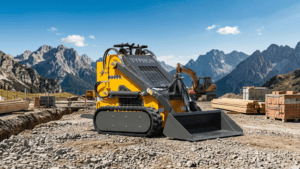
When purchasing used machinery, trusting the seller’s word without verifying the machine’s condition invites total financial disaster. Many sellers apply a fresh coat of paint and clean the cab to hide massive mechanical failures lurking just beneath the surface. Skipping a comprehensive physical evaluation ranks high on the list of what to avoid when buying heavy equipment.
The Dangers of Buying Blind
Never buy a piece of used heavy machinery without inspecting it in person or hiring an independent expert to do it for you. You must look closely at the structural integrity of the massive steel components. Search for hairline cracks along the boom arms, freshly ground welds on the bucket linkage, and deep rust heavily painted over on the undercarriage.
Check the hydraulic system meticulously while the machine operates under a heavy load. Look for seeping fluid around the main pump seals and the massive lifting cylinders. A single compromised hydraulic pump easily costs thousands of dollars to replace, instantly ruining the financial viability of your purchase.
Fluid Analysis and Professional Diagnostics
Visual inspections only reveal the external health of the machine. To understand the true condition of the internal engine and transmission, you must pull fluid samples. Professional contractors always hire a certified diesel mechanic to extract small vials of engine oil, hydraulic fluid, and coolant before signing a purchase agreement.
Sending these samples to an independent laboratory reveals microscopic metal shavings and abrasive dirt hidden inside the systems. If the lab detects high levels of copper or iron in the engine oil, you know the internal bearings are actively failing. This critical data empowers you to walk away from a doomed machine before it drains your bank account.
Mistake 4: Neglecting Future Resale Value
Every piece of heavy equipment depreciates over time, but not all brands lose their value at the exact same rate. When calculating your initial return on investment, you must factor in the cash you will recover when you eventually sell or trade the machine. Ignoring a machine’s residual value severely limits your future purchasing power.
Brand Reputation Matters
Top-tier equipment manufacturers command higher secondary market prices because buyers inherently trust their proven durability. Purchasing an obscure, off-brand machine might save you ten thousand dollars today, but it will cost you drastically more when you try to sell it. Secondary buyers typically avoid unsupported brands because finding replacement parts becomes nearly impossible.
When you invest in highly respected brands, you effectively lock in a higher future trade-in value. This retained equity acts as a powerful financial safety net for your business. It provides you with massive leverage when the time comes to upgrade your fleet and secure newer, more efficient technology.
Documentation Equals Equity
You directly control a massive portion of your machine’s resale value through strict record-keeping. Secondary buyers willingly pay premium prices for used equipment backed by comprehensive, highly detailed service records. If you cannot prove that you changed the oil and serviced the hydraulics on time, buyers will assume the worst and drastically lower their offers.
Implement a strict digital maintenance tracking system from the very first day you own the machine. Document every single filter change, grease interval, and major component repair. When you hand a prospective buyer a flawless maintenance log, you instantly build absolute trust and secure the highest possible cash return on your asset.
Mistake 5: Failing to Test the Equipment On-Site
Relying entirely on a marketing brochure to make a six-figure purchasing decision rarely ends well. A machine might look perfect on paper, but it must perform flawlessly in the dirt. Failing to test the equipment under real-world conditions frequently leaves contractors stuck with machinery their crews absolutely hate operating.
Operator Comfort and Usability
The person sitting inside the cabin holds the greatest influence over your daily productivity. If the cab feels incredibly cramped, features terrible visibility, or lacks proper air conditioning, operator fatigue will set in rapidly. Fatigued operators work more slowly, make costly mistakes, and burn significantly more diesel fuel.
Always bring your lead operator to the dealership when evaluating a new machine. Let them sit in the seat, adjust the controls, and evaluate the specific sightlines to the bucket cutting edge. When your operators feel comfortable and confident in the machine, their daily output increases dramatically.
Real-World Performance Validation
Whenever possible, demand an on-site demonstration before finalizing the purchase. Reputable dealers will happily deliver the machine to your active job site for a short trial period. This allows you to test the specific breakout force in the exact type of soil your crew digs every single day.
Use this demonstration period to evaluate the hydraulic response times and the machine’s overall stability when carrying heavy loads. Verifying the performance directly in the dirt eliminates the guesswork from your acquisition strategy.
Build Your Fleet With Absolute Confidence
Expanding your contracting business requires highly reliable machinery and exceptionally smart capital management. You now understand the top construction equipment buying mistakes and exactly how to protect your working capital. By avoiding oversized machines, calculating your total operating costs, and demanding rigorous physical inspections, you secure maximum value from every purchase.
Take the time to evaluate your upcoming equipment needs using these highly effective equipment buying tips. Demand comprehensive service records, focus heavily on retained resale value, and always let your lead operators test the machinery in the dirt. When you make strategic, highly disciplined purchasing decisions, you build a powerful, resilient fleet capable of dominating your local market for decades.
Conclusion
In the end, operator comfort is not just a nice extra—it directly impacts your productivity, efficiency, and overall jobsite performance. A machine that feels comfortable, offers clear visibility, and is easy to control allows your operator to work longer hours with less fatigue and fewer mistakes. That translates into faster job completion and lower fuel and operating costs.
Taking the time to involve your operator in the buying process is a smart, practical move. When they feel confident and comfortable in the machine, they can perform at their best every single day. This not only improves output but also helps protect your equipment from unnecessary wear caused by poor handling.
Ultimately, the right machine works well for both your business and your operator. When comfort and performance come together, you create a more efficient workflow, stronger results on site, and a more profitable operation overall.