

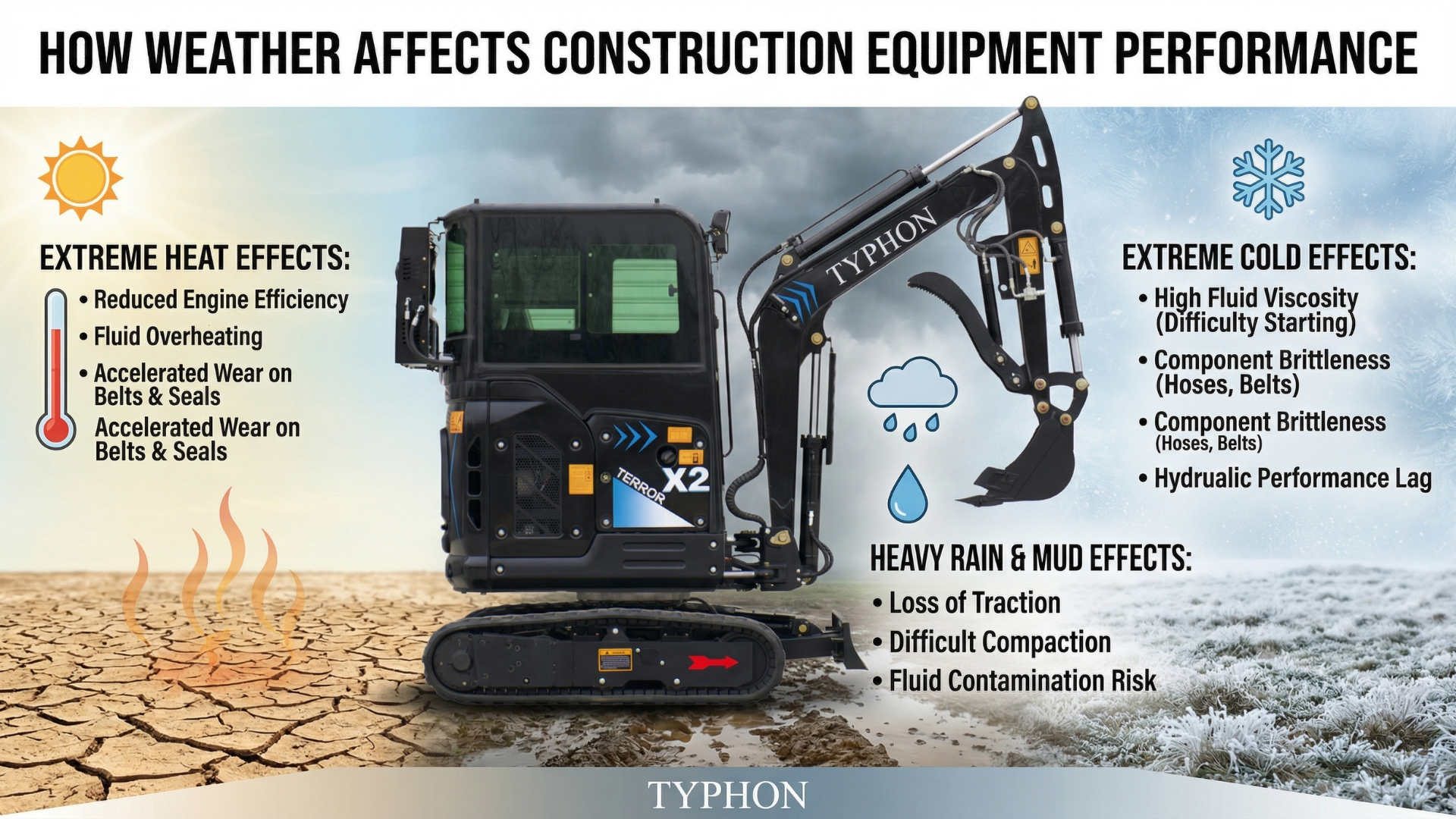
Construction projects rarely enjoy perfect forecasts or controlled climates. You must execute complex earthmoving, lifting, and grading tasks regardless of what the sky decides to do. A sudden downpour or a severe heatwave immediately changes the physical dynamics of your job site. More importantly, these shifts directly challenge the mechanical limits of your heavy machinery.
The weather’s impact on construction equipment dictates your daily productivity and long-term profitability. When you force a machine to push through deep mud, blistering heat, or freezing ice without proper preparation, you guarantee premature mechanical failure. Protecting your capital investment requires a deep understanding of how environmental extremes attack your fleet.
This comprehensive guide explores exactly how different weather conditions compromise the reliability of your heavy machinery. We will examine the specific mechanical challenges created by rain, heat, and cold. Finally, we will provide authoritative construction equipment maintenance tips to help you protect your fleet and maintain peak job site productivity all year long.
The Reality of Operating Equipment in Extreme Weather
Heavy machinery relies on a delicate balance of fluid pressures, engine temperatures, and physical traction to operate efficiently. Environmental extremes aggressively disrupt this balance. When the ambient temperature spikes or plummets, the internal operating conditions of your engine and hydraulic system change drastically.
If your operators ignore these changes, they will quickly push the equipment beyond its physical breaking point. Operating equipment in extreme weather without modifying your daily routines leads to blown seals, cracked engine blocks, and destroyed undercarriages. A proactive, highly disciplined approach to fleet management is the only way to secure your assets against the elements.
You must adapt your maintenance schedules and operating procedures to match the season. Treating a wheel loader the exact same way in January as you do in July is a recipe for catastrophic downtime. By anticipating the weather, you ensure your equipment delivers reliable, uninterrupted performance for your clients.
Conquering Rain and Deep Mud on the Job Site
Water fundamentally alters the ground beneath your tracks. Solid clay quickly transforms into a slick, heavy paste that clings to everything it touches. Navigating a saturated job site places immense physical stress on the structural components of your machinery.
Managing Traction Loss and Undercarriage Wear
When equipment travels through deep mud, the soil packs tightly into the undercarriage. For tracked machines, this compacted mud hardens around the sprockets and idlers. As the mud builds up, it forces the heavy steel or rubber tracks to stretch dangerously tight.
This extreme tension accelerates the wear on your undercarriage components and forces the engine to burn significantly more fuel just to move the machine forward. You must train your operators to frequently clear the tracks using a specialized clean-out tool. Removing this packed mud multiple times a day prevents the tracks from snapping under the immense pressure.
Protecting Critical Hydraulic Systems
Heavy rain also threatens the internal integrity of your hydraulic systems. Equipment cylinders rely on tight rubber seals to keep highly pressurized fluid inside and environmental contaminants out. If a seal becomes worn or damaged, rainwater easily slips past the barrier and enters the hydraulic reservoir.
Water contamination instantly destroys the lubricating properties of hydraulic fluid. It causes the internal metal components of your pumps and travel motors to rust rapidly. You must inspect your hydraulic cylinders daily for any signs of weeping fluid, as a fluid leak outward means water can easily push its way inward.
Beating the Heat and Preventing Overheating
Summer operations push heavy machinery to its absolute thermal limits. A diesel engine naturally generates massive amounts of internal heat while working under load. When you combine this internal heat with soaring ambient temperatures, the cooling system must work perfectly to prevent a catastrophic engine meltdown.
Defending Engine and Cooling System Stress
Your machine’s radiator is the main line of defense against engine overheating. But in dry, dusty conditions, it can quickly become clogged. Dust builds up on the cooling fins and blocks the airflow needed to keep the engine cool.
That’s why cleaning the radiator should be part of your daily routine. Use compressed air each morning to clear out dust and debris from the cooling system. If you notice the temperature gauge rising into the red during operation, stop right away. Let the engine idle to cool down, then check for any blockages before continuing work.
Preventing Lubrication Breakdowns
High temperatures also change the physical viscosity of your essential fluids. Engine oil and hydraulic fluid naturally thin out as they get hotter. If the fluid becomes too thin, it cannot maintain a protective boundary layer between the fast-moving metal components inside the engine block.
This lack of lubrication causes severe metal-on-metal friction, rapidly destroying the engine’s internal bearings. You must consult your operator’s manual and switch to a heavier weight of engine oil and hydraulic fluid designed specifically for summer operations. Using the correct seasonal fluid viscosity guarantees your moving parts remain protected under extreme thermal stress.
Managing Cold Starts and Freezing Temperatures

Winter presents the most hostile environment for heavy machinery. Freezing temperatures attack the machine’s electrical system, fuel supply, and hydraulic components simultaneously. Starting a frozen machine incorrectly causes immediate, irreversible mechanical damage.
Combating Battery Drain and Fluid Thickening
Cold weather severely reduces the cranking power of standard lead-acid batteries. A battery that functions perfectly in the summer may lack the cold cranking amps required to turn over a massive diesel engine in January. You must test your batteries thoroughly in the late autumn and replace any units showing signs of weakness.
Furthermore, freezing temperatures cause engine oil and hydraulic fluid to thicken into a heavy sludge. When you turn the key, the pumps struggle violently to push this thick sludge through the internal lines. You must switch to lighter, winter-grade oils to ensure the fluids flow freely the moment the engine starts.
Executing Safe Warm-Up Procedures
Never start a cold machine and immediately put it to work. The thick, cold hydraulic fluid will blow past the protective seals, and the sudden thermal shock can crack the cold steel of the boom. You must allow the machine to wake up slowly.
Start the engine and let it idle for at least ten to fifteen minutes. Once the engine reaches operating temperature, the operator should slowly cycle the hydraulic cylinders back and forth without carrying a load. This process pushes warm fluid through the entire system, safely preparing the machine for heavy labor.
Essential Construction Equipment Maintenance Tips
Securing a high return on your equipment investment requires unwavering discipline. You must protect your fleet from the elements through proactive, preventative care. Use these authoritative construction equipment maintenance tips to keep your machinery running flawlessly in any weather.
Enforce Strict Daily Inspections
Your operators are your first line of defense against weather-related breakdowns. Require your crew to perform a comprehensive visual inspection of the entire machine before every single shift. They must check the ground for fresh fluid leaks and inspect the tracks or tires for severe damage caused by hidden rocks or frozen ruts.
Catching a chafed hydraulic hose or a worn fan belt during a morning inspection costs a few dollars and takes thirty minutes to replace. Ignoring that same issue guarantees a massive failure later in the day. Daily inspections prevent minor weather-related stress from becoming a major financial disaster.
Implement Proactive Fluid Management
Never wait for a machine to break before you service it. You must manage your fluids strictly according to the manufacturer’s seasonal recommendations. Transitioning your fleet from summer to winter fluids before the weather actually turns protects your pumps and engines from sudden thermal shocks.
Additionally, you must grease every pivot pin and bushing daily, especially when operating in the rain or snow. Fresh grease pushes abrasive mud and corrosive moisture out of the moving metal joints. A well-greased machine moves smoothly, requires less engine power, and drastically extends the life of its expensive steel components.
Conclusion
The weather impact on construction equipment is a constant, unavoidable challenge in the contracting industry. However, unpredictable forecasts do not have to result in unpredictable job site performance. By understanding how environmental extremes affect your machinery, you can build a highly resilient, profitable operation.
Operating equipment in extreme weather requires specialized preparation and relentless daily discipline. You must protect your undercarriages from packed mud, keep your radiators free of choking dust, and respect the delicate warm-up procedures required on freezing winter mornings. These professional practices protect your operators and your capital investments.
Take the time to review your upcoming seasonal maintenance schedules today. Ensure your fleet is equipped with the correct seasonal fluids and that your operators understand the specific hazards of the current climate. By prioritizing these construction equipment maintenance tips, you guarantee your company will consistently deliver exceptional, reliable results for your clients, no matter what the weather brings.